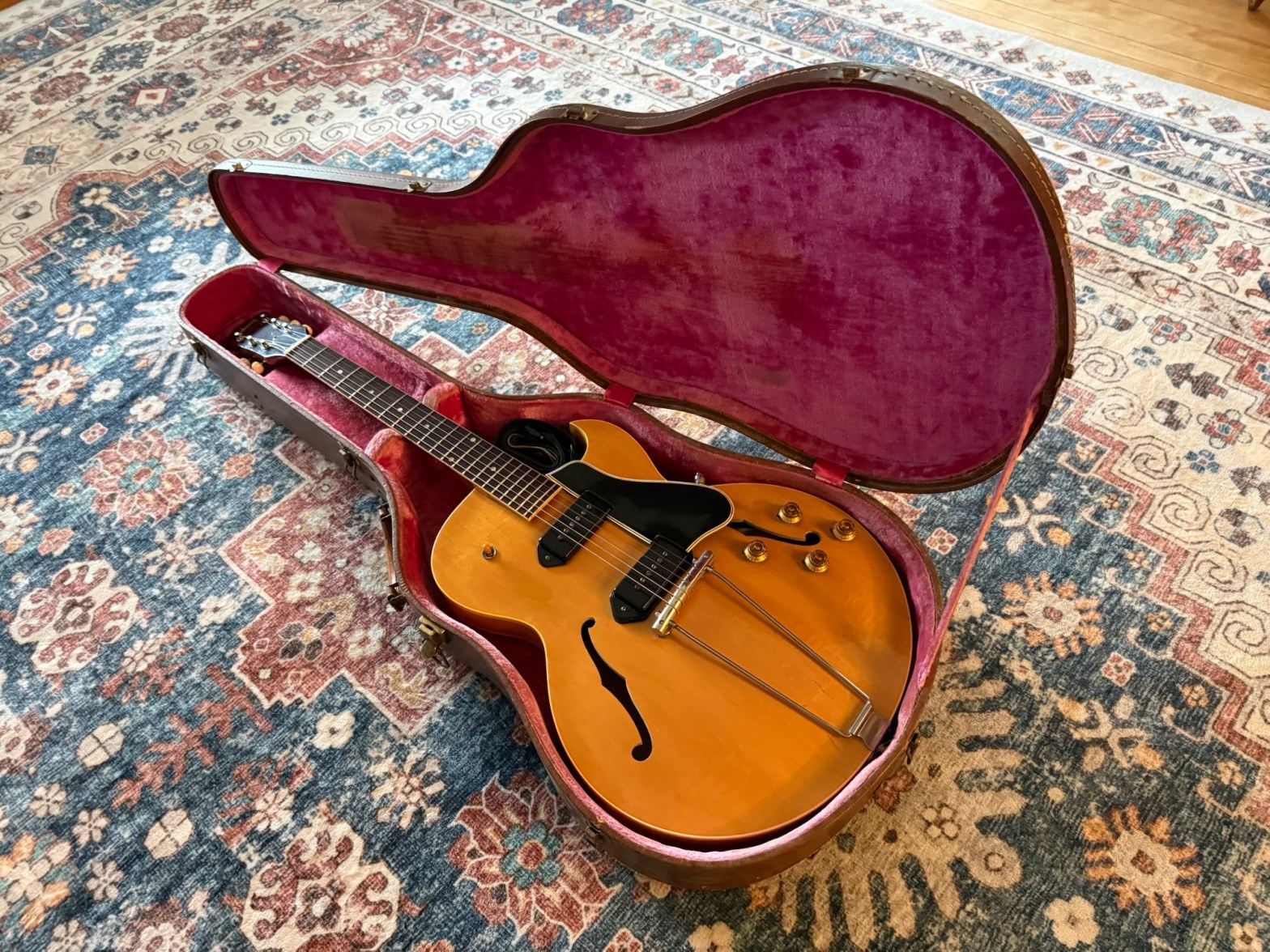
My 1958 Gibson ES225 TDN.
Over the years I’ve had a number of guitars that were important to me. My 62 Les Paul, the first ‘real’ guitar I bought with my own (get this) $600.00 was definitely one of them. My 94 SG was pretty important as well … in fact, expand that out to personally important musical equipment more generally and it’s been an embarrassment of riches ranging from drum sets, synths, basses, studio equipment.
However, when I left Montreal back in 2012, none of them appeared to have any personal value at all. Other people would tell me about what whatever thing was selling for or whatever … I don’t know, I didn’t really care all that much. I wound up selling a Roland Jupiter 8 for like 1,500 .. I think that was the most I got for anything when I purged before returning to the U.S. .. Including the 62 Les Paul.
I did hang on to two guitars and two amplifiers, namely my grandfather’s Barclay and Harmony solid state amplifier and my father’s 1958 Gibson ES225 TDN with his 59 (or 60?) Ampeg M-12 amplifier. The Harmony combo was really more a thing of not having the heart to shit can it. I never knew my grandfather as a player and certainly never saw the pair in his proximity. I didn’t even know it existed until I was in my late teens so it really doesn’t hold much meaning for me.
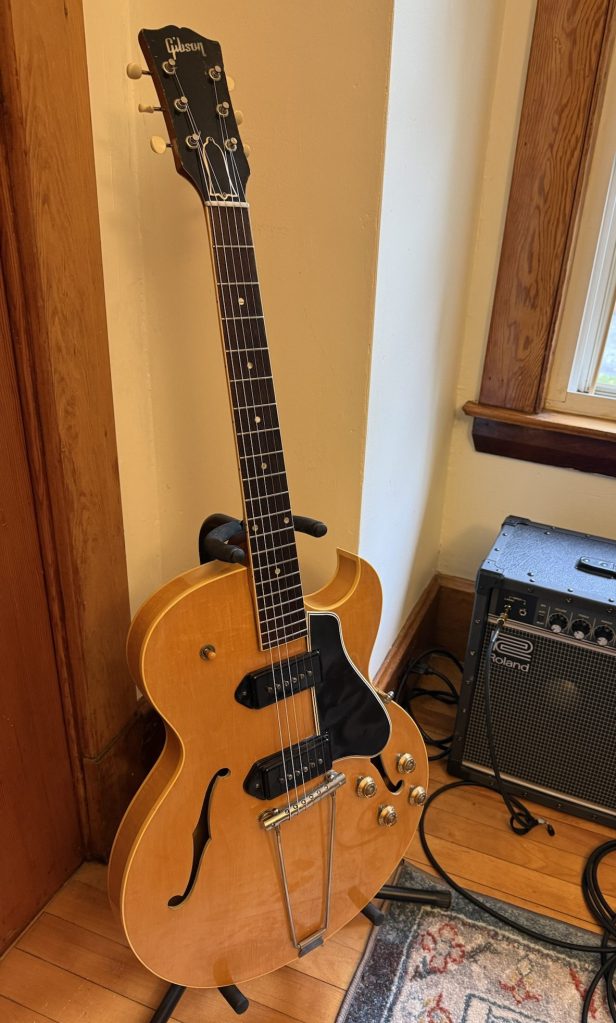
My father’s guitar on the other hand I’d known well since I could crawl. Low enough to see it’s brown faux leather case under the bed in my parents room. I can remember smelling the interior of the case even with it closed. I can remember the first day my father caught on to my interest and pulled it out from under the bed. I’m not sure he even played it that day, but I was able to run my hands over the dirty, detuned strings. As I gained the strength to slide it out from under the bed and learned to open the case, I regularly strummed it then put it back before being found out.
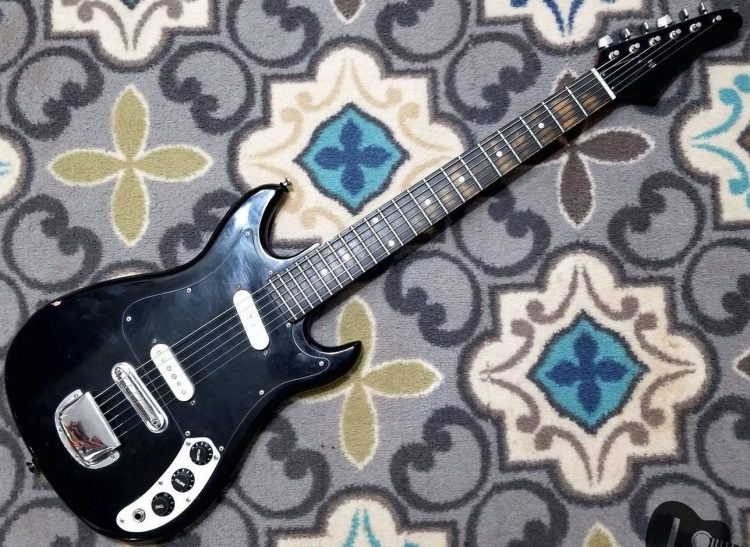
I wound up with my own guitar, a Cort solid body, not unlike this one here. Like most student models, It didn’t do much for my desire to play what with the unfinished fret ends, the high action, the tree trunk shaped neck and I wound up dropping guitar for drums by the time I was 11. Only to return to my Dad’s 58 when I became interested in composition.
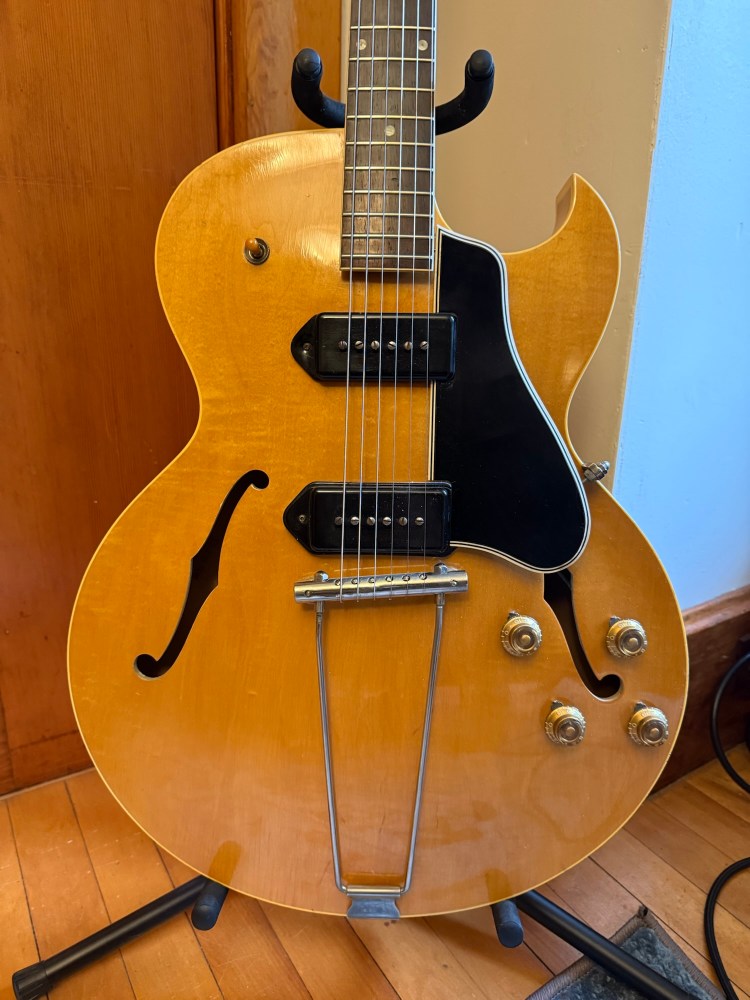
Back then, I wouldn’t have been able to delineate ‘tone’ from a blender full of pea gravel let alone understand what made a good guitar sound and feel like a great guitar. The 58 Gibson ES225 was, for all intents and purposes, a student model. ¼ sawn mahogany neck, a nice, deep pocket, play top and bottom, rosewood fretboard, bone nut and Gibson’s trapeze tail piece wound up being a very solid guitar in many ways, a wonky nightmare in some smaller others.
The 2 (in this case, the “d” in TDN stood for double. the single variety had a midway placed pickup) P-90 single coils were very powerful, well rounded pickups which leant to a nice, bluesy overdrive in some combinations, a very nice jazz clean in others. However, take it on stage in front of any amp with power and WATCH OUT. It’d feed like a monster on the A string and if you choked it, it’d HOWL like a banshee. The trapeze bridge was constantly moving about the body if played with any aggression. Not to mention this this particular guitar had seen far more closet and under bed time than playing time. When initially unearthed, there was a sort of green fuzz on the frets, the strings were likely the original strings, the nickel was practically white, the finish was (is) pretty checked. At the time, I was less concerned. I probably cleaned it with “Fantastic” or something of that ilk, restrung it and went to town.
Once I moved to Montreal in 2004, visiting my folks became more of a regular thing and I once again checked in on my Dad’s guitar. Wasn’t hard to find, under the bed, wasn’t in surprising condition, exactly how I left it but with the same green fuzz on the frets and strings, haze on the nickel. I plugged it in and noticed a lot of dead spots in the pots and some real stiffness in the tuning machines. The pin hole for the front pickguard mount had also busted out (?) leaving the pickguard dangling from it’s rear mount. Man. So, after giving my Dad the “dude, it’s really going to shit sitting there” speech, I brought it back up to Montreal with me.
I’d initially taken it to a luthier, who seemed more afraid than excited to work on it. He was a good guy though and he cleaned it up really nicely, did some build up in the nut slots and cleaned the pots up to an acceptable level. Over time though, I just didn’t feel like what was wrong with it was what he thought was wrong with it.
I started picking away at it the first time in 2010 or so by removing the bridge assembly with thoughts of soaking it in Kroil or the like. But the adjusting nuts were already loose so I took them off and lightly coated the threads in anti seize compound, put it back together and set the intonation to the best of my ability … or anyone’s, it’s not like a very versatile assembly.I also took this opportunity to deal with the action, which, always felt sorta high.I mean, it’s a thin line archtop with 12ga strings, it’s not a screamer. But half the reason my father quit playing was because of how hard it was for his child self to play this very guitar. Taking a straightedge to it, there was a rather decent up bend in the neck, not surprising considering the years it sat under a bed with all tension on its original strings…. More surprising that it wasn’t worse, actually. I slowly backed that up bend down a bit and lowered the feet on the bridge. I’d wanted to pin them but I’m still waiting until I do some finish touch up on it including where the feet have worn the finish beneath them away.
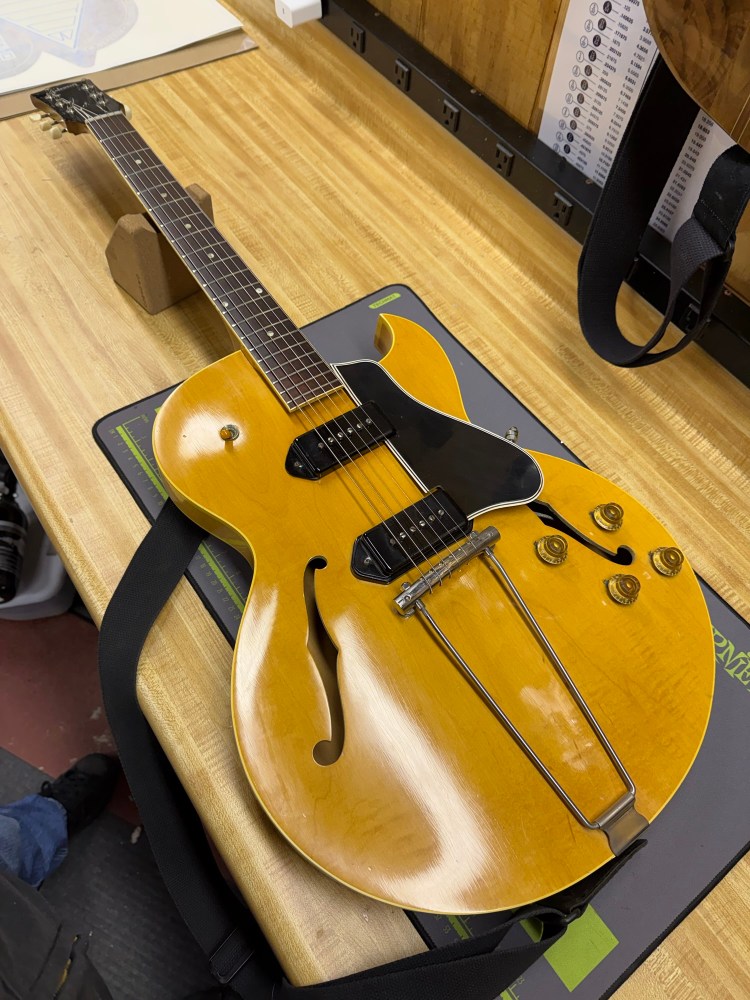
In 2019, the frets had been buzzing in certain places. After straightening the neck fully, I went through all of them. They’re rather light fret wire and the idea of leveling them was kind off scary, though the inconsistency called for it, a re crown, beveling, dress and polish. This was what finally made this guitar feel stable, responsive, and dare I say, fast. The level itself was very light. I’m not totally sure how much I took off but it was far less than 0.010” using 1000 grit on the beam. The frets were machine polished to a high shine, no dents, no scratches. The fret board deep cleaned with Murphys’ oil soap, then conditioned with Mineral Oil
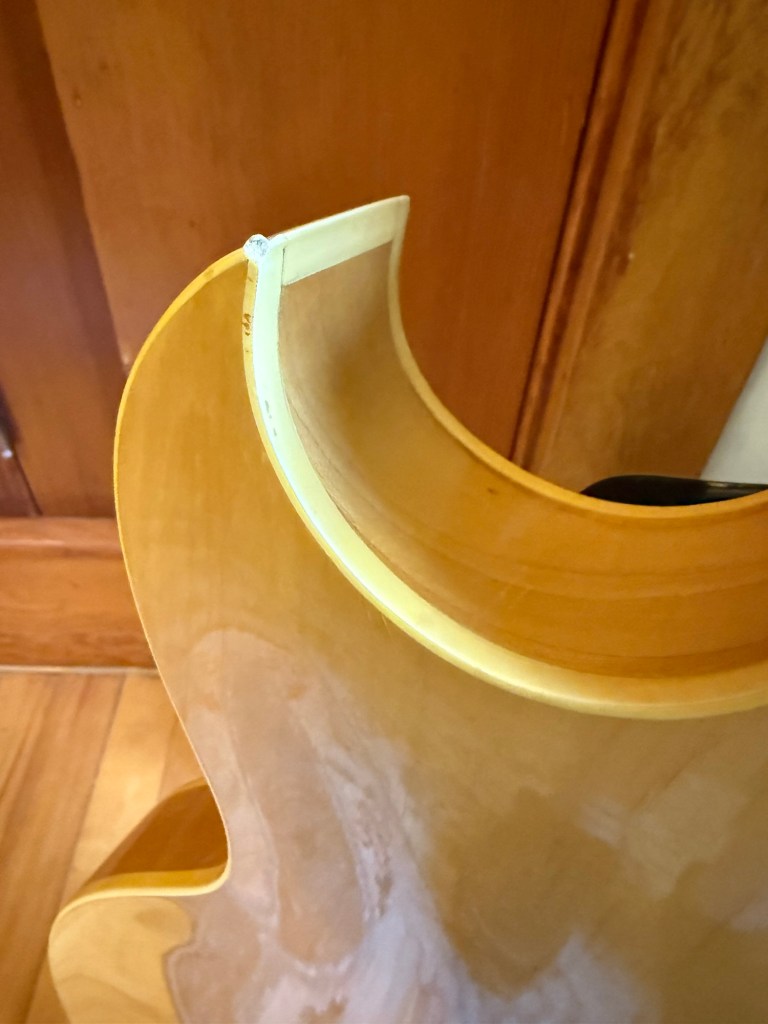
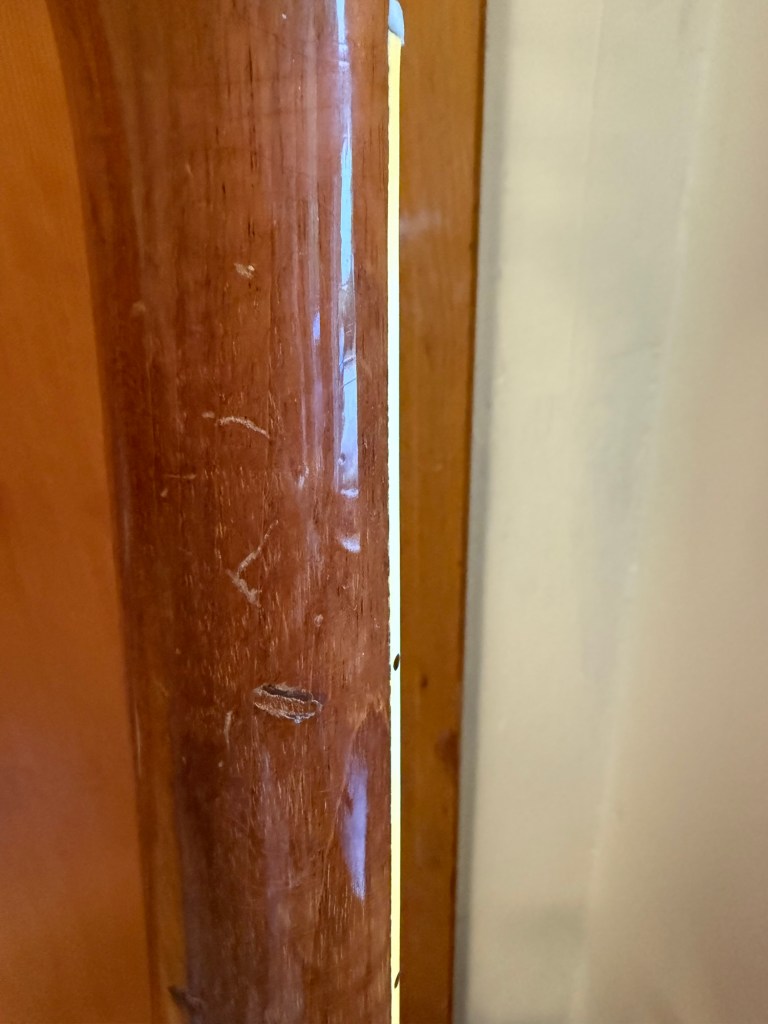
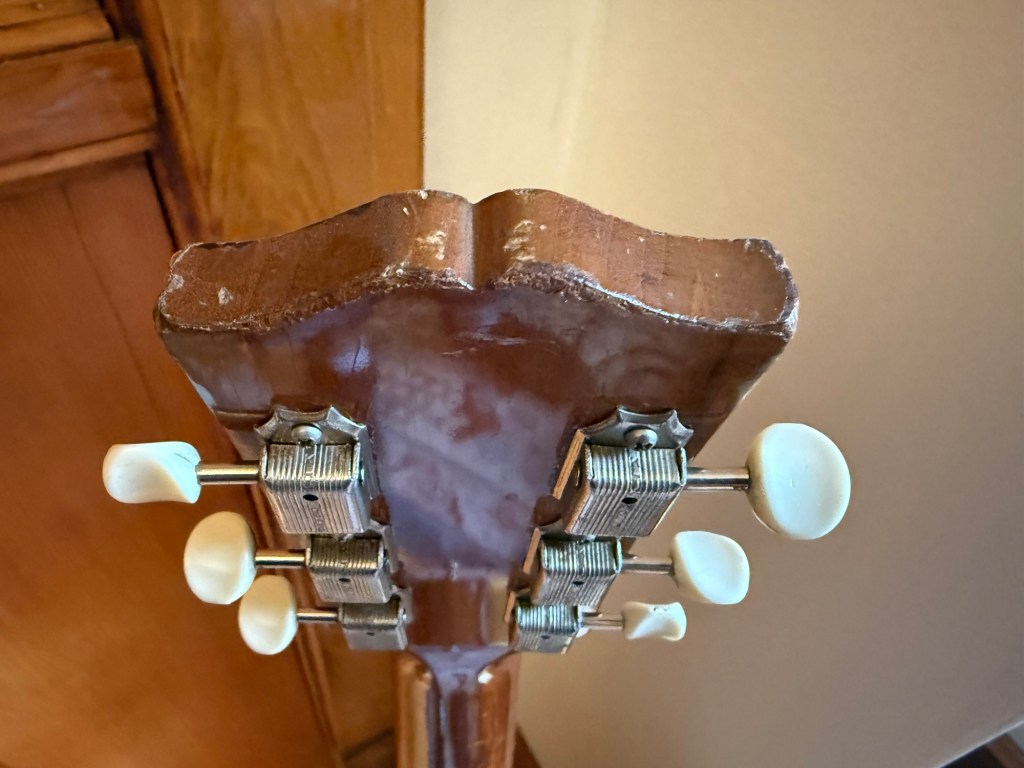
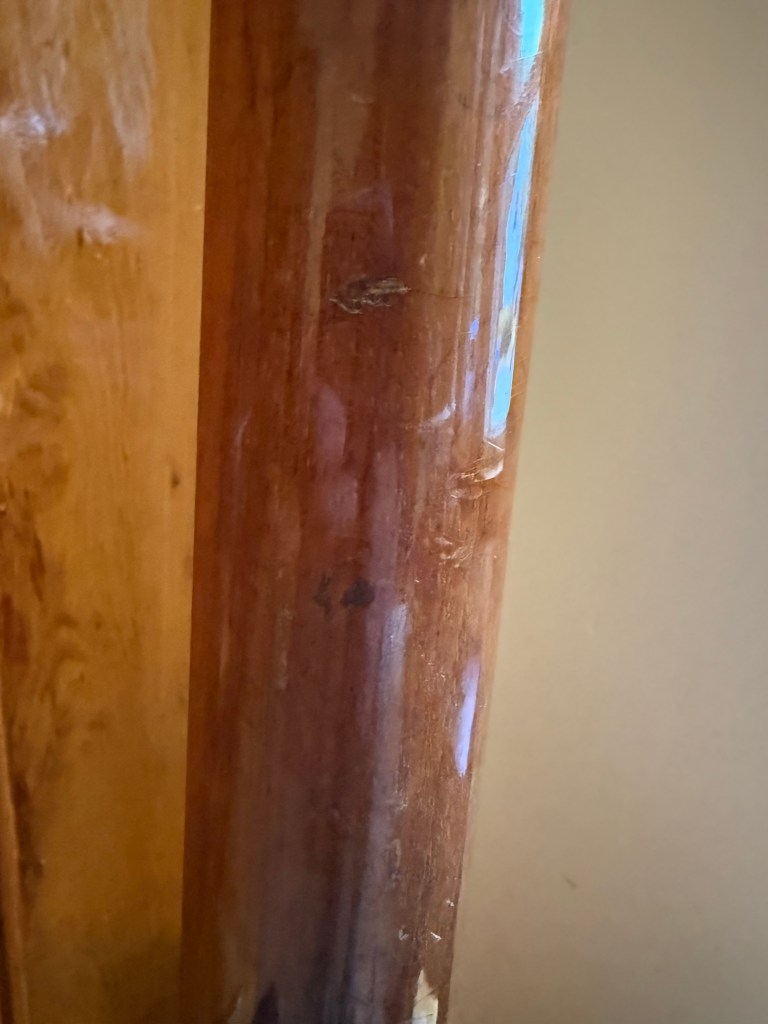
There’s still some issues with the finish: a few neck dings that my father gave it back in the day, one ding in the binding at the tip of the cutaway, some wear around the heel, but honestly, considering the checking in the finish, none of these bruises tear the grain so I’m not wed to doing anything about them. I’ve been playing with that ding in the neck since I was a child. Just part of the guitar now. The pots will have to be dealt with at some point but again, the guitar is not in service either live or in the studio so I want to take time to find the right parts to do that.
Till then, I’ve basically been playing and enjoying it. This is just one of those guitars, I guess. It was the first thing I understood as a musical instrument. The first of many things I remember having in common with my Dad. The first thing I put any effort into learning about both as an instrument and a subject of work. I’ve gotten some silly offers on it but for some reason, unlike all the others that I did unload, the offer couldn’t be silly enough. If anyone really wants it, they can pay close attention to the obituaries and particularly, where they intend to do my planting because it’ll likely be there in the box next to me.
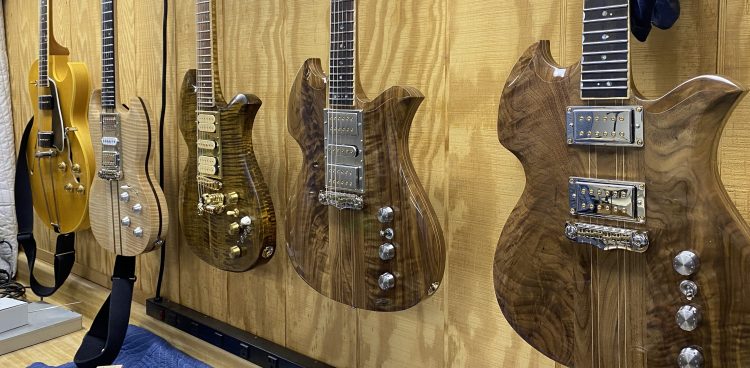

 Custom Job