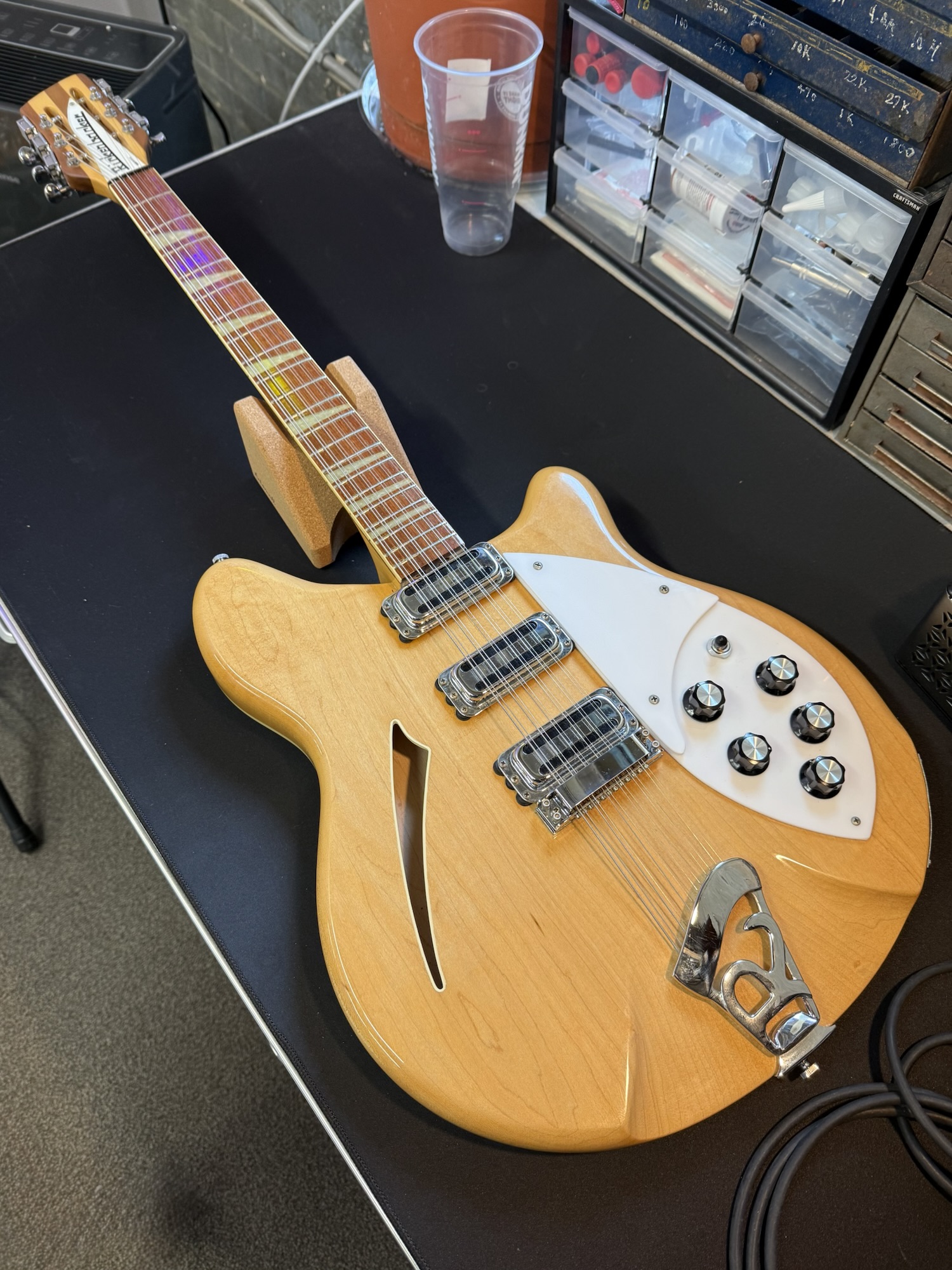
I’ve always loved Rickenbacker. Initially, the basses, specifically the 4003, struck me as so singular. Later on I had a 381V6 that I enjoyed a lot. My cousin has had MANY and I’ve enjoyed every one I’ve played.
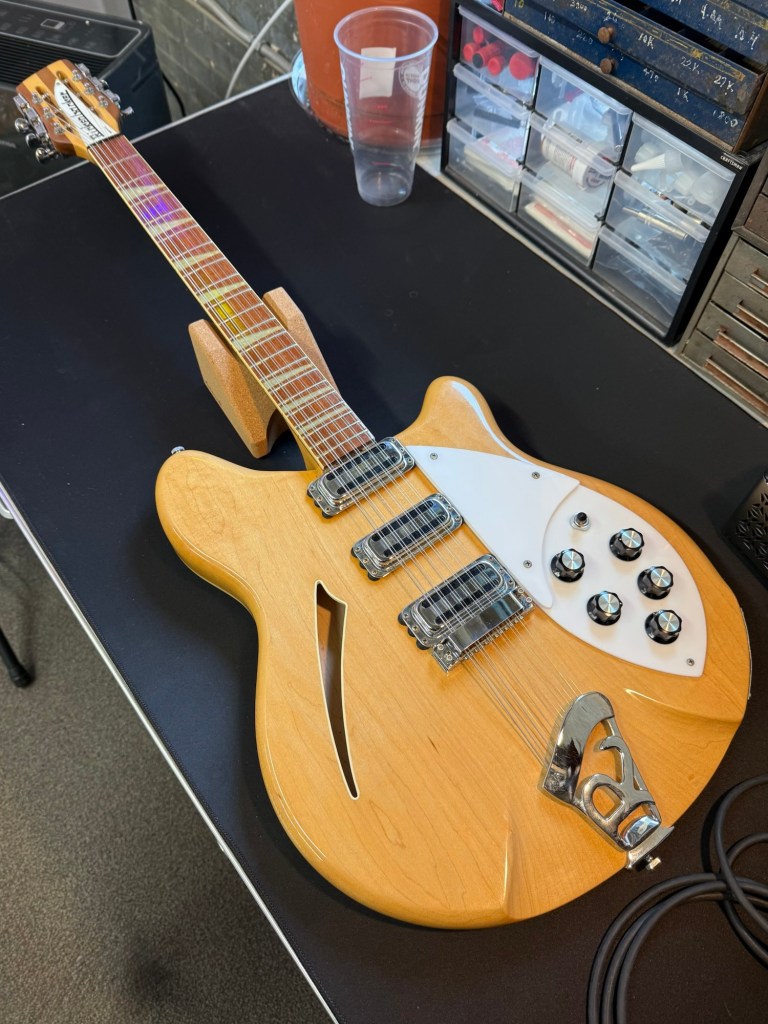
So, it was a dream to have my first customer bring me an under the bed fresh 370 12RME (Roger Mcquinn model, missing the signature guard). His guess was around 20 years in storage, piled atop some hard use by the previous owner, and some question mark issues with the finish.
The first noticeable issue was a result of storing without detuning. There was a good .100” of string height mid neck, dying down to about .060 at the heel. The first fret was around .020”. So, first thing was to pull the strings and let the neck relax a spell.
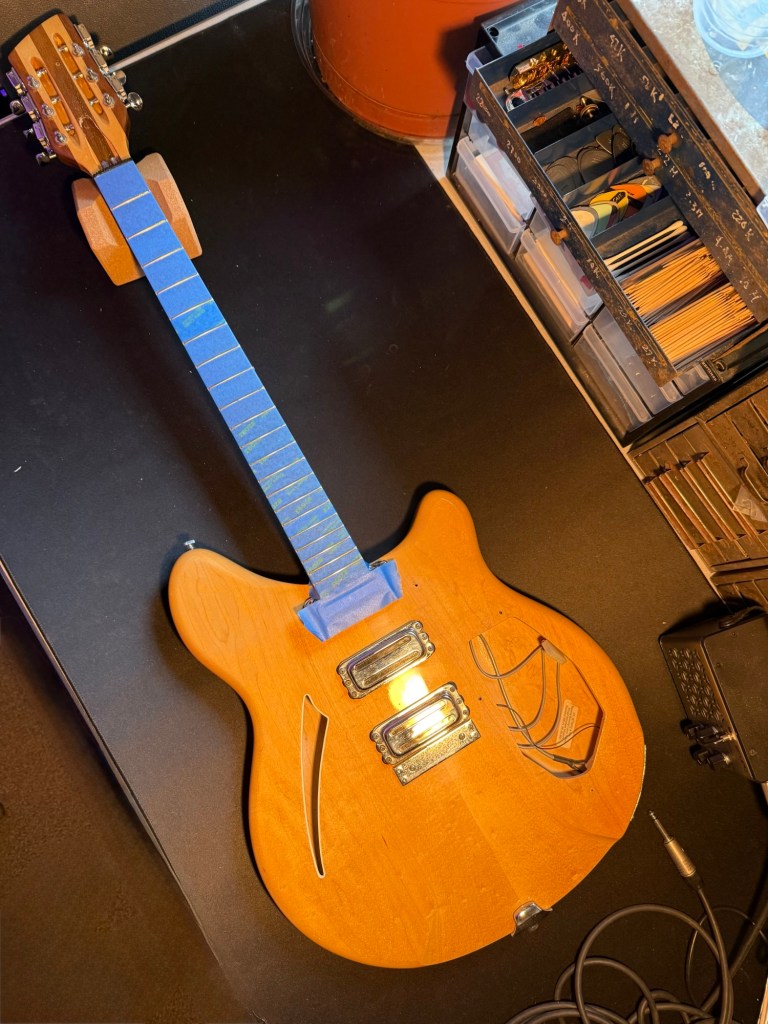
The neck came back to almost straight without much work, but taking the tension off the truss rod still left a little relief. I spent a few hours massaging it gently back into dead flat, then let it sit for the night.
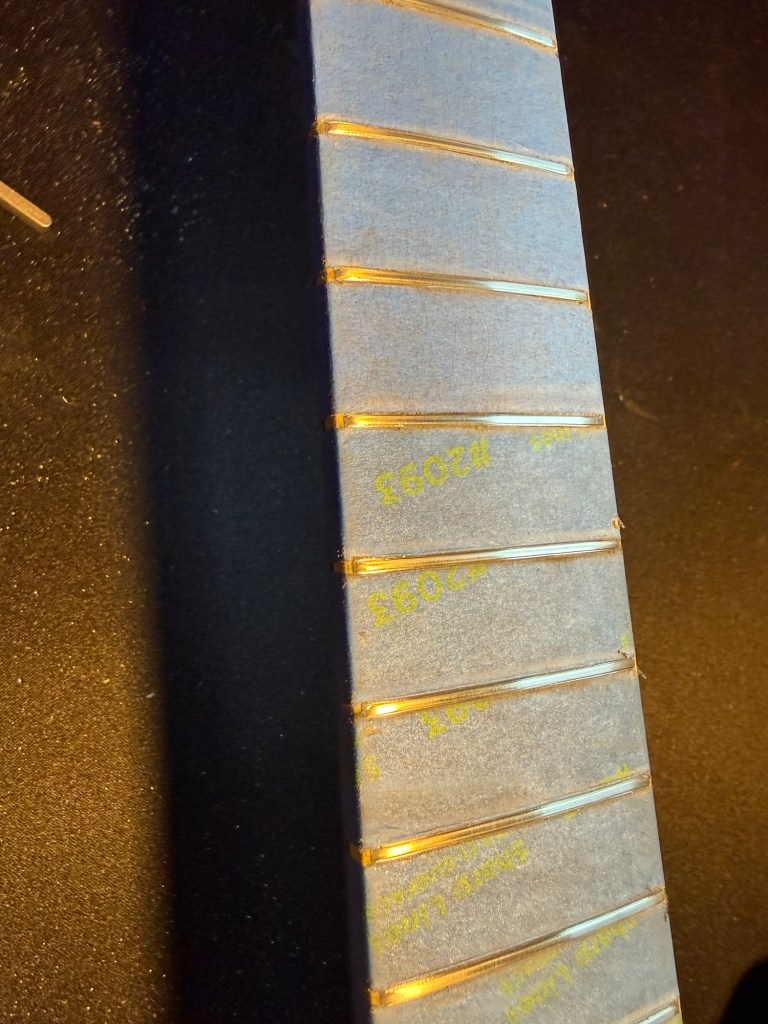
The next day things were settled out and I had some decisions to make about the frets. They’re rather thin to begin with and this guitar had already seen a level at some point in its life so I was concerned about leveling them, but really needed to get a consistent flat to correct some of the string dents and questionable crowning on the treble side. So, after going over it with a fret rocker, I decided to level it super slowly with a beam and 400 grit.
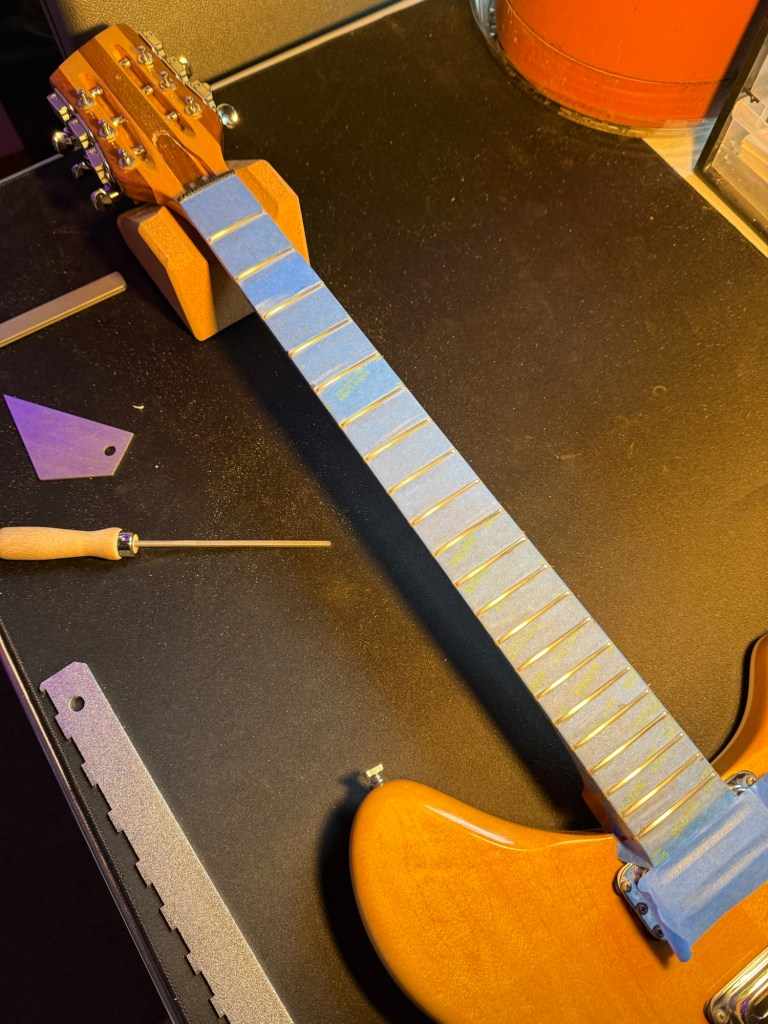
Beyond that, it was very gentile crowning focusing on the areas where the frets had hardly been poorly crowned before.
Post crowning and dressing, I usually run a flap of 800 grit up and down the frets to catch any light tool marking that may have been left from the files. Beyond that, it’s 1000, 1200, 1500 and 2000 mesh in a suitably sized file (slightly larger than the fret crown itself), then buffed with Blue Magic and finished (depending on fretboard material and finish) with carnauba wax.
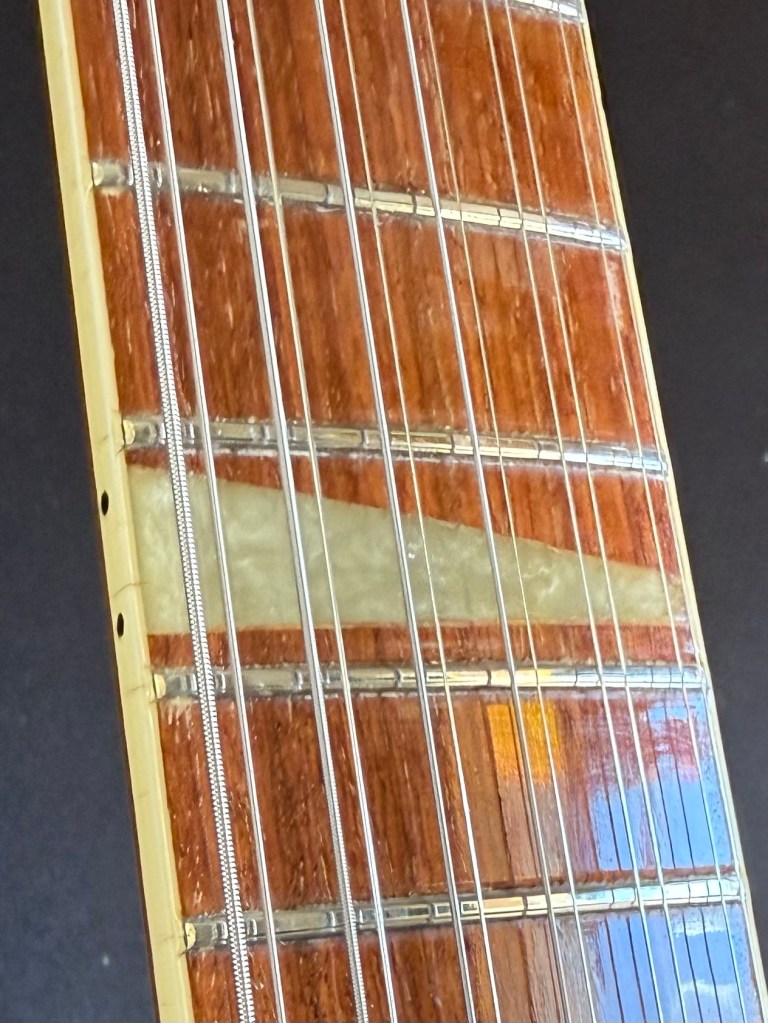
So, from there I had a dead straight, level fretboard to start my set up with. But first, I had to get into the finish a bit.. well, and electronics and the bridge so stay tuned! Next week I’ll talk about some of the many issues with this guitar’s finish, the things I had to take on, and things I’d take on if the owner ever wanted to get that deep.

