I’m a long time fan of Pinball, Bowling, Pool, Bar Shuffle Board … basically anything having to with propelling an object from point A to point B is a good time for me especially if it involves an intricate or simply beautiful play field.
I had been into vintage pinball for a while when a friend of mine started an underground pinball bar in Montreal. I was introduced to his friend Roger who was like THE GUY to go to for electromechanical restoration of these gorgeous machines. Obviously, my electrical knowledge basically ends at the very basics. But as I looked at his collection which ranged pretty drastically in era, my head was spinning with how anyone could take one of these machines, reproduce or repair the playfield, the back glass, or even settle a mask for the outer cabinets.
I can’t say that I ever had the opportunity to test out any approaches on an actual Pinball. However I did gain the vision for it. Coupled with my love of firearm stock/grip customization (wire inlay, carving, etc.), and luthier inlay, binding, and branding techniques, I hoped one day someone may present a game to me that wasn’t so set in its ways nor too much in it’s infancy to accept some of these treatments that I longed to put on a shuffle board or a pinball.
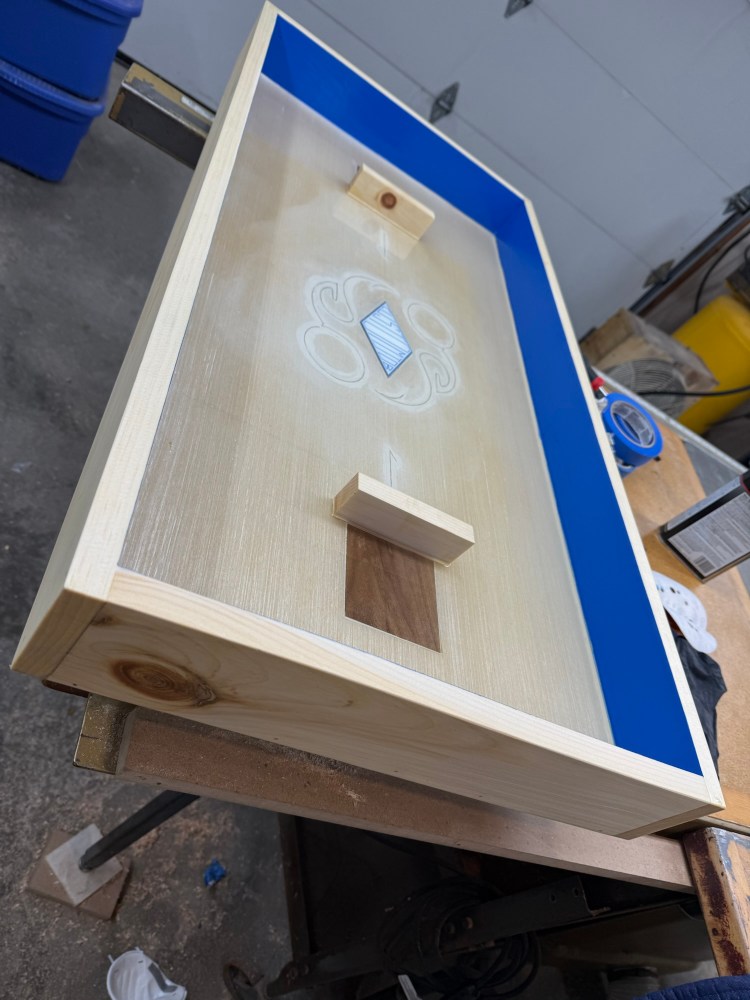
The very same folks who I made the Business Card Rack for, did just that. The game is called DAGZ. It takes it cues from a lot of different smaller area games of physics, BAGZ (or ‘cornhole’ which I can’t say without giggling…. every time I see and all american family playing “corn hole” I say to myself “lookit em. corn holing right out in public. not a care in the world.”), Bocci, Pool in some ways. However, the object isn’t round but 6 sided, 16mm dice. The ‘goal’ is the hole in the Walnut square behind each of the pine blocks at either end of the field. In true to me form, I never did get a photo of the board with the holes cut so … sorry bout that!
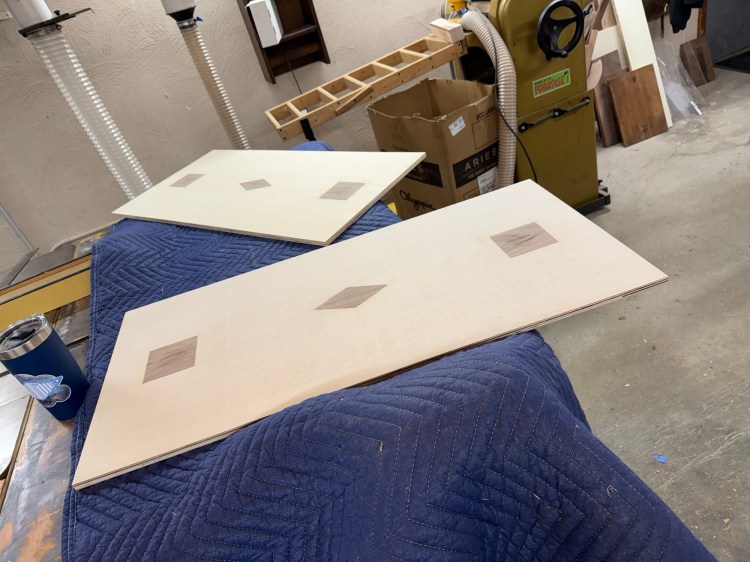
My client insisted “it doesn’t have to be pretty” but … well. For one, I wasn’t too into the burn in technique that was used on the models I saw, I mean, it works perfectly well for this game, but I wanted mine to look different. After locating the opposing sides, I inlaid two 3.5″ squares of walnut … and a diamond in the center as a background for the Custom Job diamond.
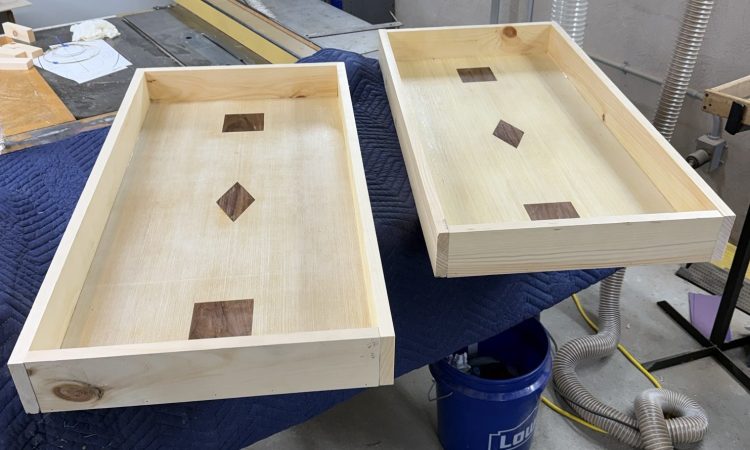
The sides were just made of relatively clean pine local home reno store. That’s always challenging, digging through that to find anything straight, let alone cleanly lumbered or, uh, one continuous piece… but the option was to hit up my good lumber store which is a good hour away and I wanted to get these to the clients before Memorial day.
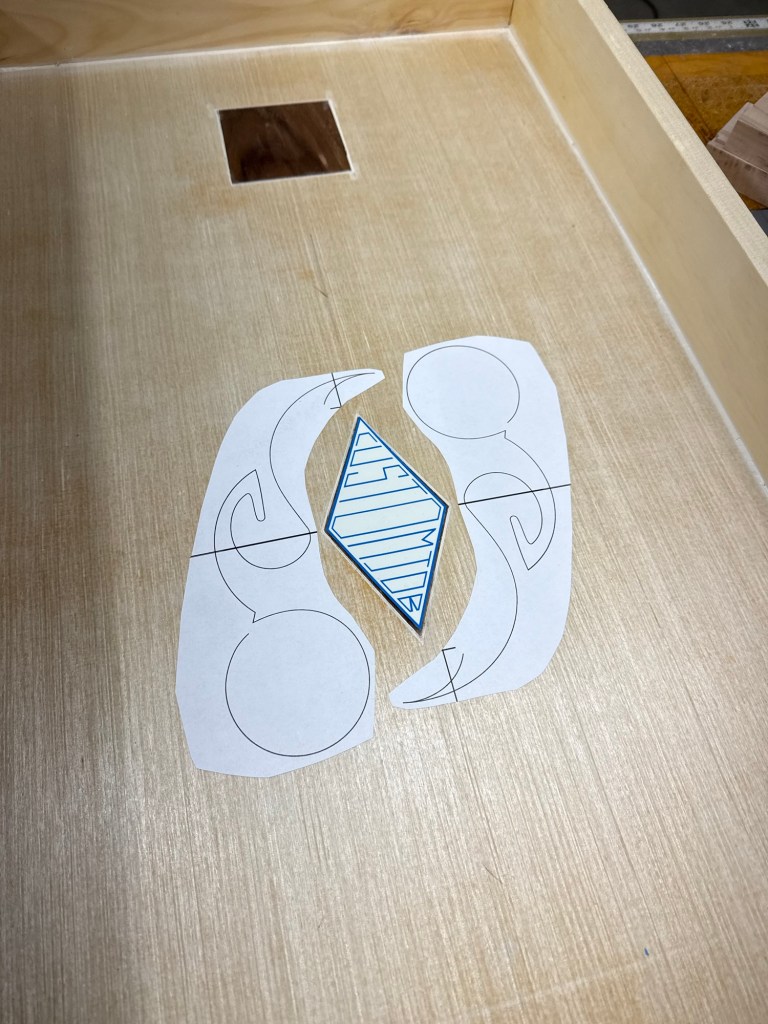
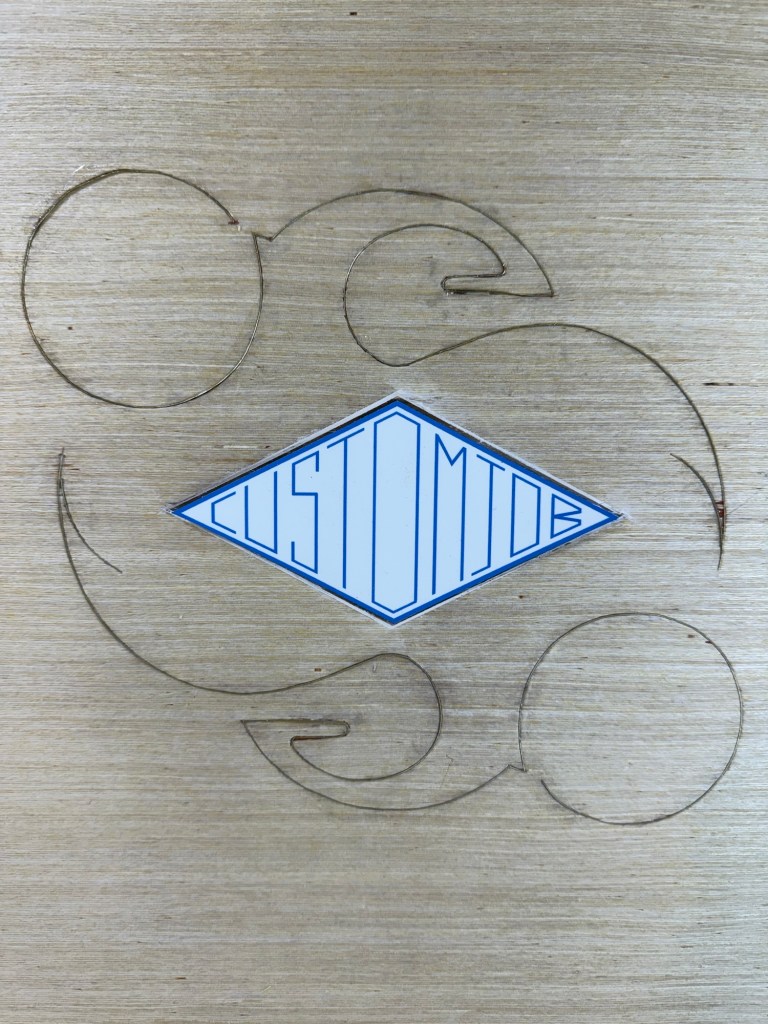
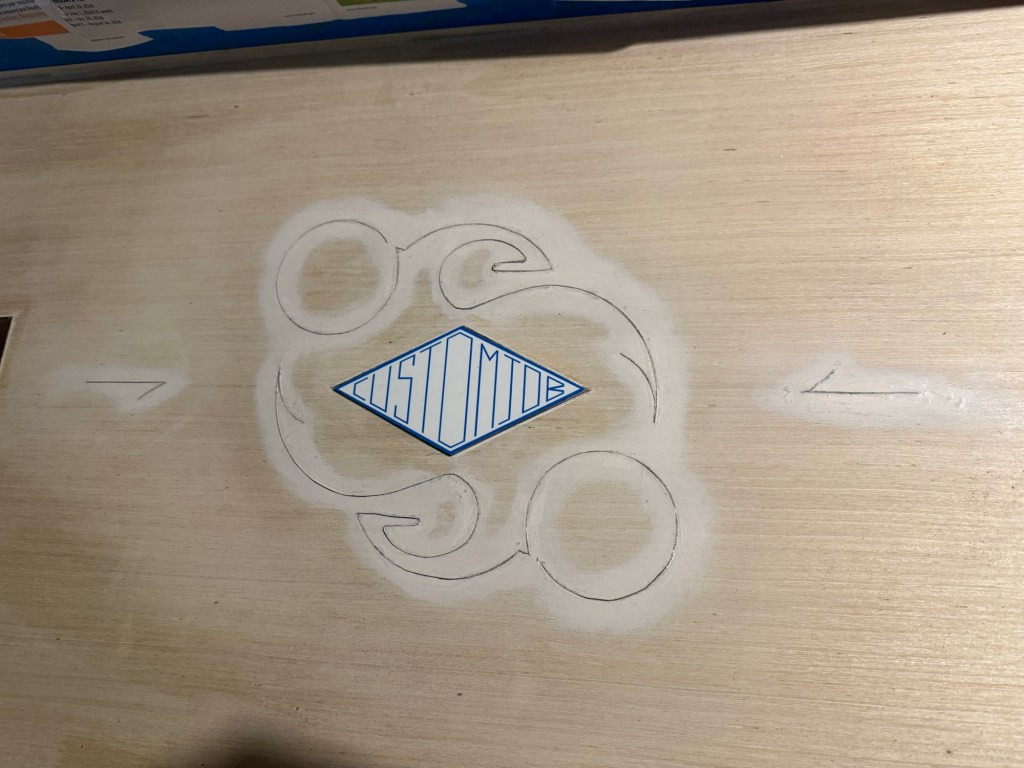
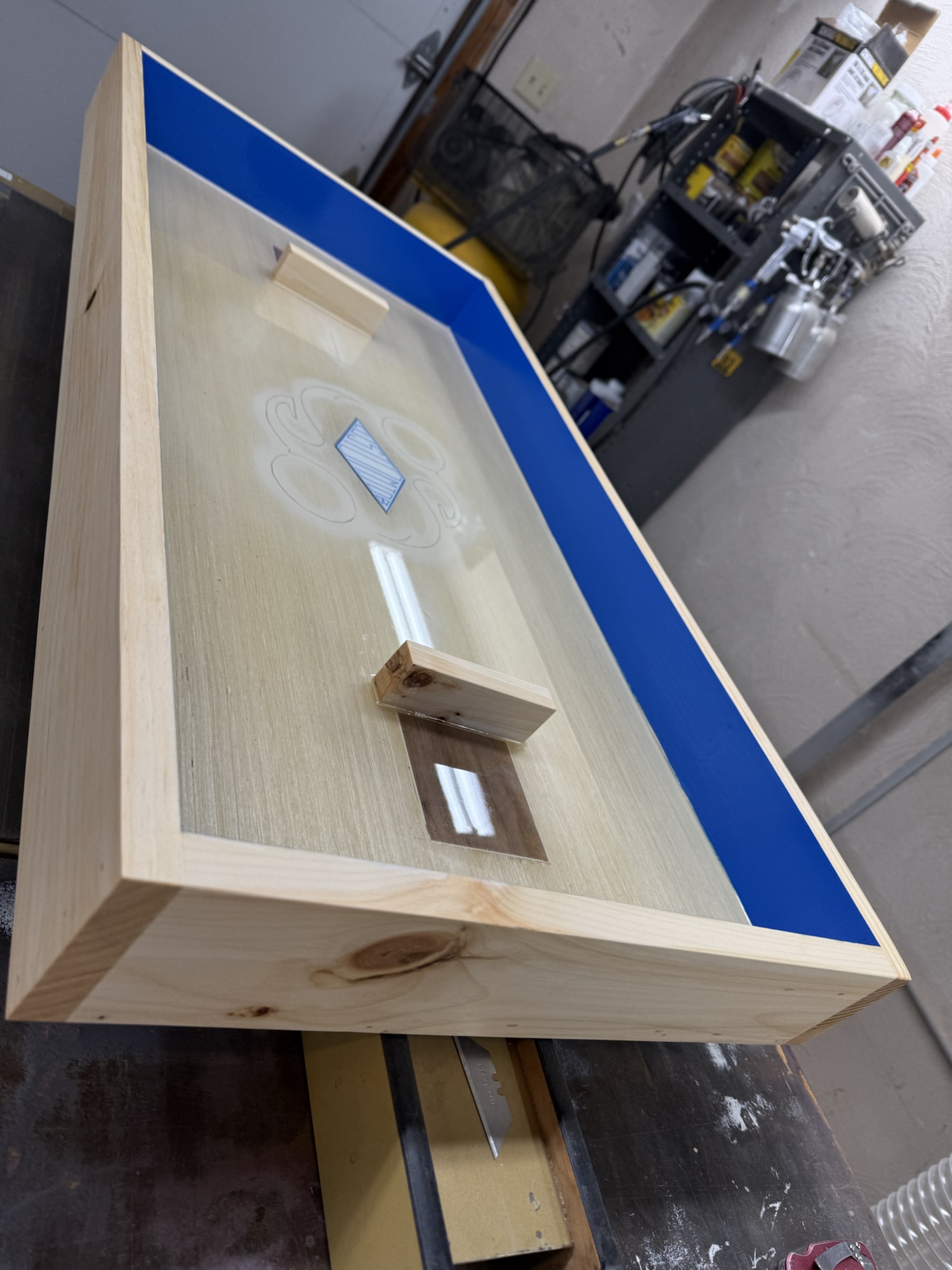
I decided to use the scrolls I use on my guitar headstocks and most other things related to the company. While they’re not actually a part of the Custom Job logo, there’s a certain playfulness to them and they look really nice on most applications. The wire inlays on the board include them and directional arrows, not unlike the ones on bowling alley floors but realized out of wire. The airbrush haze around all the wire was intended to hide imperfections from laying wire into plywood but also to crisp the lines of the wire when the board was in the sunlight.
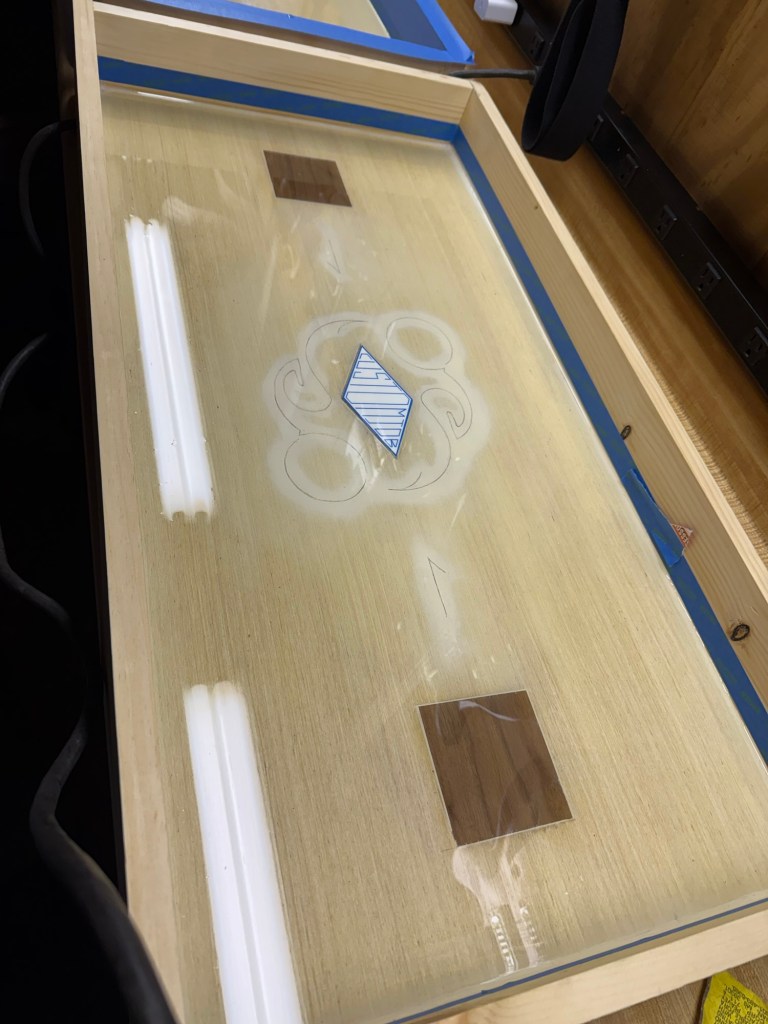
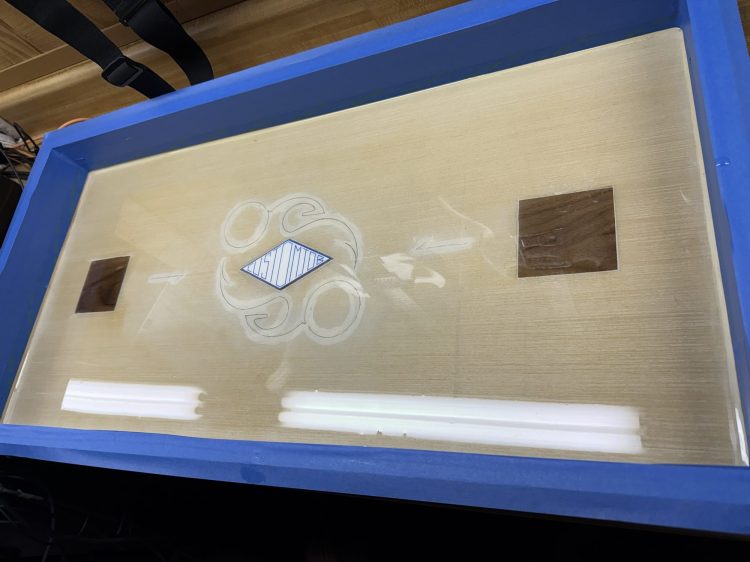
Here’s about where I went off script a bit. Epoxy Resin has become very popular in the last, say, 15 years. I don’t even care to count the number of coffee tables, guitar bodies, etc., etc, I’ve seen online over these years. It’s over used and generally, not very impressive. Here is not necessarily an exception. However, I wanted something that lent some depth to the aesthetics of the play field but, could also be resurfaced (polished, waxed) over time. Let’s not forget, this is largely a game played by drinkers and drinkers spill stuff and leave their games out in the rain. When a suitable play surface can be attained with a more durable and renewable finish, why wouldn’t one use that?
Two coats of 1/8″each per were poured. The wire was left proud of the surface by microns, but enough to grab light through the epoxy. The Custom Job Diamond was laid on a 3/32″ piece of plexi and sealed to the board before the first coat, giving it a slight stand off from the substrate of the play surface.
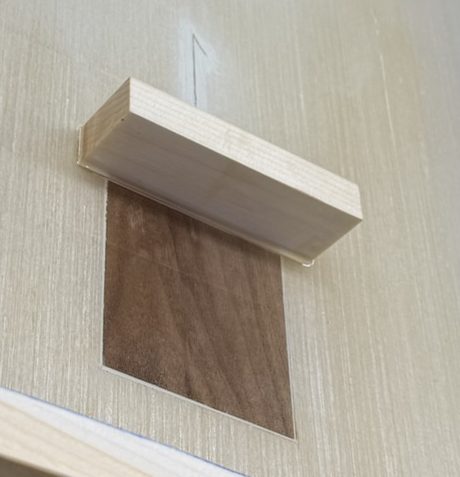
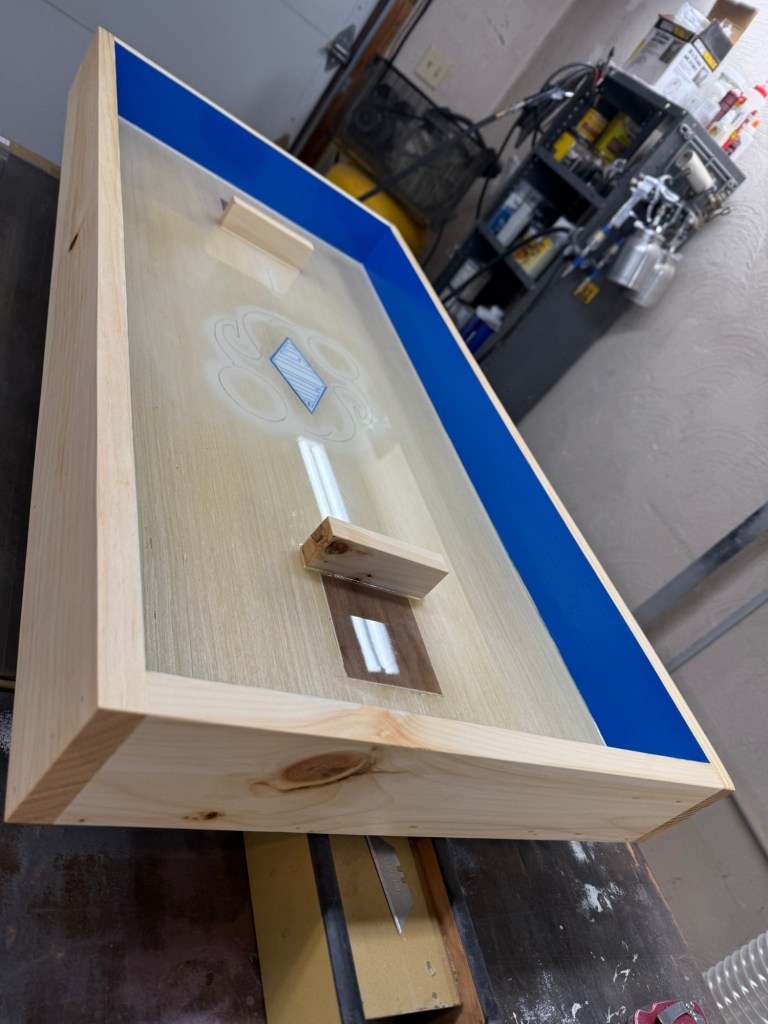
The Blocks were set in before the second coat of Epoxy. After pouring the second coat, I noticed some discoloration between the second layer of resin and the wall that I didn’t like so I finished the walls in a complementary blue which I polished to a fine satin. The holes were cut, again, after all this was done and, true to form, I forgot to take pictures. but the circumference 1/4″ of resin was sanded to a flattish sheen which lit up the holes really nicely
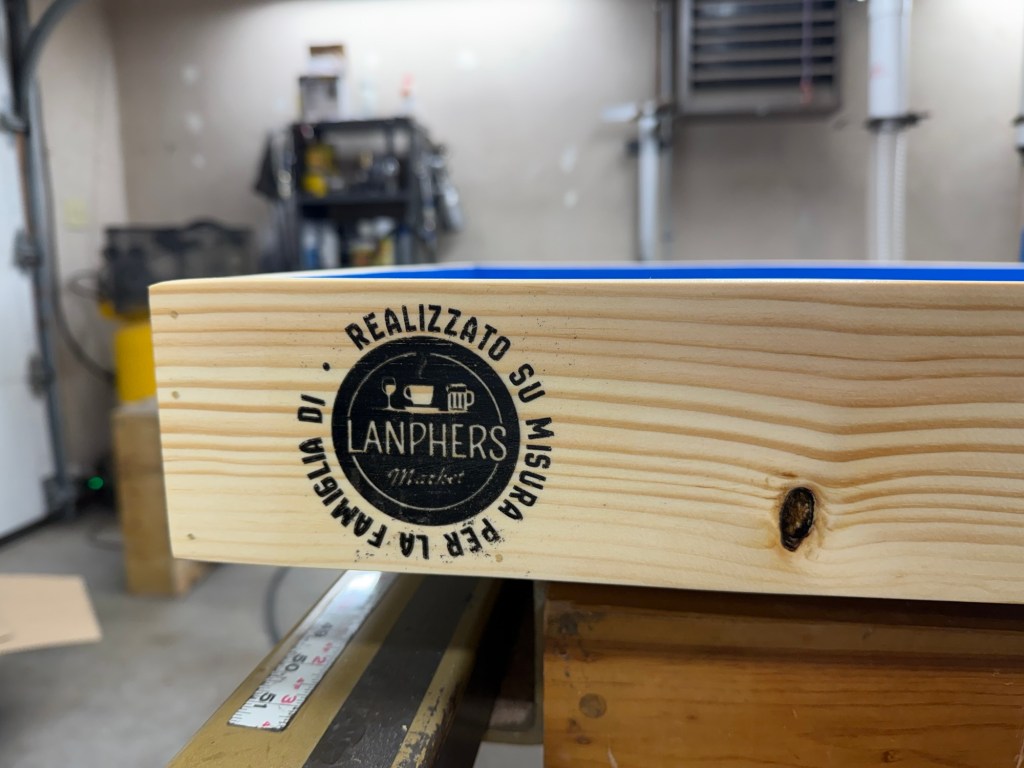
I felt a little sheepish passing something off with just my logo as I don’t usually do that. So I did up a version of the Lanphers logo with “Custom Made for the family at Lanphers Market” in the best Italian I could muster up. The entirety of the set that was not coated in resin was then finished with 5 coats of gel polyurethane, allowed to cure, then polished with a wax paste which should keep it good and sealed for summer time abuse.
In the end, There’s some material choices I’d not make again. The wood choices were rather lack luster, and the board itself didn’t take wire or inlay like good old solid wood. The Resin, though I like it functionally, felt a little too much to me and certainly, the blue on the walls could have been less intense. But either way, They’re sturdy, resilient, portable, and pretty …. most importantly, they were made for some folks I really like.

