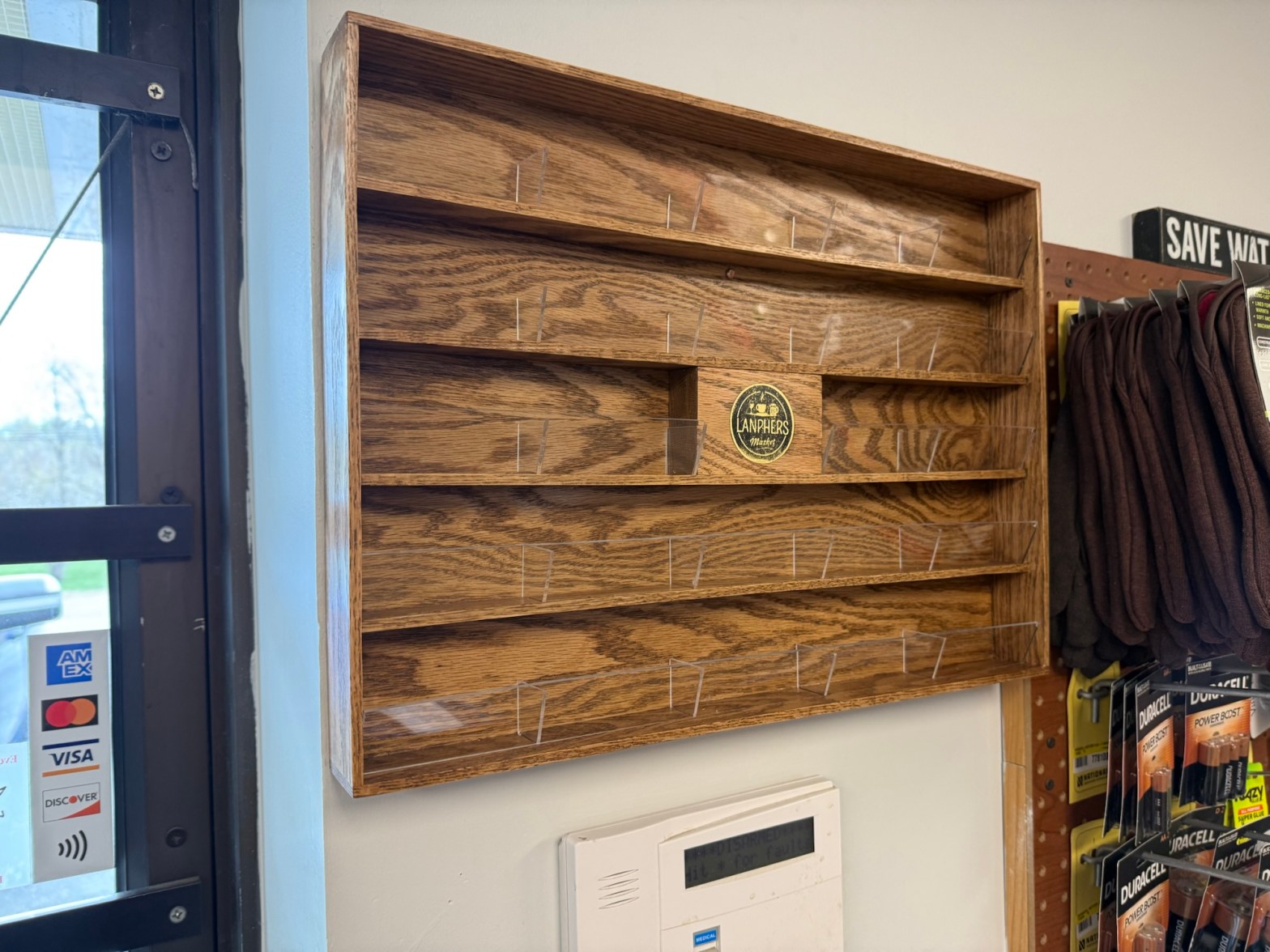
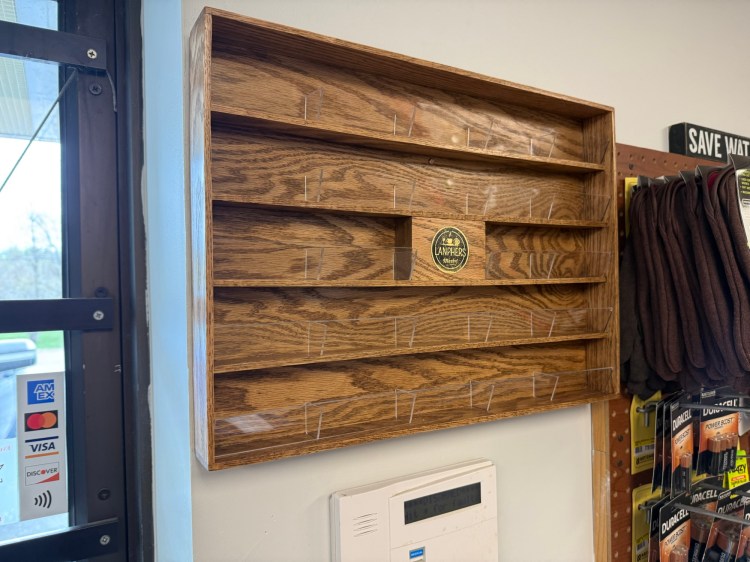
Some great folks in the neighborhood run a little store up the road from my house. Most mornings, many locals can be found there catching up, drinking coffee, scratching lottery tickets. The Lanpher’s, who own the place, are a great bunch of folks who are always happy to help and always welcoming and great to anyone who comes in the door.
Being a very local centric sort of place, they had business cards from local places sort of scattered about under the plexiglass on the counter. A crowded counter with service request bells, payment machines, displays of this and that. Often, the business cards got lost underneath of all that. There wasn’t really a way for people to take a copy of their own either. So I got to thinking about what might provide a better solution, where people could browse local businesses and hopefully, walk off with a means of contact for these businesses. Granted, I know so much is online now. But there’s nothing “online” about being in this store. People at absolute MOST, show one another photos on their phones. But still see and interact with word of mouth and printed matter.
I proposed making one to them and was given only one instruction: “Make it so it will hang here and use the holes that are already in the wall from the thing that was there before.” My kind of job, obviously.
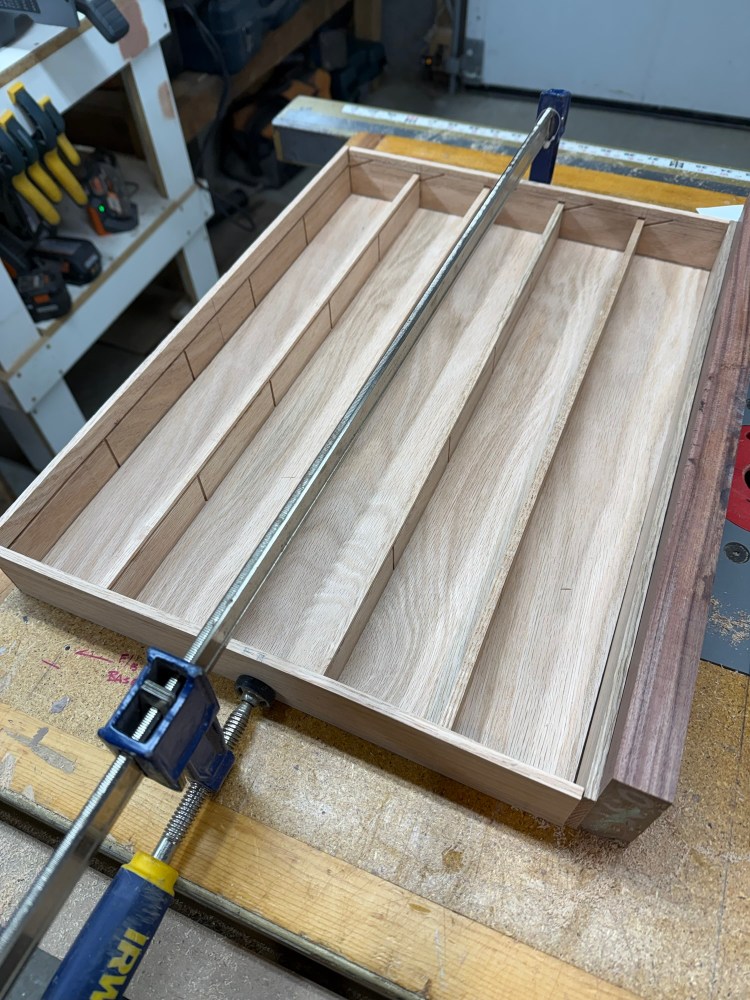
I had a lot of left over Red Oak, as most shops involved in repair and construction of traditional cabinetry would. I designed the piece itself at 13.75″ tall and 18.75″ wide with 5 shelves made of 1/4″ thick solid oak for all components.
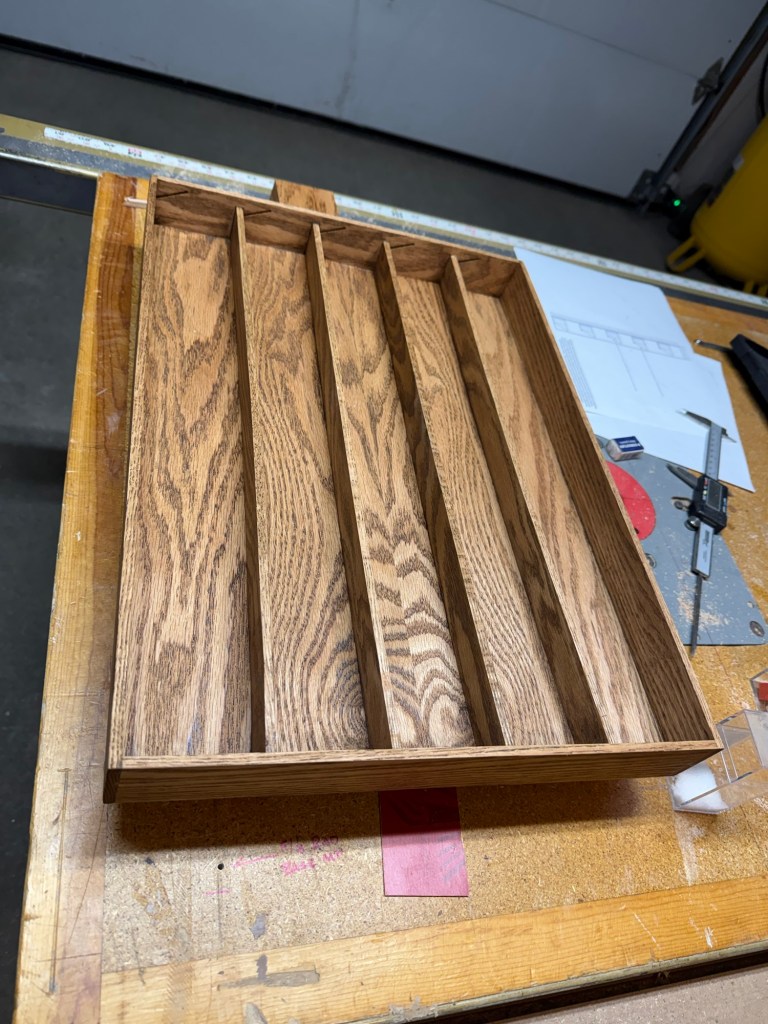
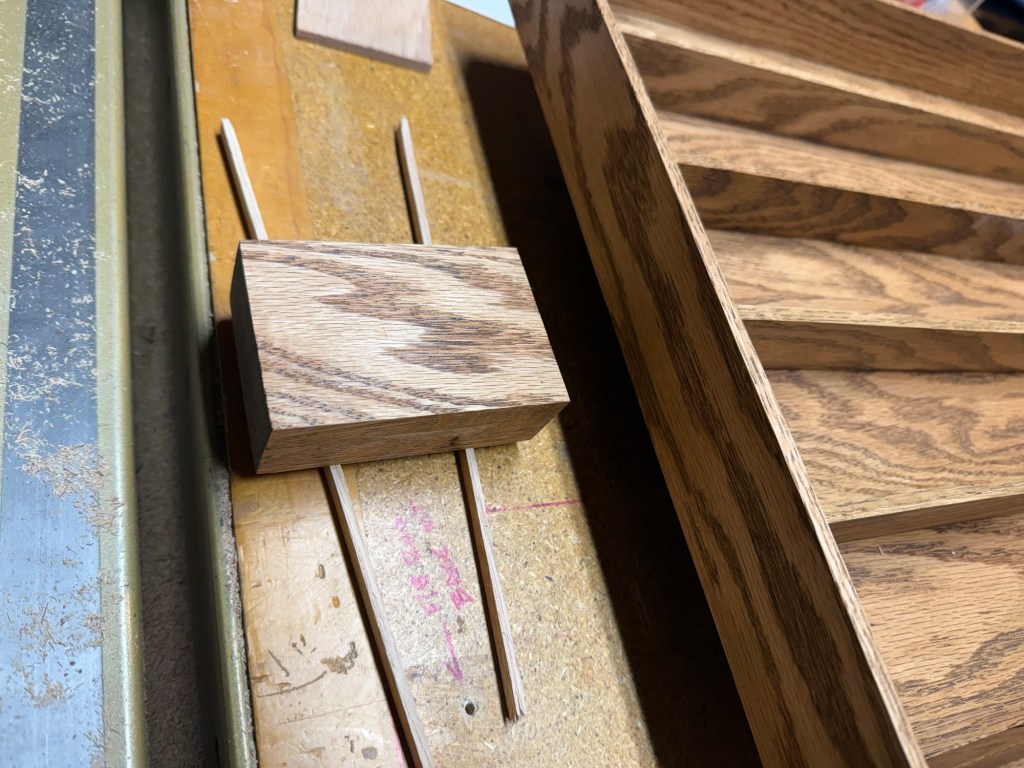
Being as utilitarian as piece as it was, I didn’t feel like going too too crazy on color and finish and I always liked how red oak showed with ‘early american’ stains, which too, was on the shelf and ready to go, along with the 4 coats of satin polyurethane I used to finish it.
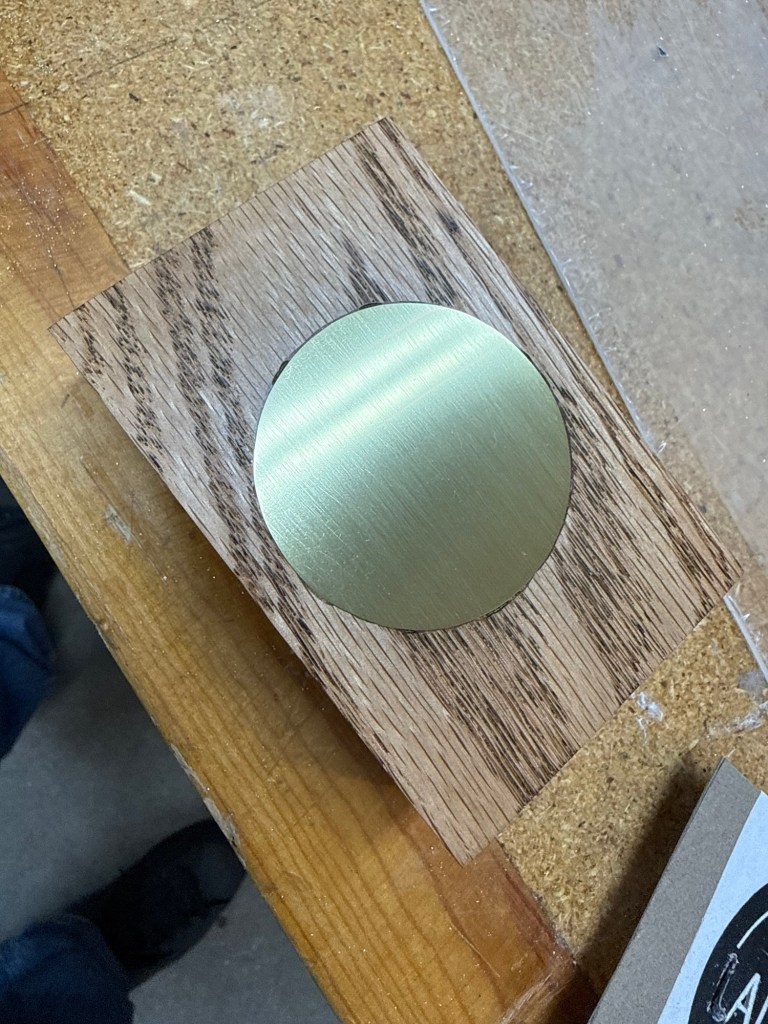
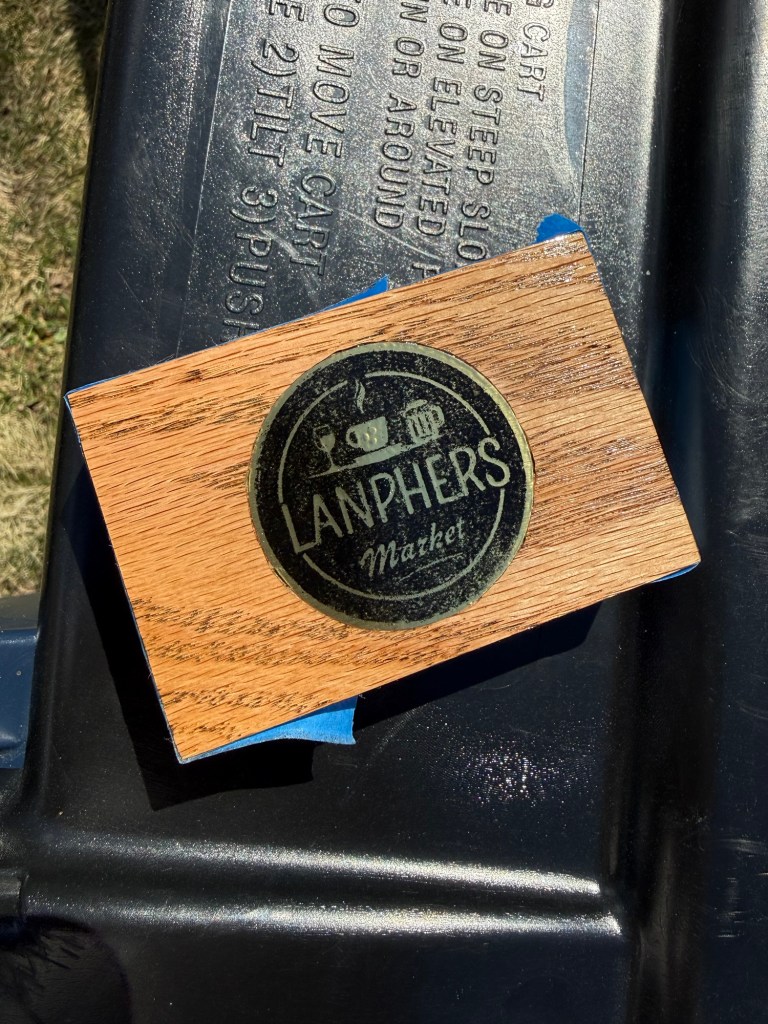
I didn’t however want the store’s logo displayed permanently. I built a block the exact size of the center most card slot and inlaid a disc of brass and used laser printer transfers between coats of clear poly to apply the logo. I’d initially wanted to do a burn in with a mask and a blow torch, but the details were too fine on this logo.
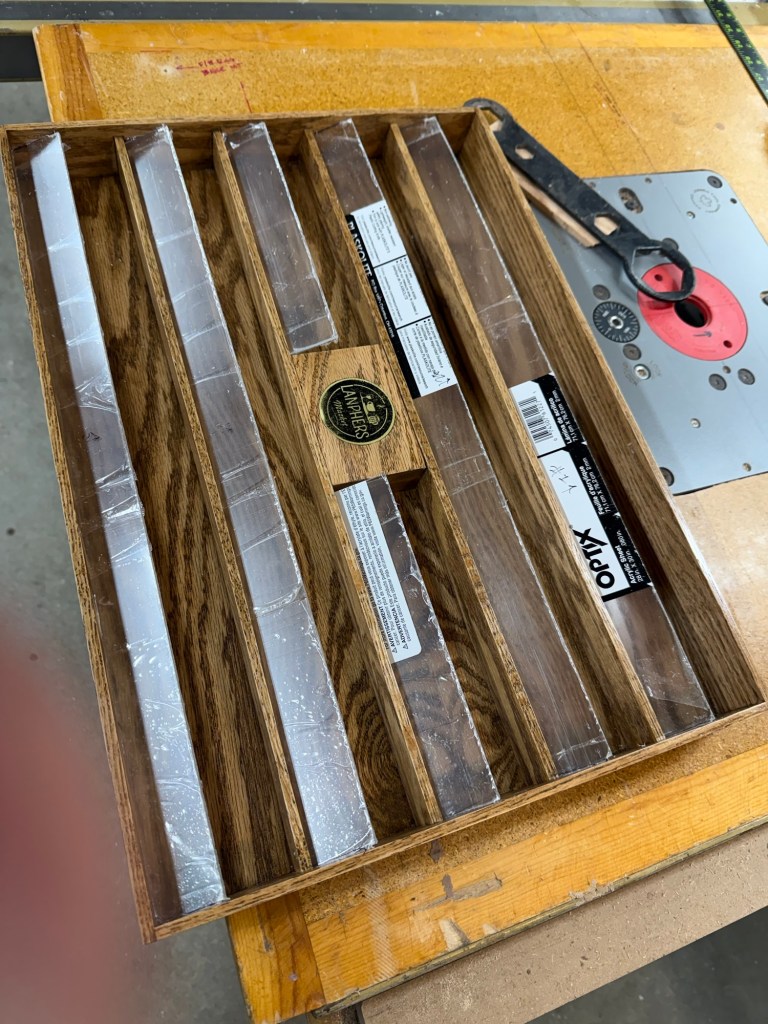
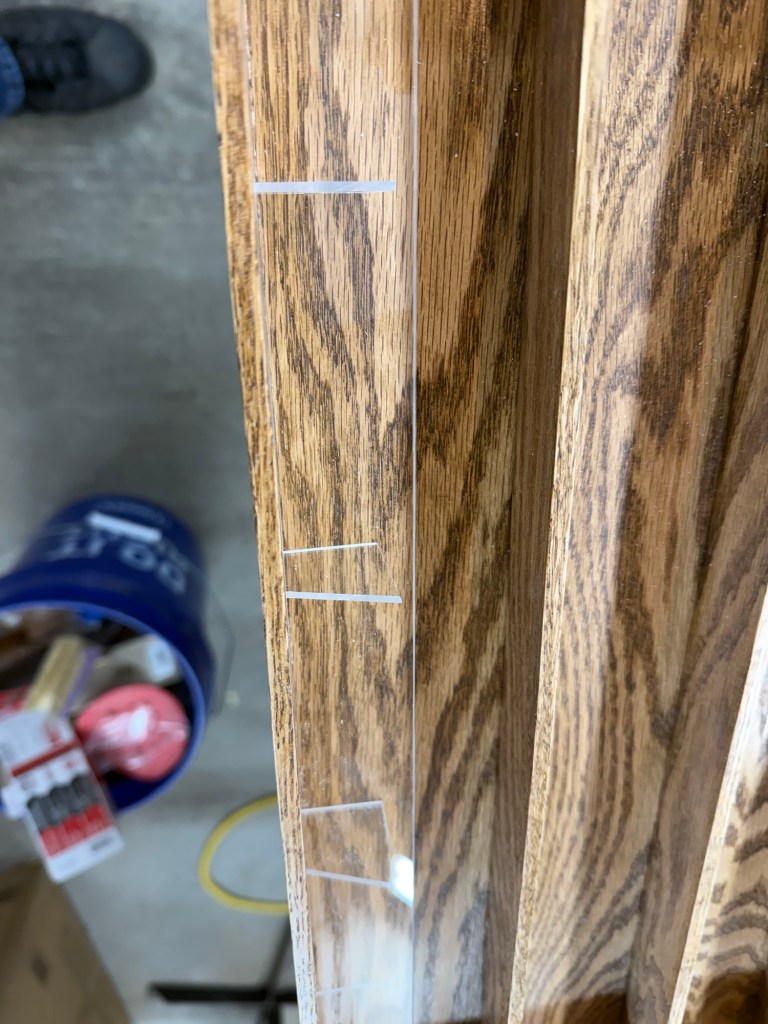
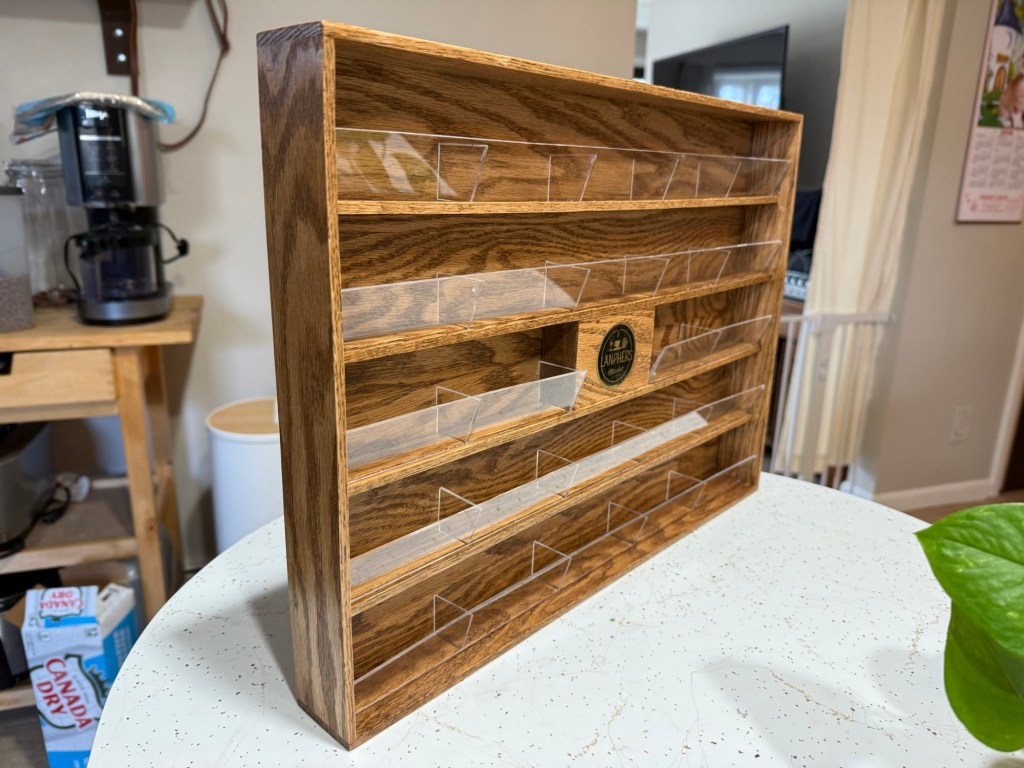
I had some plexiglass left over from a few picture frames I’d made and liked the idea of the entire card being visible when in the rack so I cut it at 1.25″ tall and about a 1/16th” longer to sit in 75 degree groves in the sides. The divider pieces were cut to meet the stays at 75 degrees and affixed with light activated clear adhesive …. which…. I’m now totally in love with ESP for acrylic work. It takes a steady hand as any acrylic glueing does but it happens quick and it happens strong.
So, finally, the “existing holes” issue. When I was a kid, my father bristled every time I put a thumb tack into my bedroom wall. In all fairness, I see what annoyed him about that after many years of prepping walls for paint. Apparently, Jim felt the same way about putting more stuff on the walls at the store.
There was an unused document display on the wall with anchors placed about 9.5″ apart but quite low to hang the rack as a straight screw though. I also wasn’t keen on drilling directly through the back of the rack. So I built a small gravity bar system (one strip glued on the piece 45 degree on the long, low side going into the back of the piece, one screwed to the wall upside down. Gravity holds it in place) thereby hiding the hanging system. The piece being near the door, I was a little concerned with wind so I built a pin that went through the back of the piece into the strip mounted to the wall. It’s hidden when cards are in place and really, barely visible when the rack is empty.
A lot of my favorite work happens when making things for people I know. It’s not exclusive in anyway, I feel like I get to know people when I’m making things for them. An exchange of ideas, compromises. A melding of aesthetic and functional values. It sort of feeds my want to please people, but it also stretches my skillset. Finding new solutions or repurposing ones from other building experiences. I guess that’s a big part of Custom Job. I like doing work for folks who have a vision of what they need and helping them build the thing they want and need.

