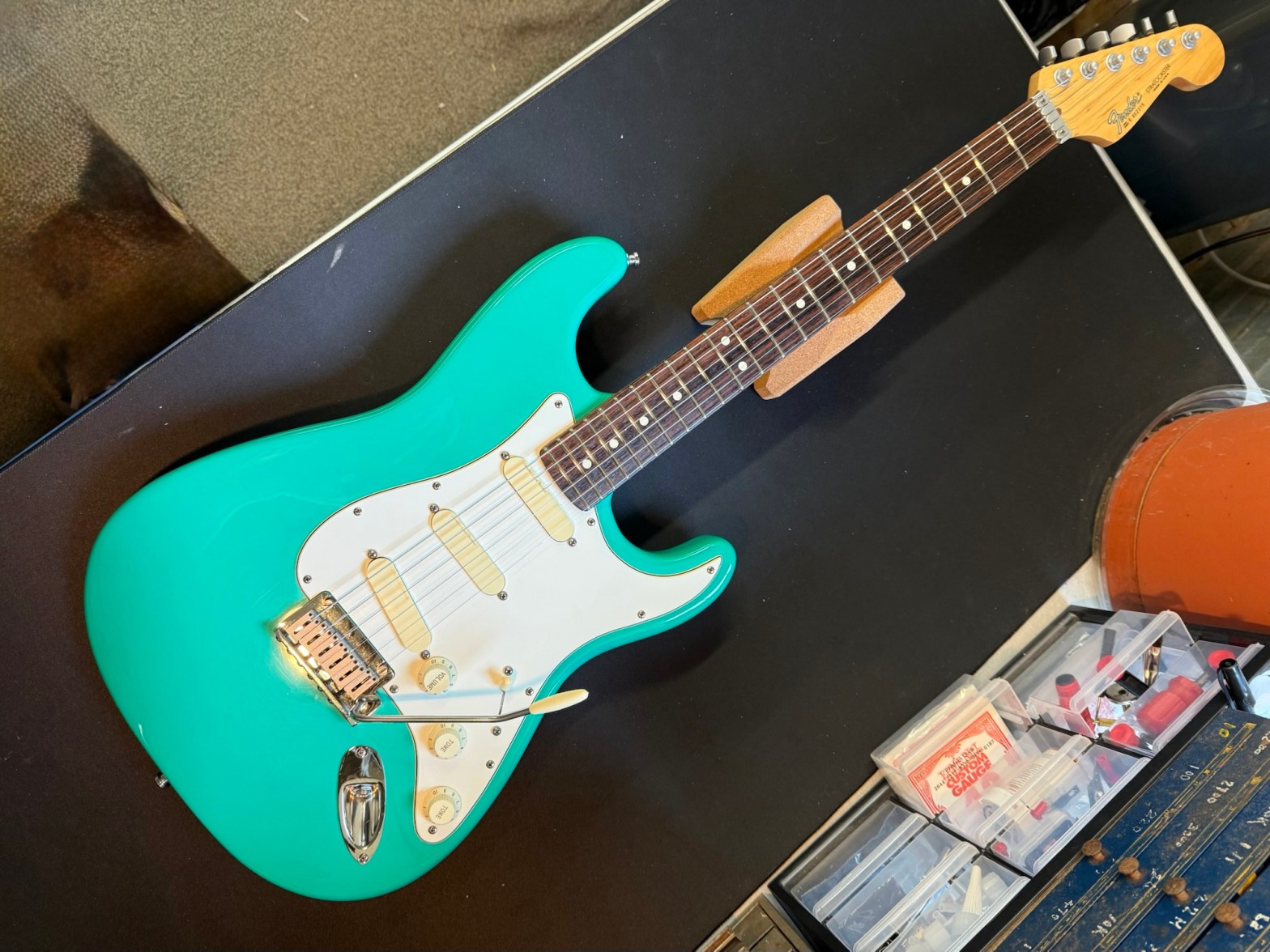
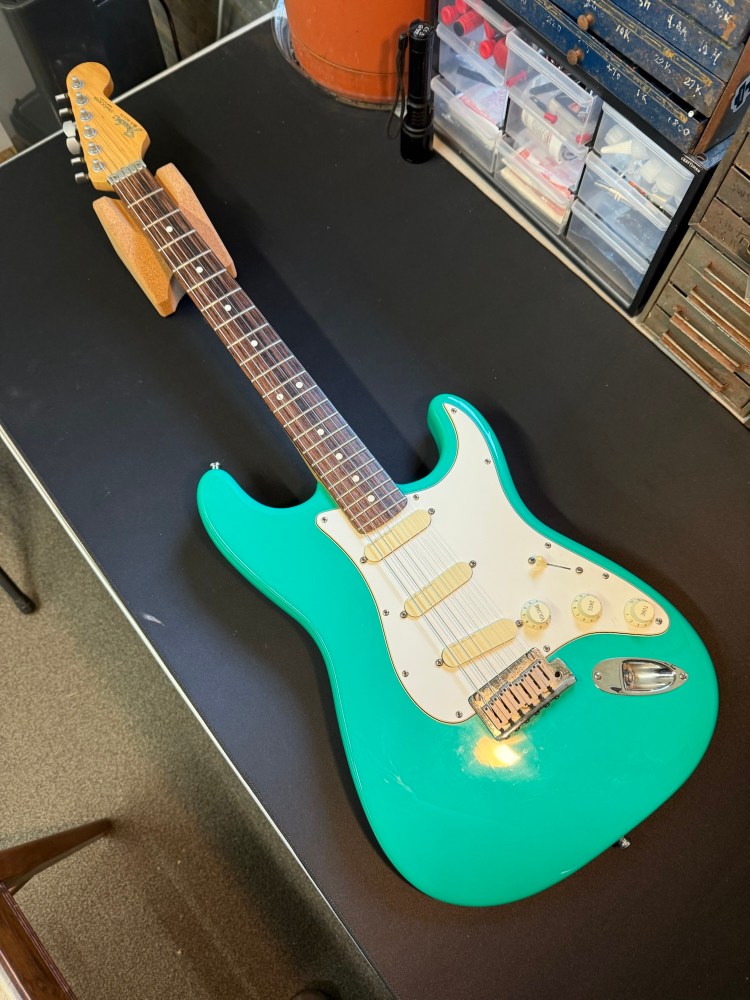
Per usual, I’m always sort of amazed by Fender. Of all guitars, they seem to deal the best with neglect. I’m not talking about like, leaving it in the basement for 30 years next to the furnace, or in a car outside. But just standard, under the bed, relatively stable humidity/temperature. Stuff obviously goes wrong over time like any stringed instrument, but they are pretty resilient machines.
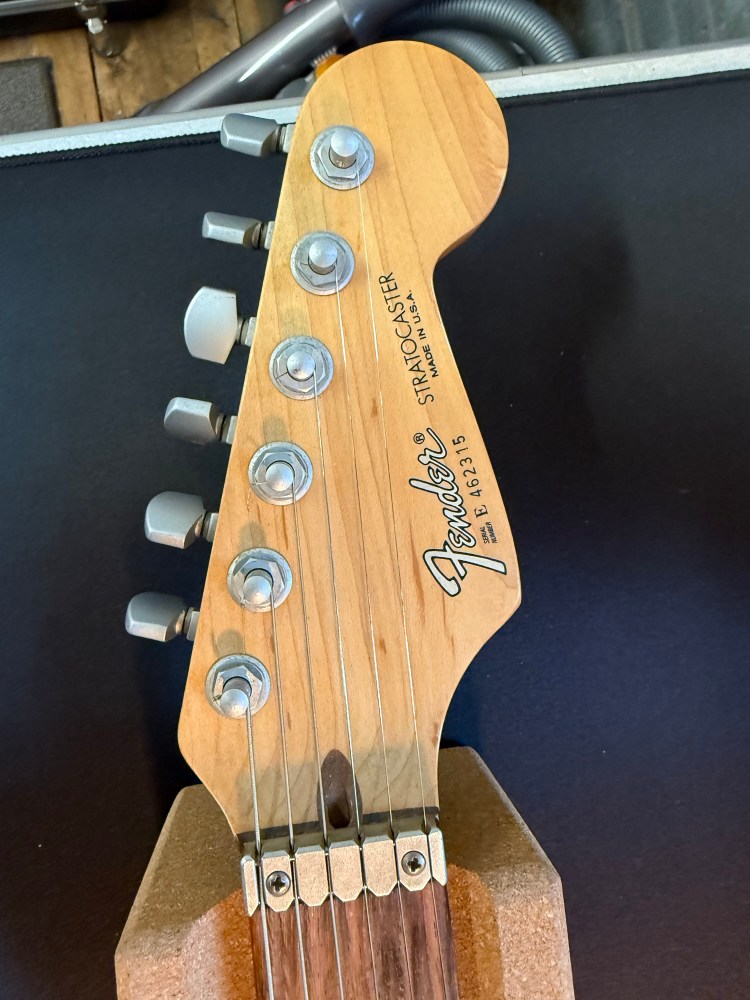
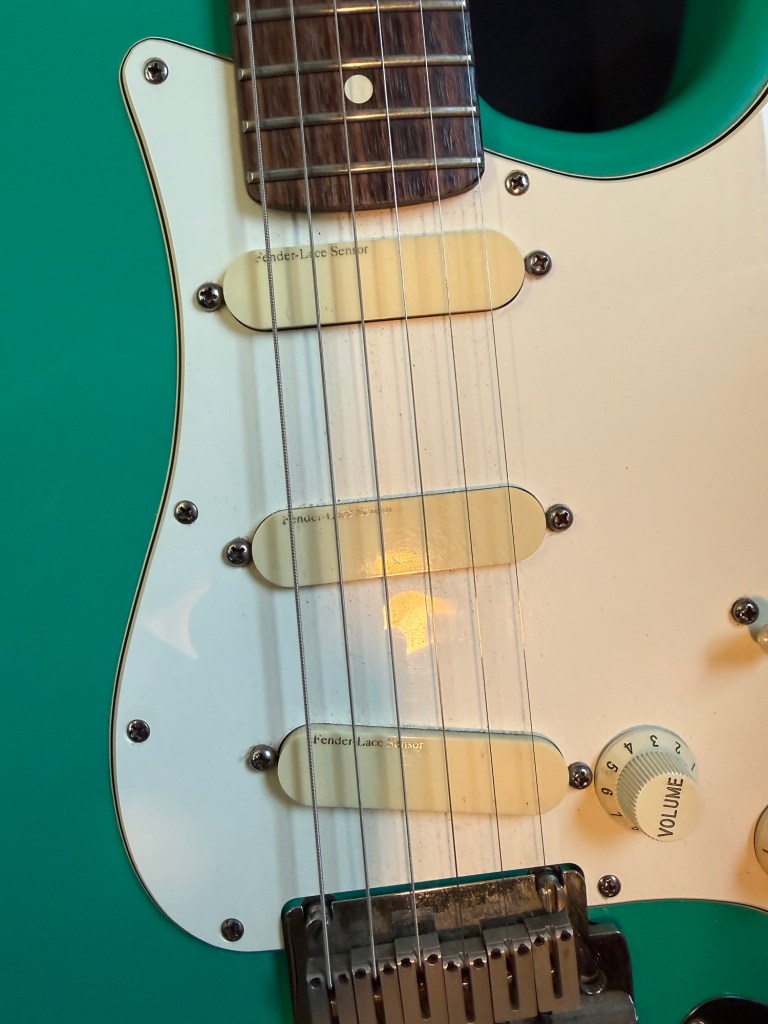
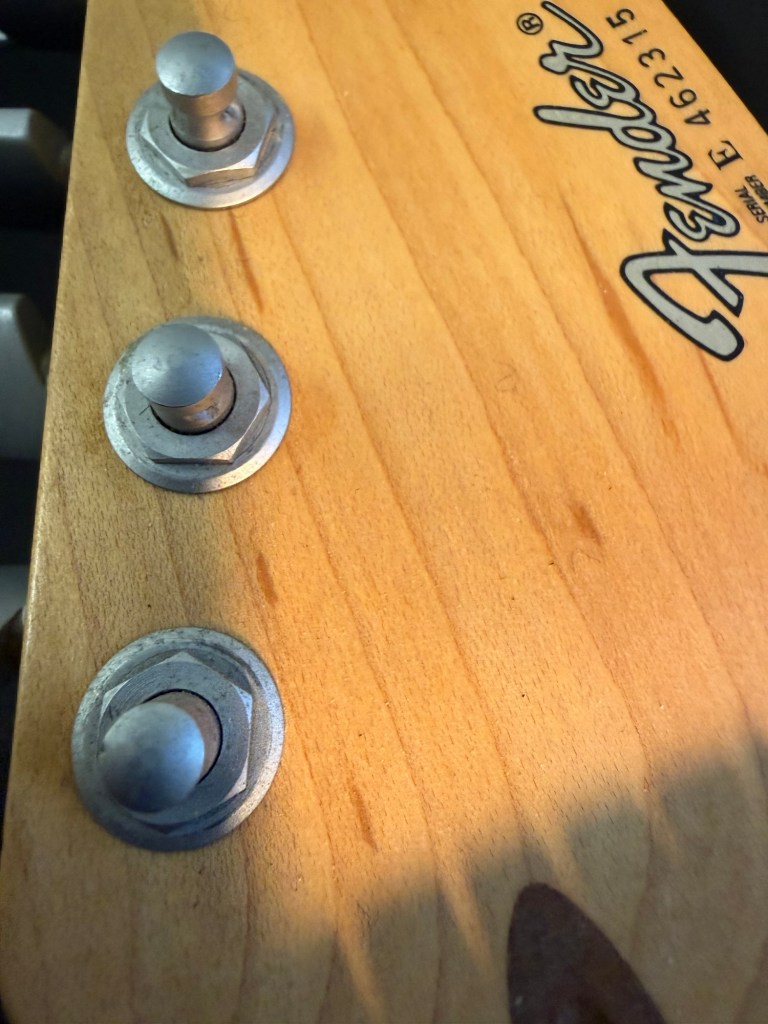
This guitar dates anywhere from 1984 to 1988. I didn’t get deep enough to cross check pot dates or anything like that, but I’m assuming from the nut, bridge, and tuner type, that it’s later in that range. The owner had told me that it was some sort of Jeff Beck model but I’m not sure of that. My cousin had a very similar model in the early 90’s (though black and white) that I think was considered a Clapton model? I dunno. Fender is a lot like Chrysler that way.. Lots of different names for the same basic truck, etc.
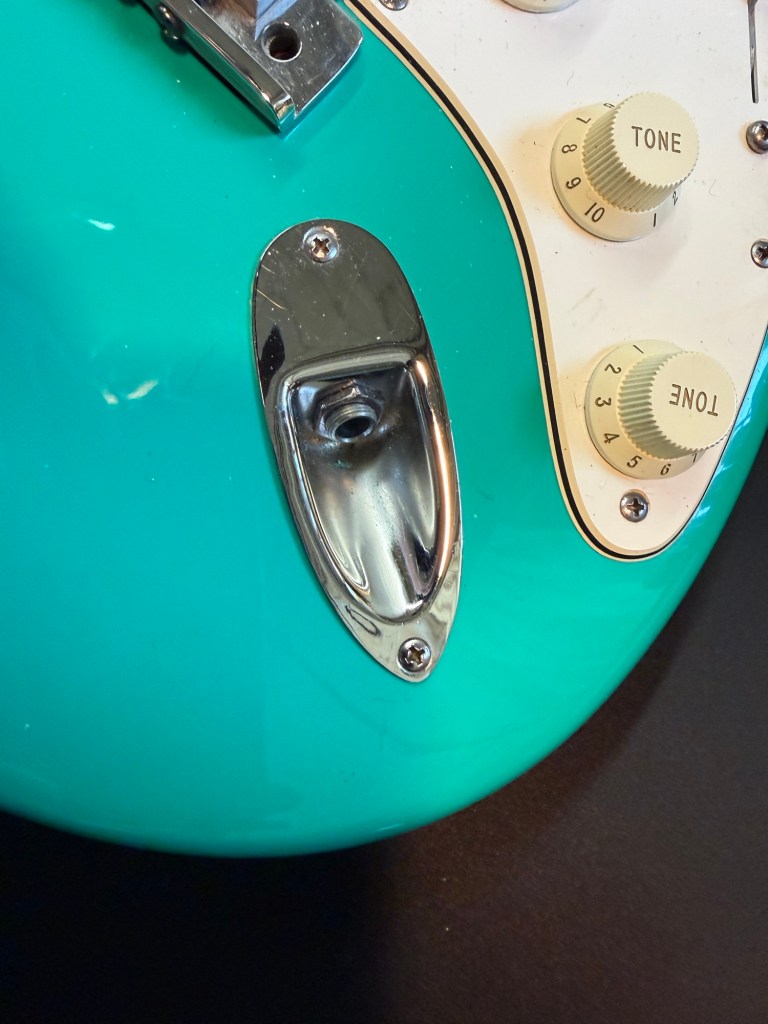
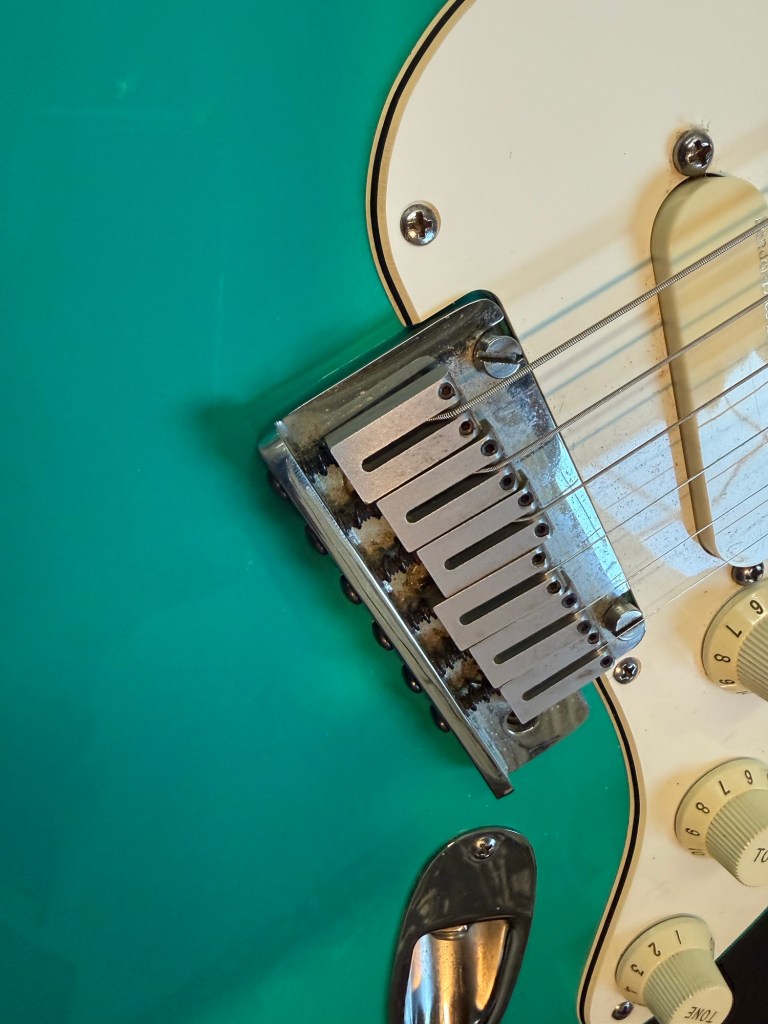
Anyway, according to the owner, it’s seen quite a bit of play though not on his part. It had apparently toured though I wasn’t able to find even a hint of buckle rash. The only thing that would point to any consistent use would be the skin oils built up on the matte finish hardware. Everything else pointed to sitting a long time without a deep cleaning. Dust build up in the bridge, nut, output jack, and around the tuner pegs, haze on the brightwork, and yellowing of the pickup covers and knobs.
The big ole frets showed dents under the D, G, B, and E strings up to the 5th fret and wear up to the 12th. Though not enough for an aggressive leveling, the truss rod was backed off and the neck was allowed to relax back to straight. All frets were checked, marked in problem areas, lightly spot leveled then crowned, dressed and polished.
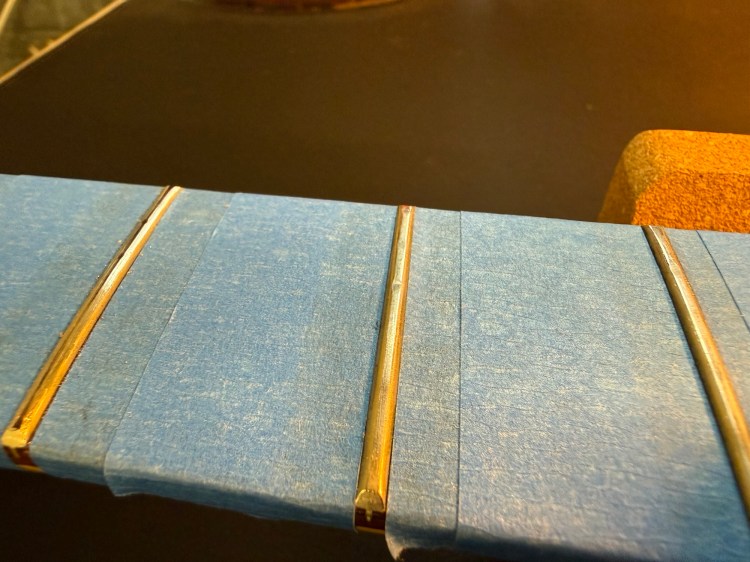
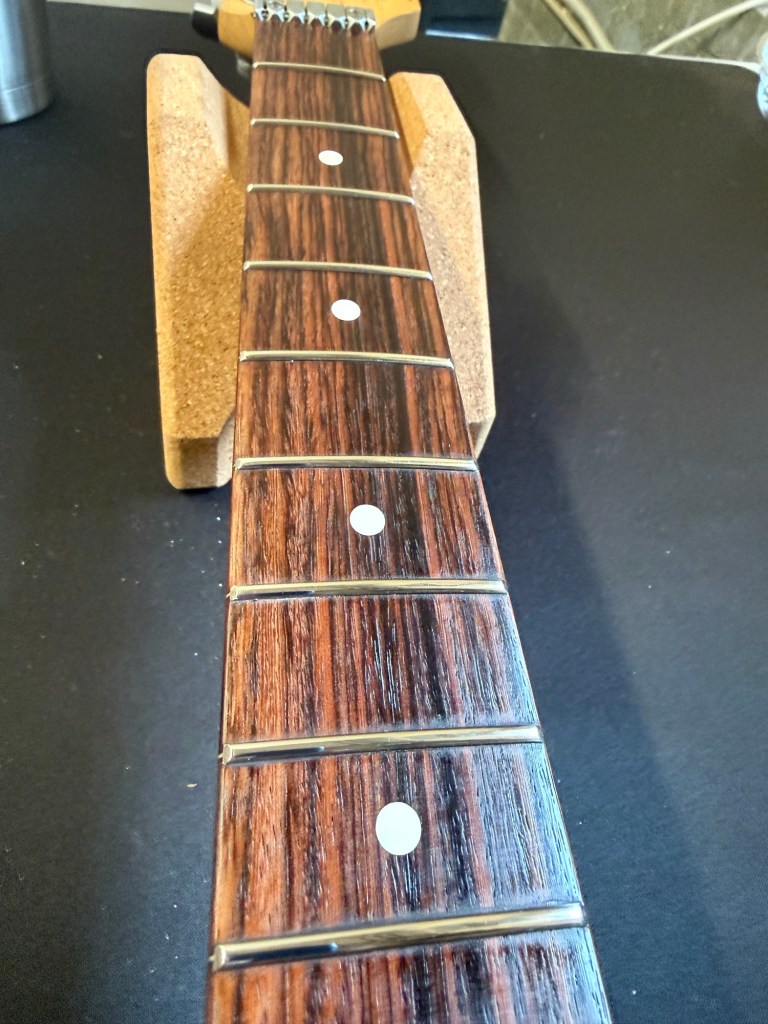
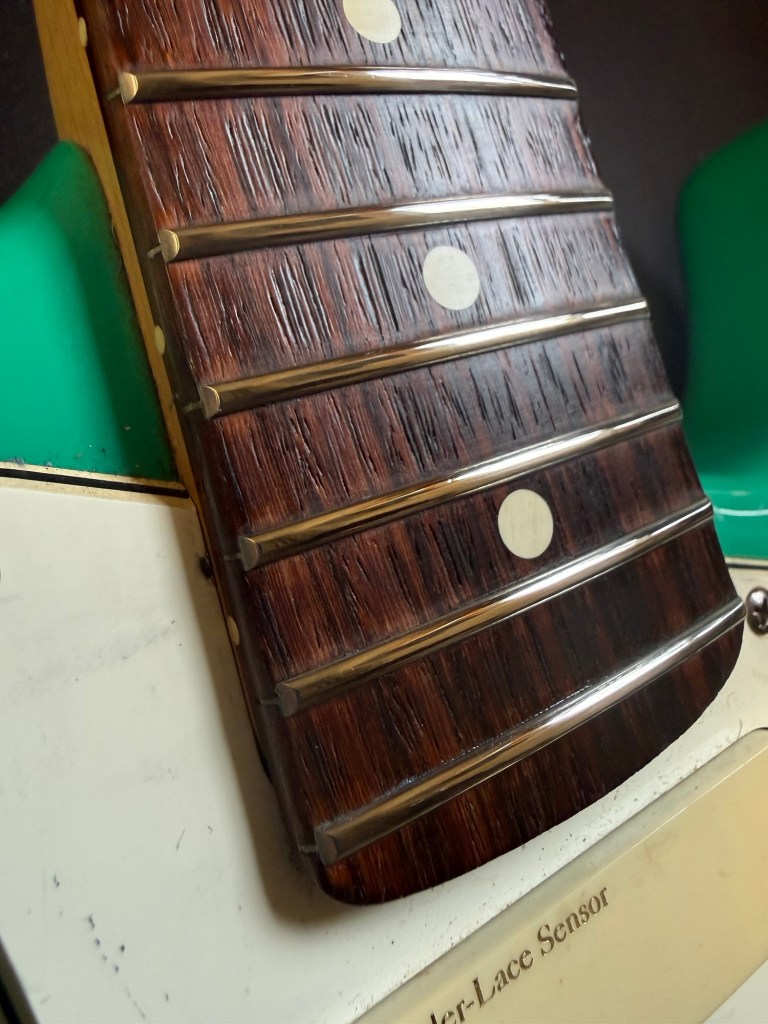
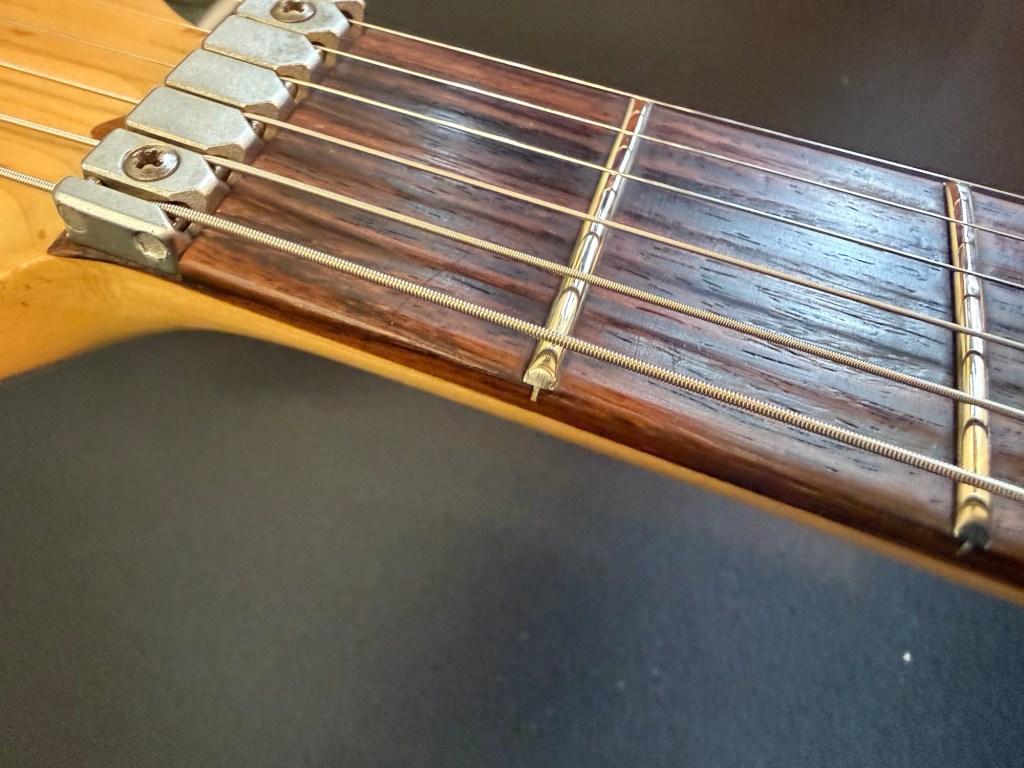
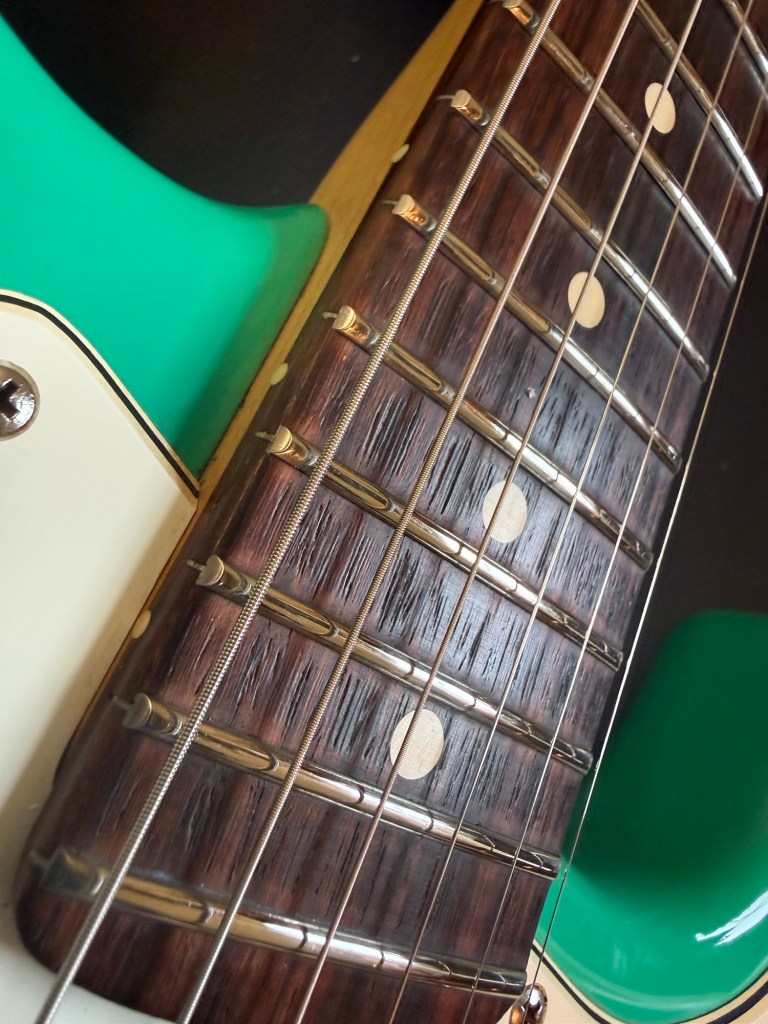
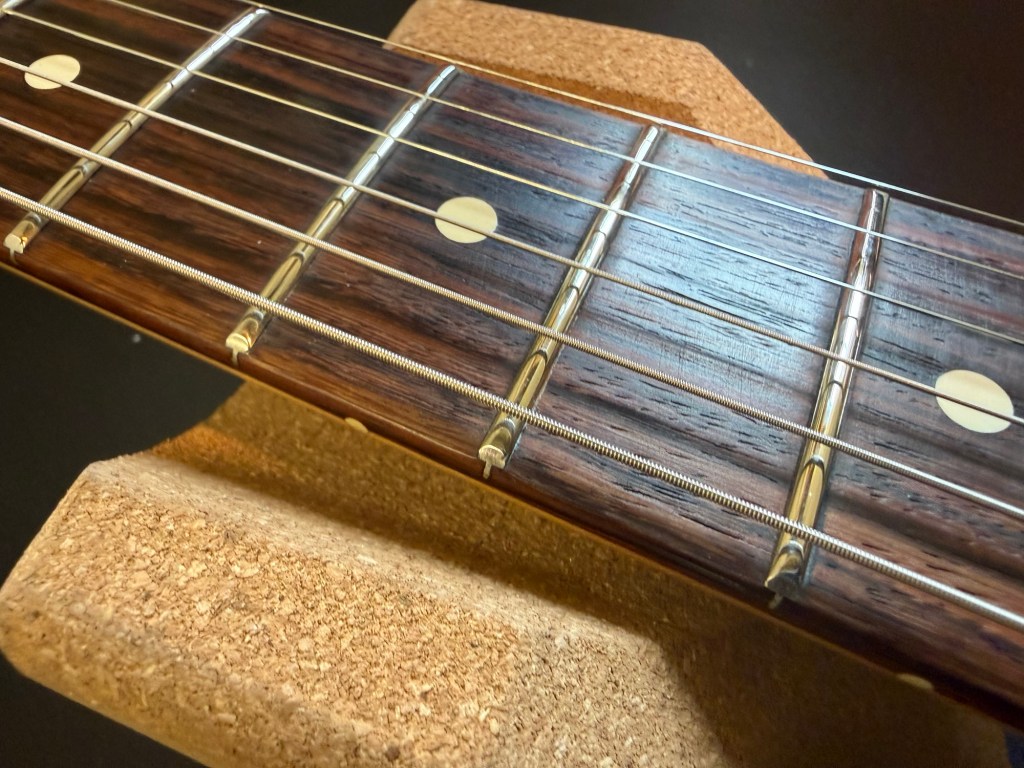
The frets all settled and the fretboard cleaned and conditioned, I turned my attention to the bridge. At first glance, it looked dirty but complete and unmarred. One weird thing was the spring on the B saddle was broken … Not really sure what to attribute that to, but everything was disassembled, cleaned, dry lubricated, and assembled with a new spring on the B saddle adjustment screw.
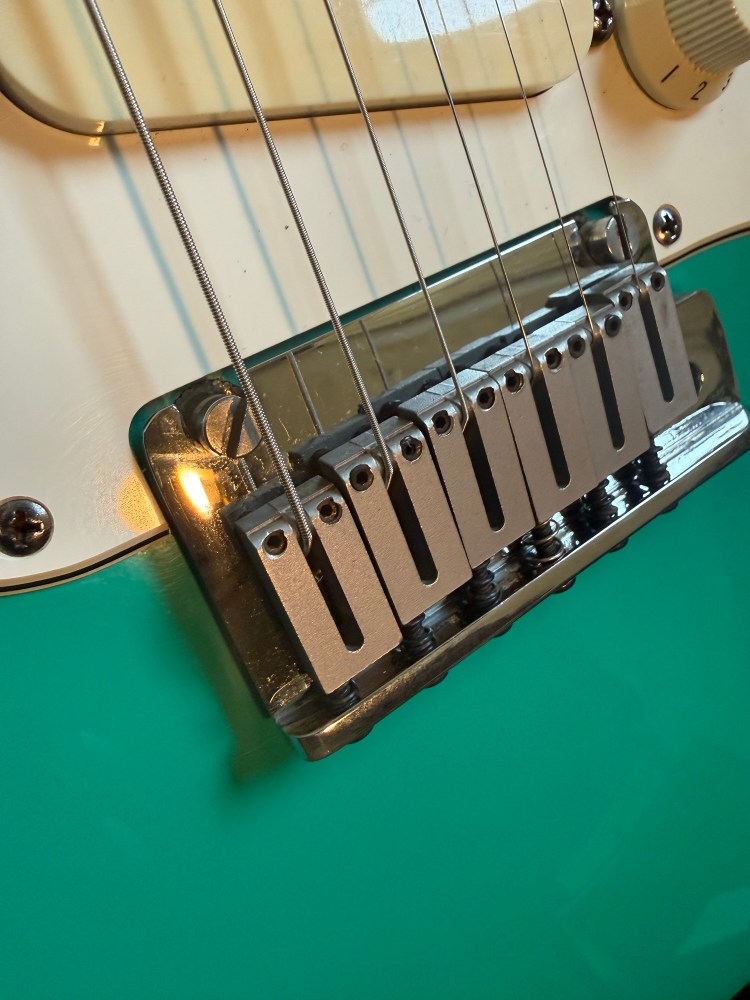
After that, it was strung up with a new set of 42-11s and I dove into the set up. The action had been quite high on this instrument which was weird considering the relief that it showed up with which was super close to spec. I assumed it’d never been set up since it left the music store. Soup to nuts, I brought it down to a comfy .010″ at the 8th fret (capo on the 1st). I let the neck settle into that for about 24 hours before re checking for relief. Meanwhile I went at the output jack housing and other small/electrical parts cleaning. Coming back to the table, I checked relief again and it remained stable so, off to intonation land I went.
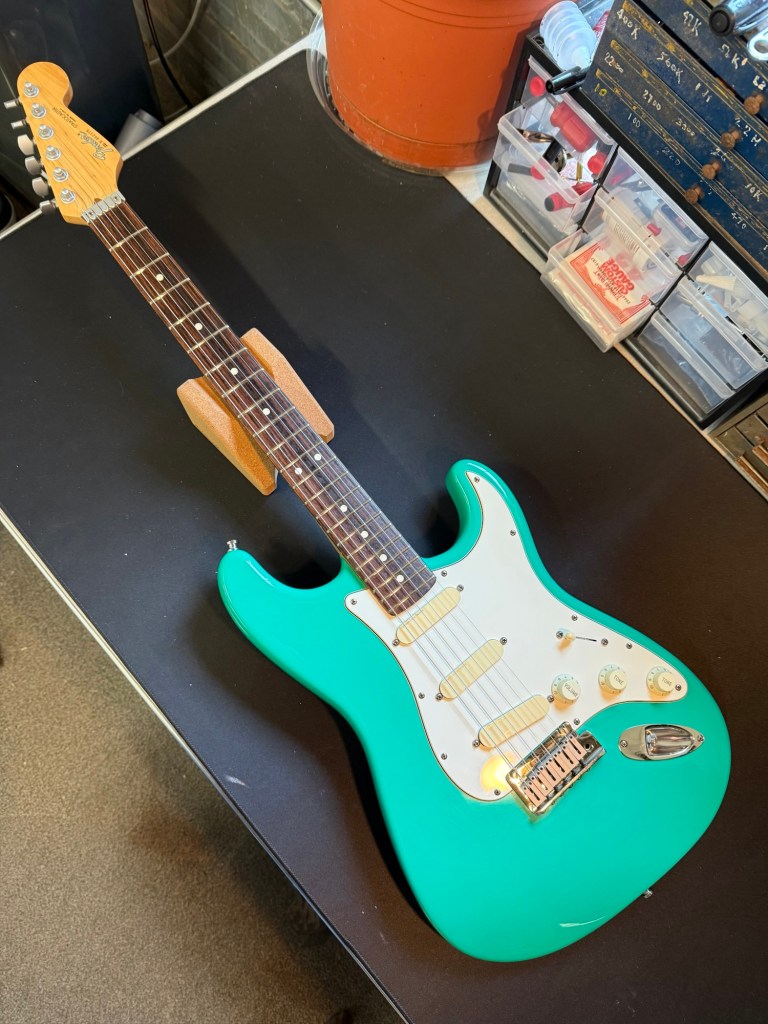
In the end, this guitar came back to the client well beyond what came into the shop. For that matter, I’m never satisfied when I play something brand new from any of the big names these days. It just always feels like little investment was put into set up. All that said, if it’s built right, the specific touches can be applied through a good set up from a luthier who understands not only the mechanics and processes, but who pays attention to the owner/players playing style and needs.
Next up:
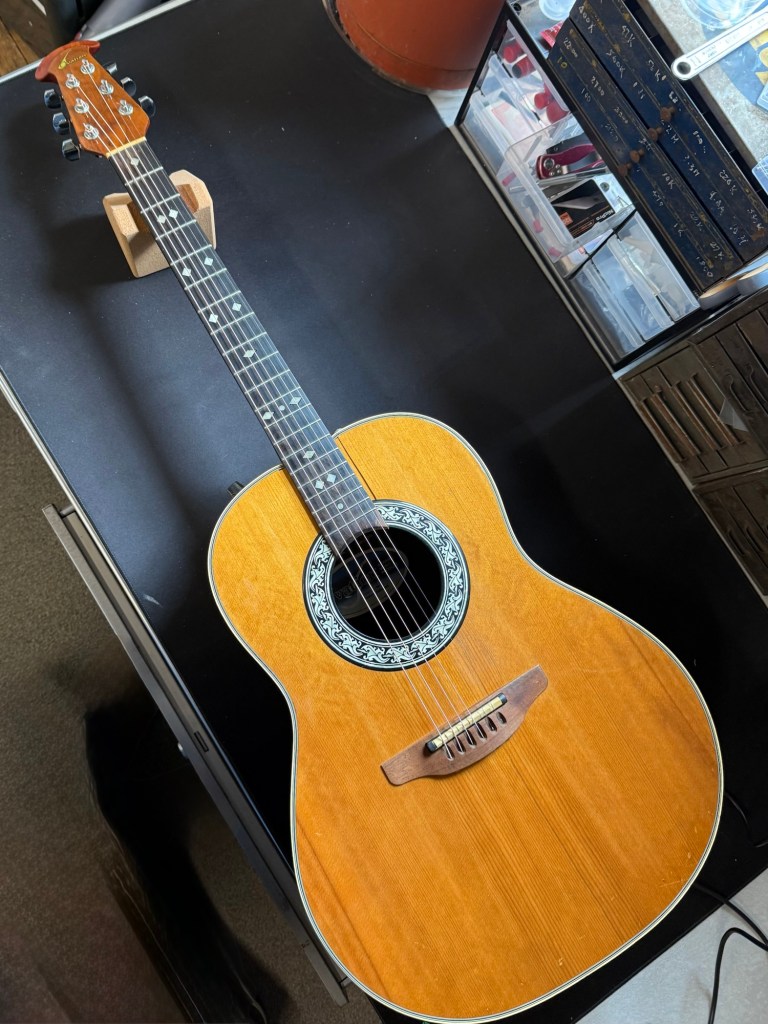
WHY?
A repair story. Stay tuned.

