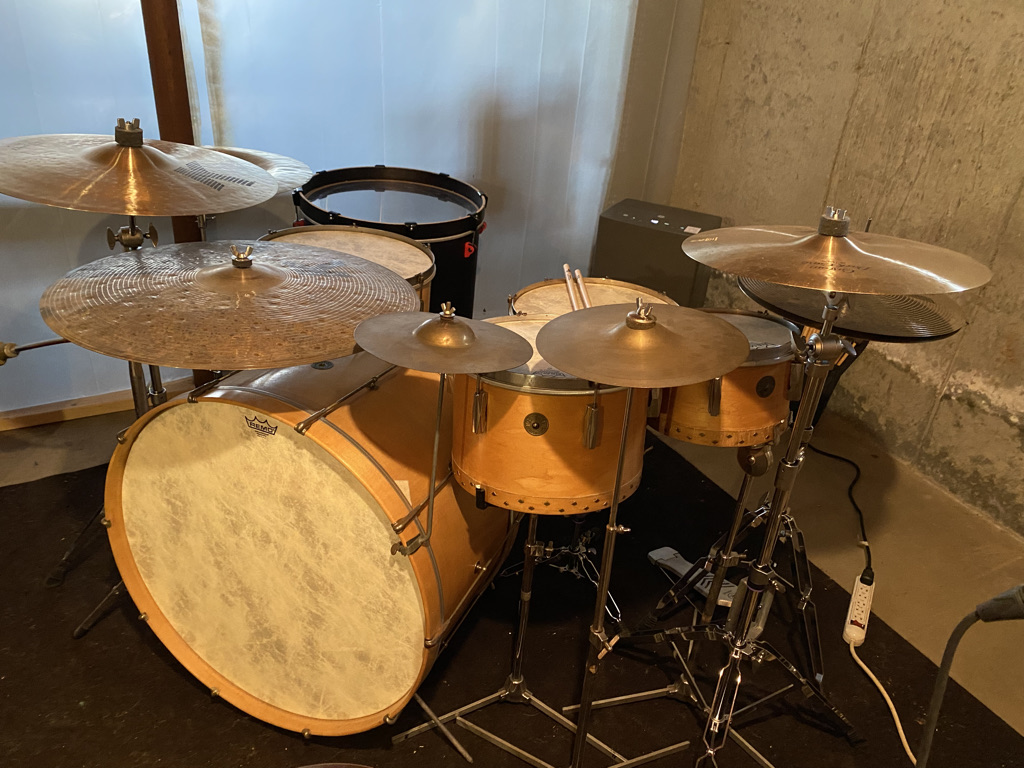
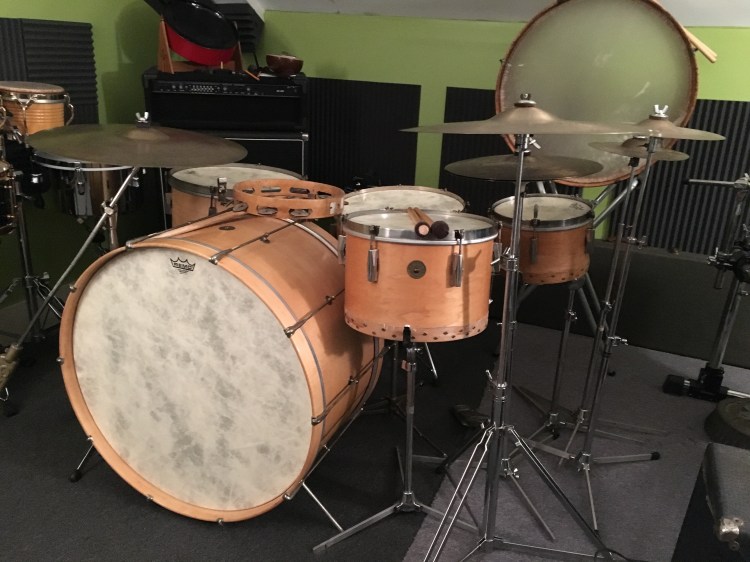
I found the snare and two of the toms at a picker type place. I’ve since restored those, added a bunch of new stuff, made a drum from scratch and modified a few drums to fit the package.
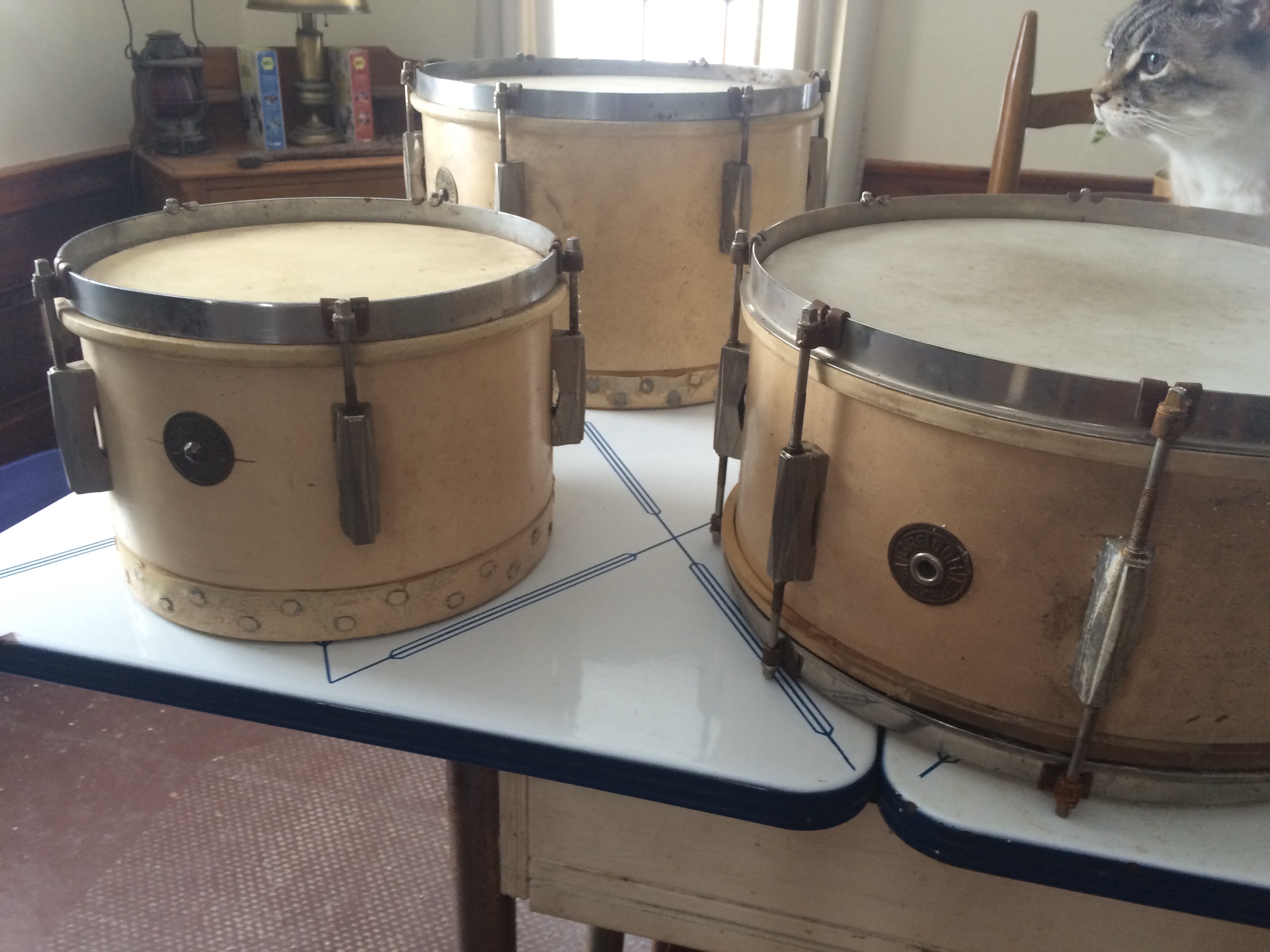
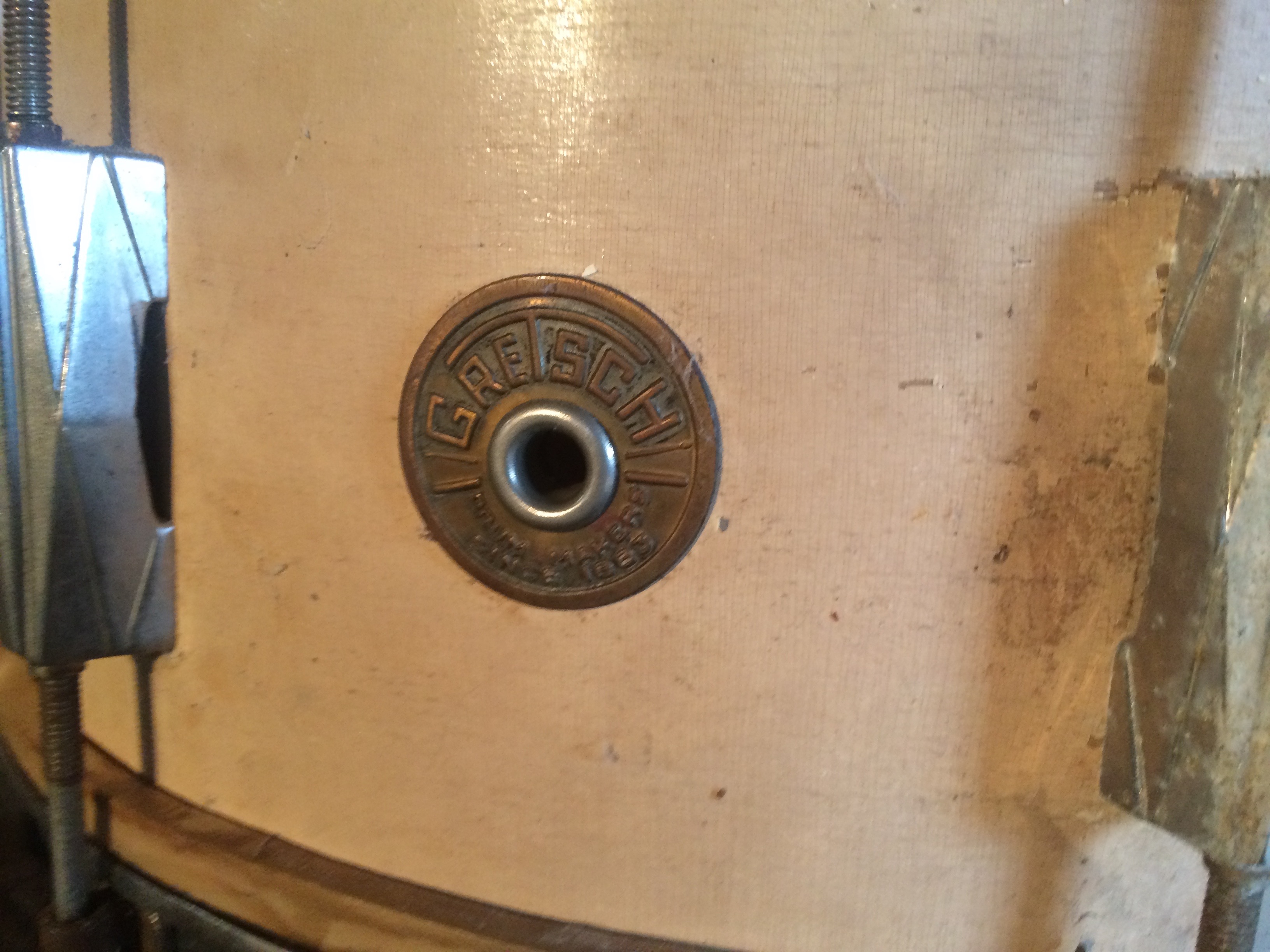
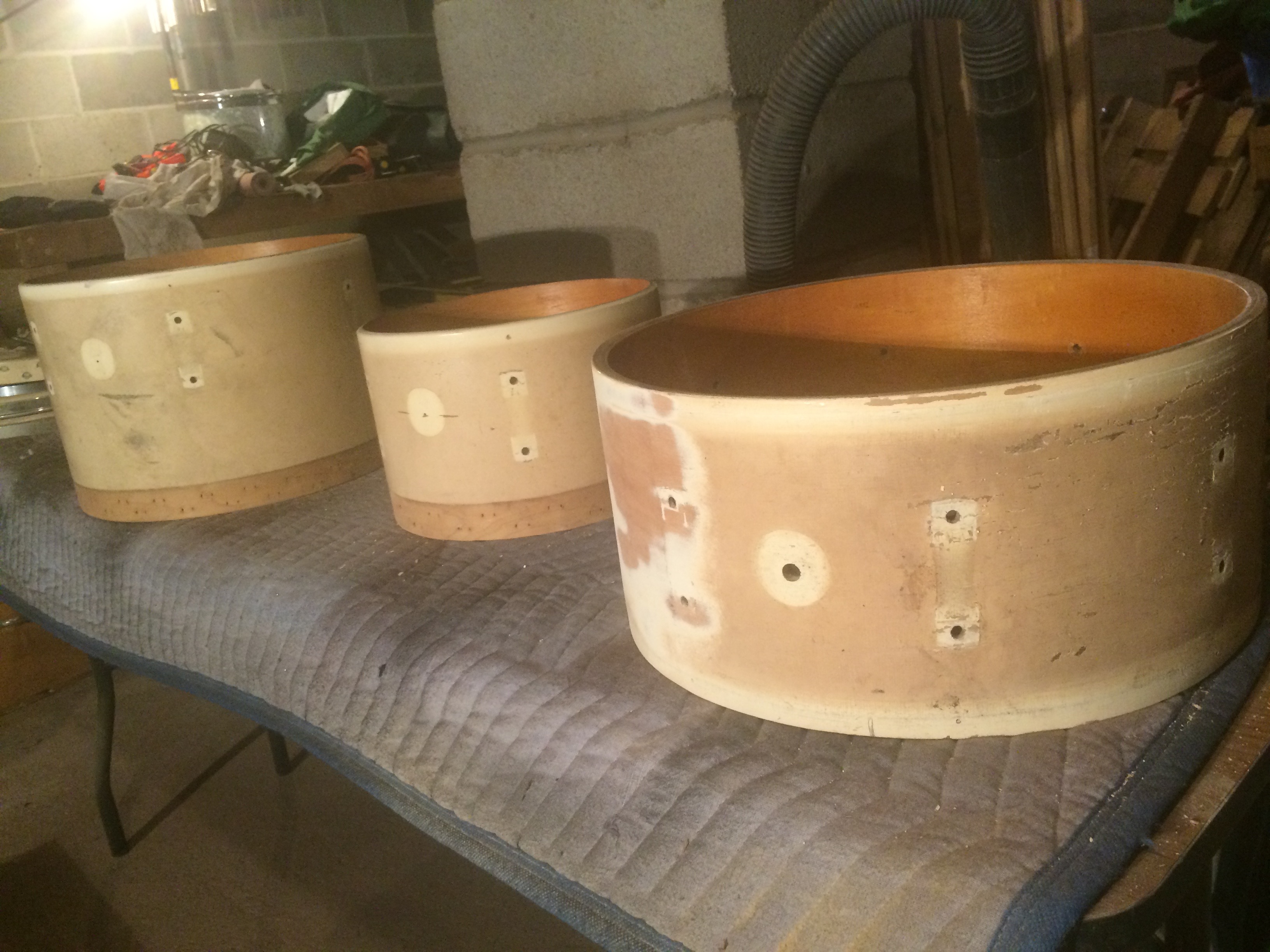
I’ve been a drummer most of my life. My first kit was the obligatory crappy CB700 which, in combination with selling a pair of skis, got me my second kit which was a not much nicer Ludwig “Rocker II”. I threw a lot of work into that, trying to make it sound decent. I collapsed the shell on the snare drum eventually and thats about where I got into restoring drums. Somewhere along the line, I played a very nice Leedy kit from roughly 1952 and it changed not only my approach to playing but my understanding of what a drum should sound like. Fast forward a million years, thumbing through a local junk collectors shop, these three Gretsch drums turned up, along with a trunk of miscellanea, stands, pedal, a couple of trash cymbals from the era. I snagged the whole deal up for about 100 bucks and went on my way. I’d never dealt with tacked calfskin resonant heads but I knew the snare alone was easily worth the price I left with him.
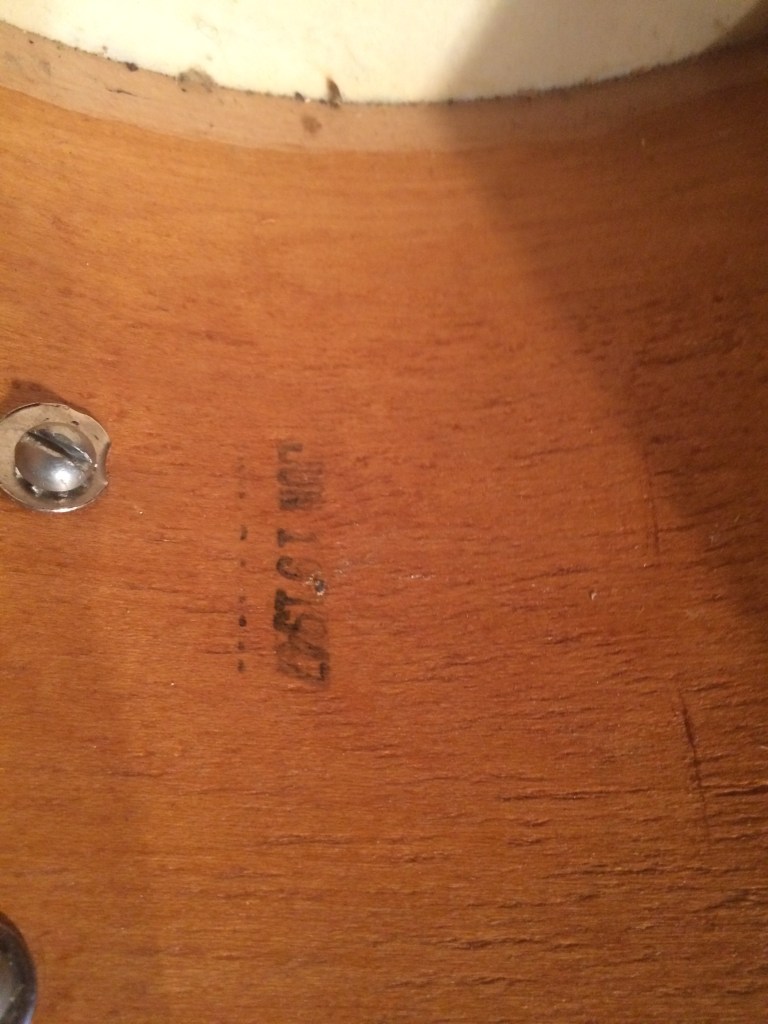
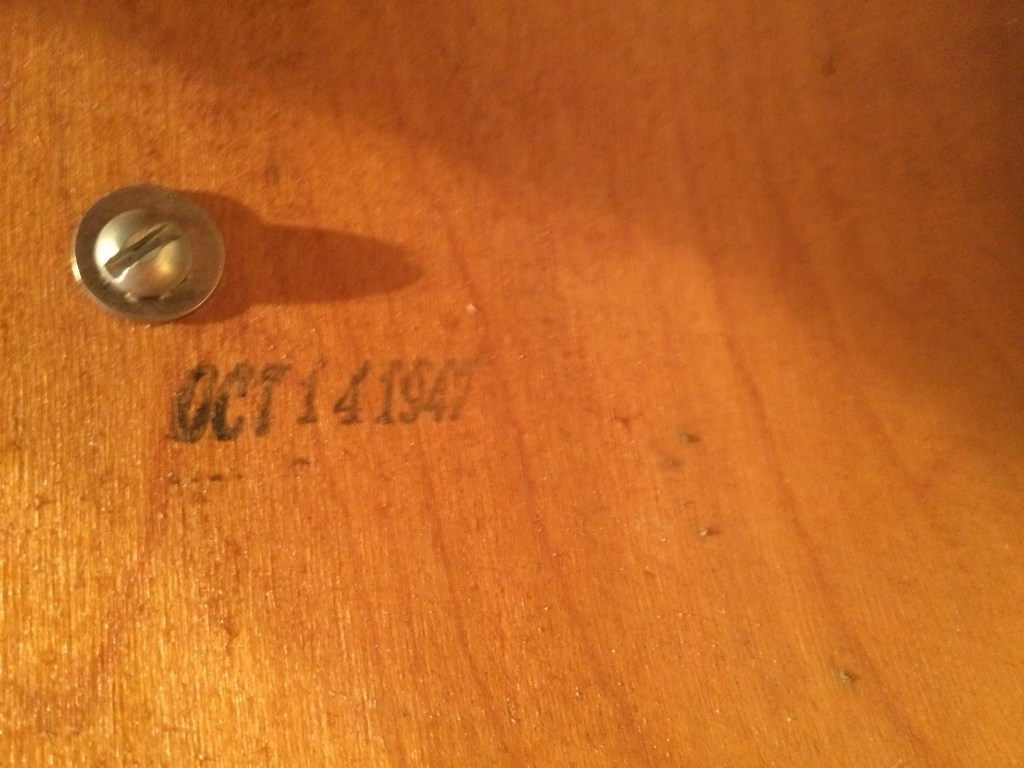
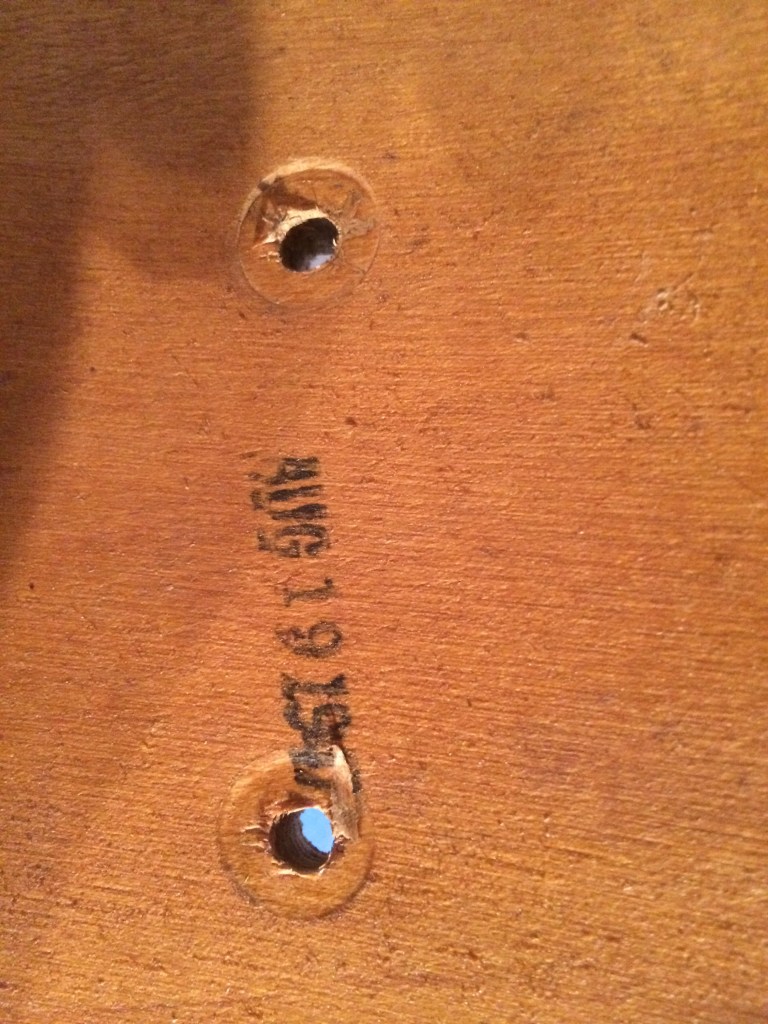
The dates read as above so the actual release date I assume to be 48. The shells weren’t in bad shape at all aside from a slight separation in the snare’s contact edge. They’d seen some moisture but not solid moisture.
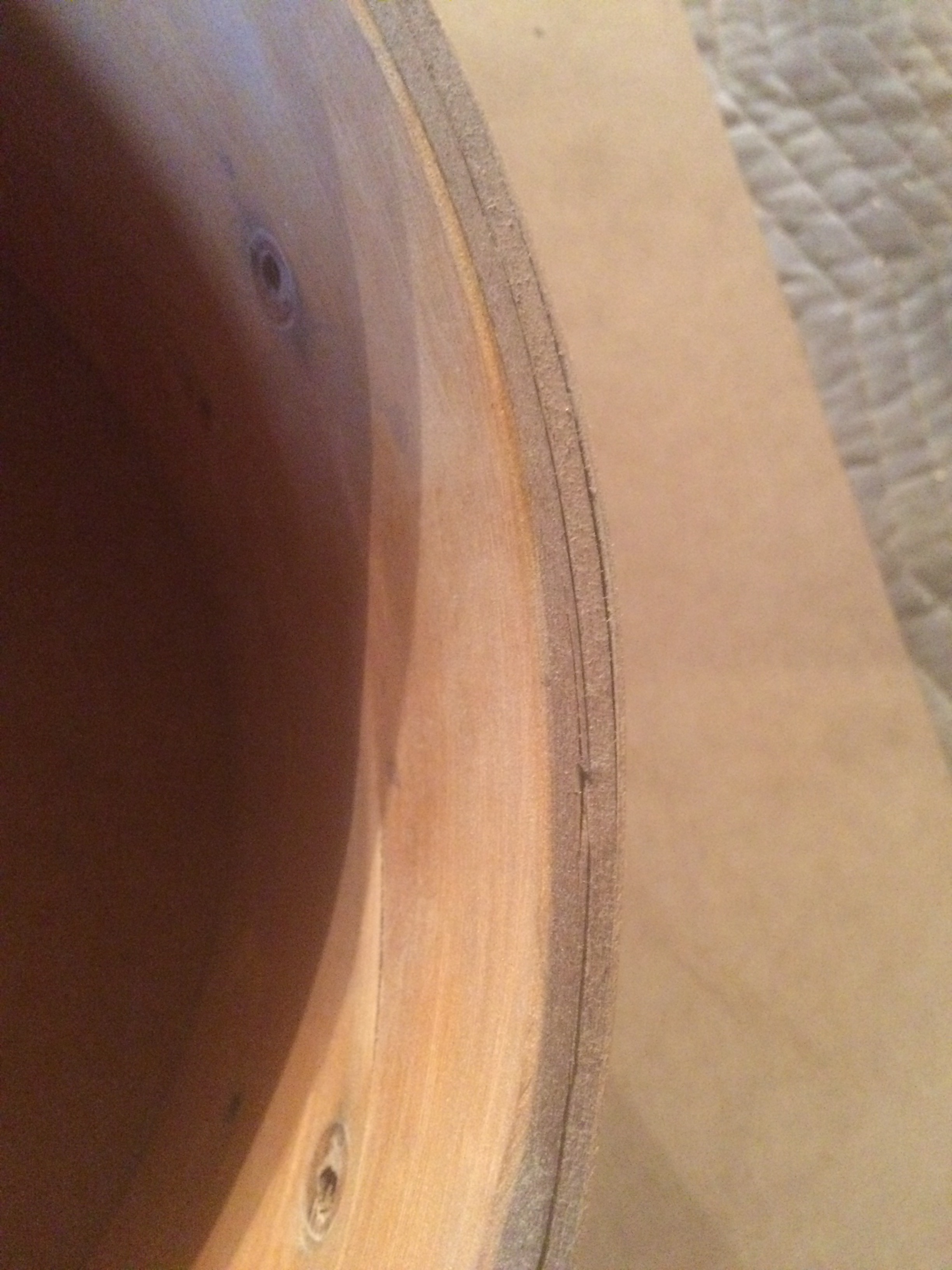
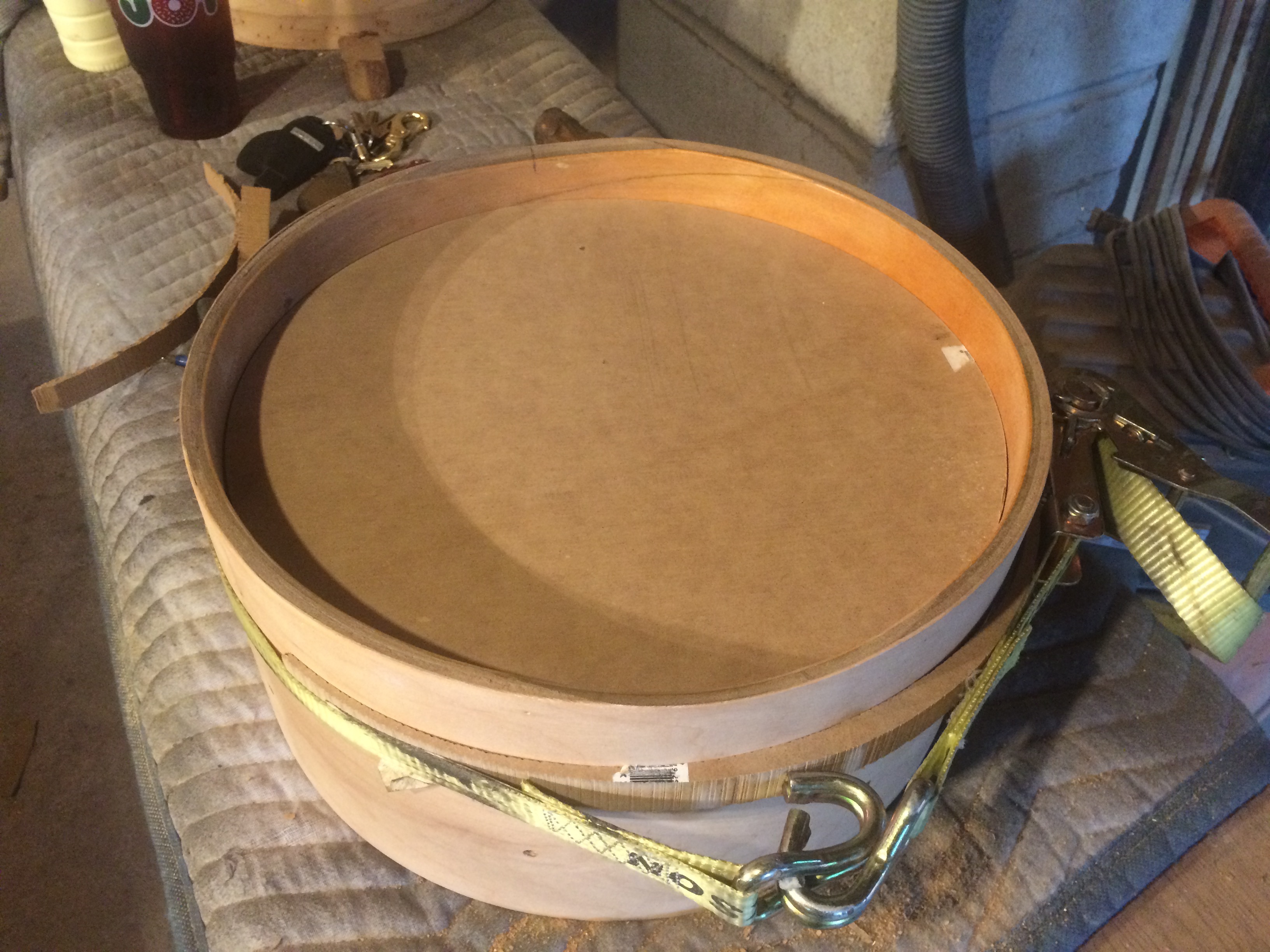
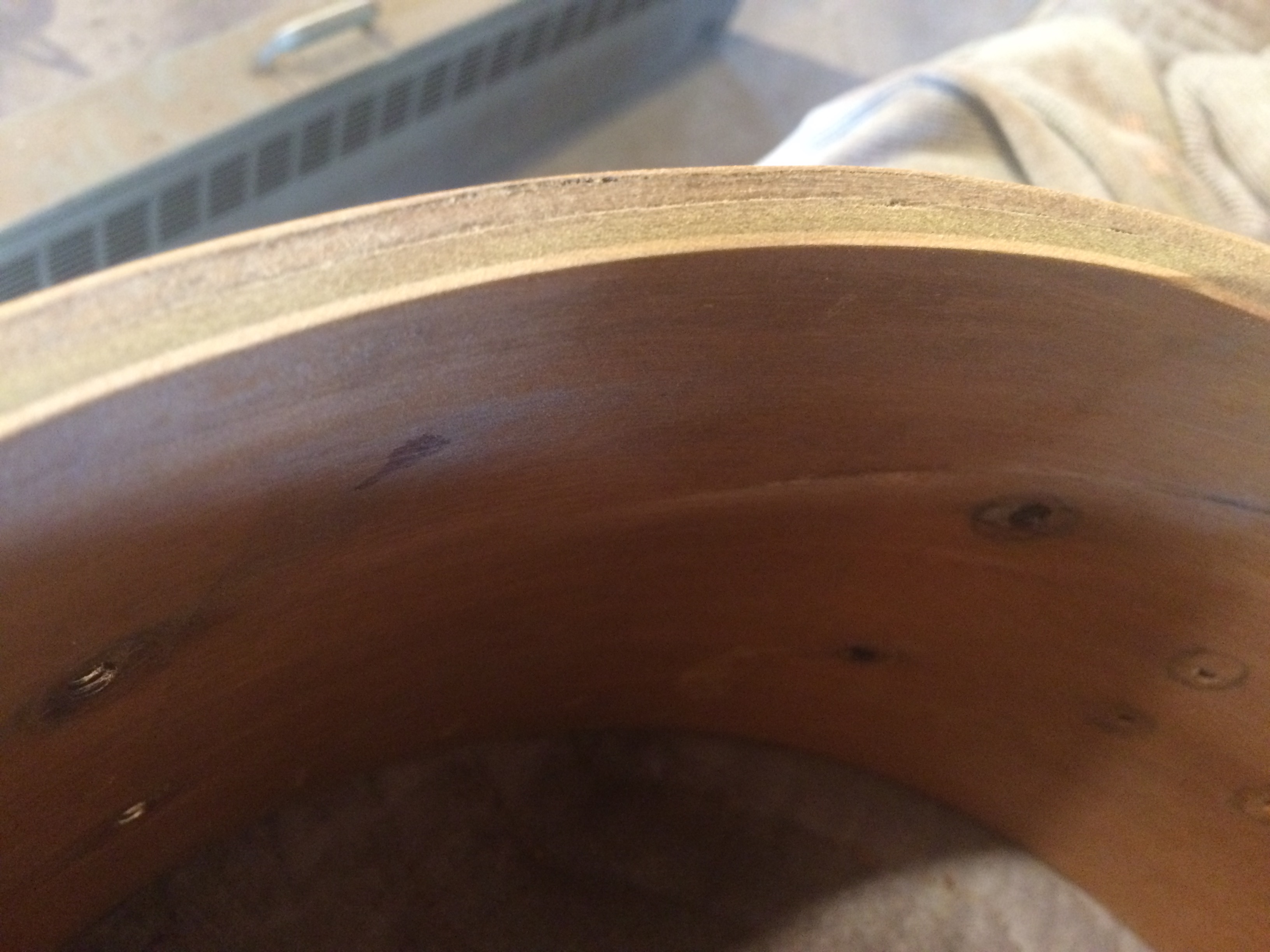
For the snare, I built an inside bolster to clamp against and filled the crack with wood glue. After holding with a ratchet strap for 32 hours or so, it held up well. I moved the bolster up even to the top to clean up the contact edge with a custom filed router bit that I would later use to cut contact edges into the scratch made 18″ floor tom.
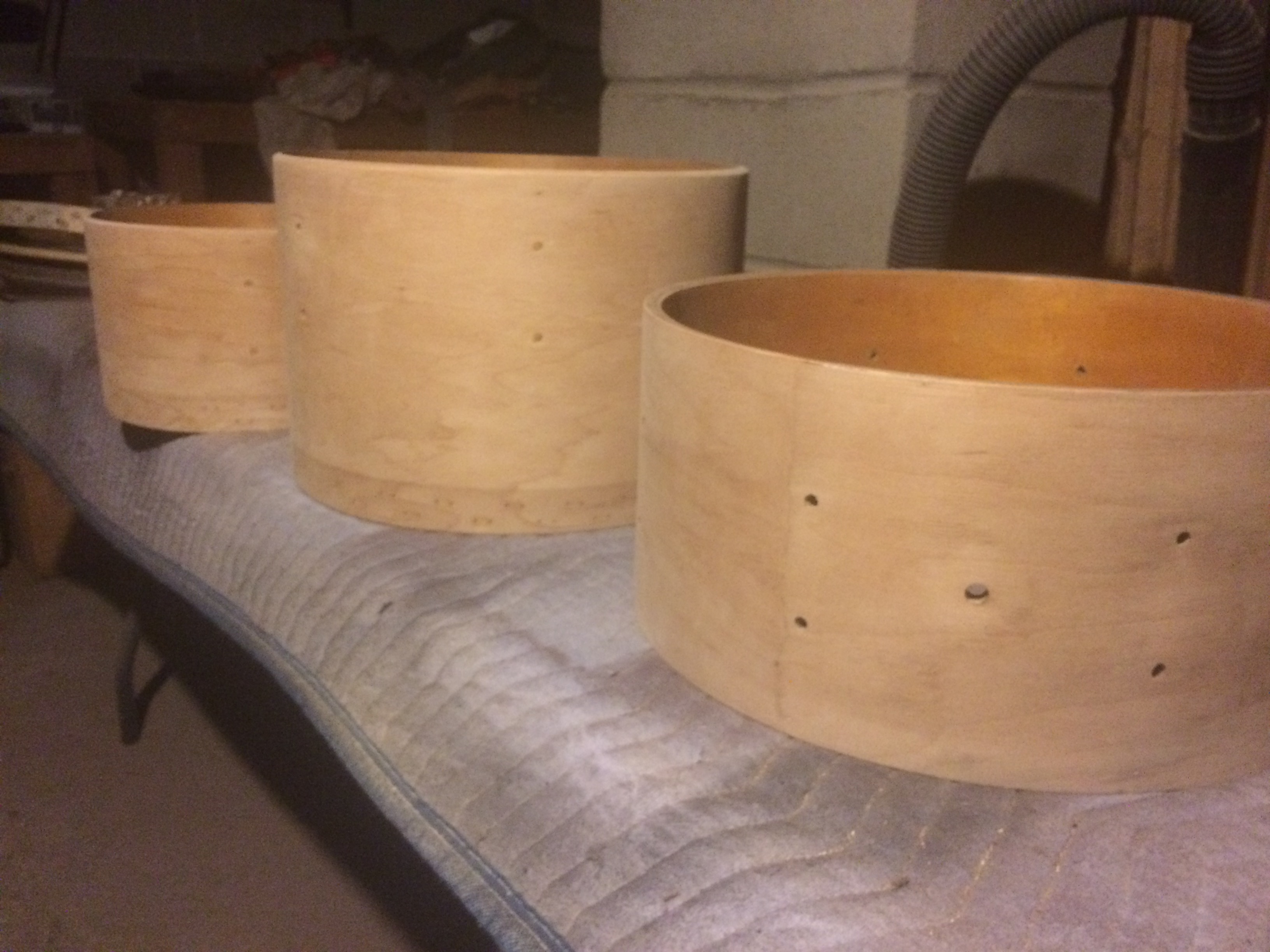
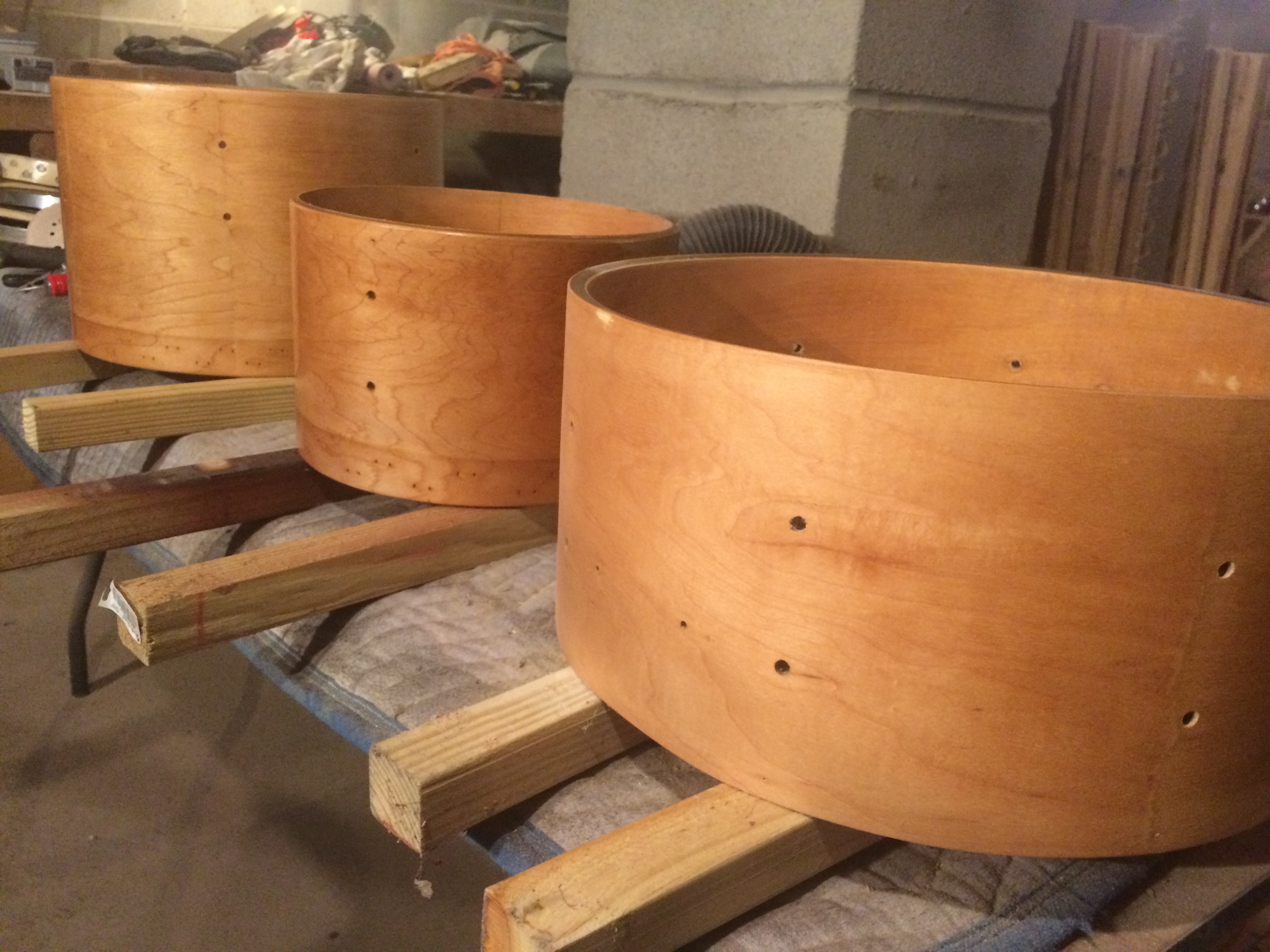
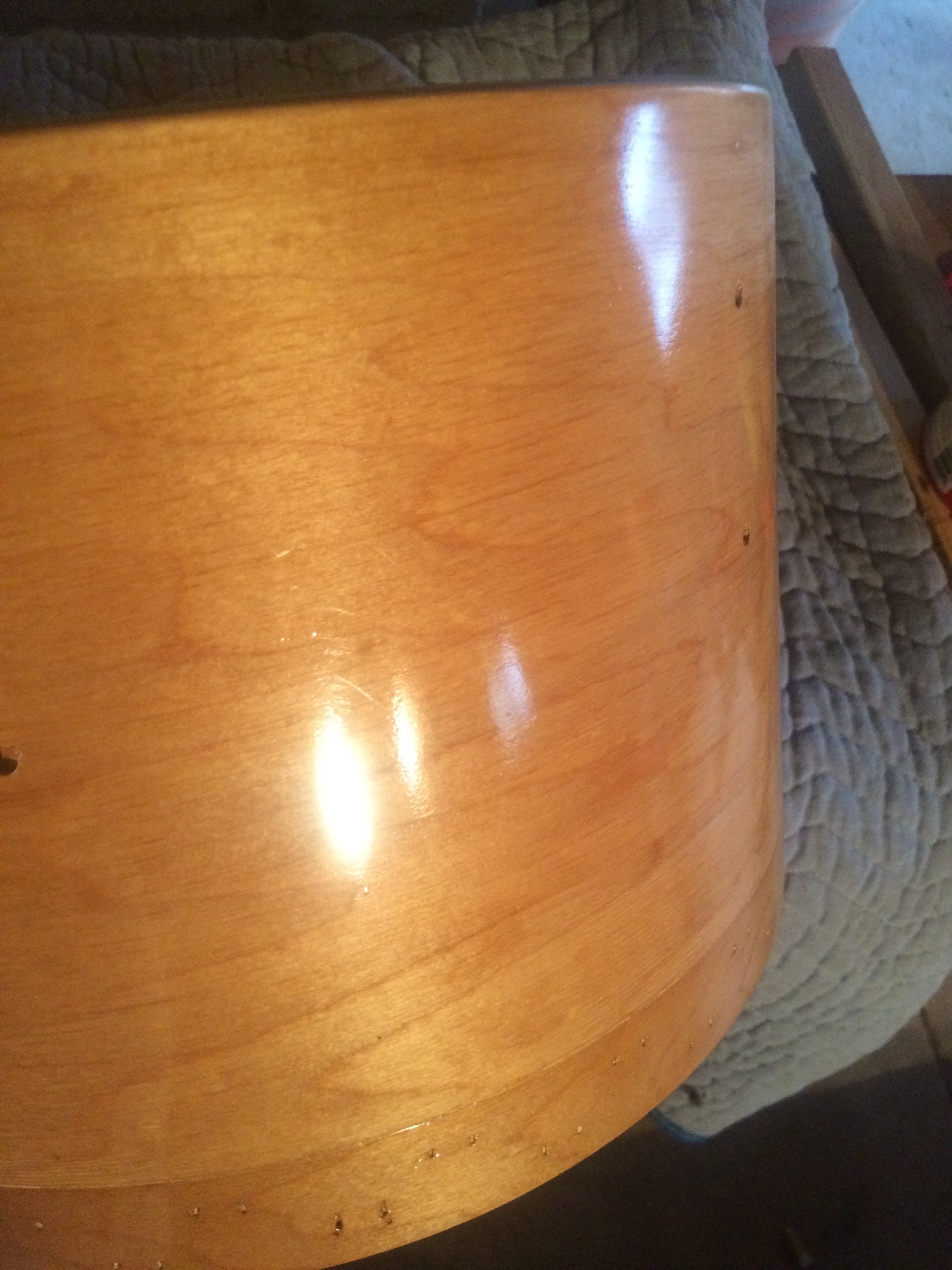
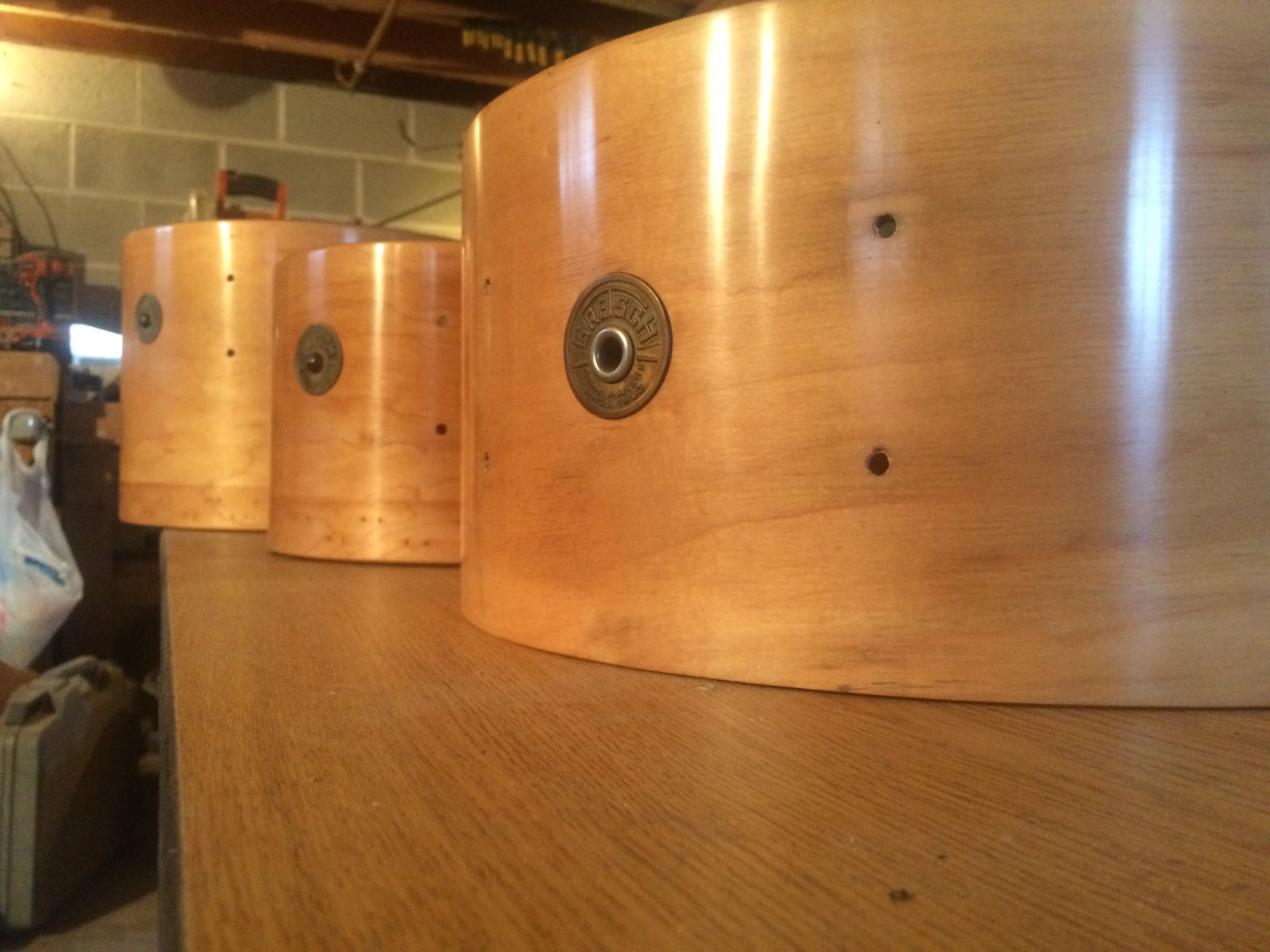
Aside from some discoloration that would be hidden by the heads, badges and lugs, there wasn’t much glaringly amiss in the shells. I doweled in a few places where provisions for mounting hardware had been and shot them with 3 coats of clear Nitrocellulose Laquer which, not being correct for the kit itself, really made the grain deepen and breathe.
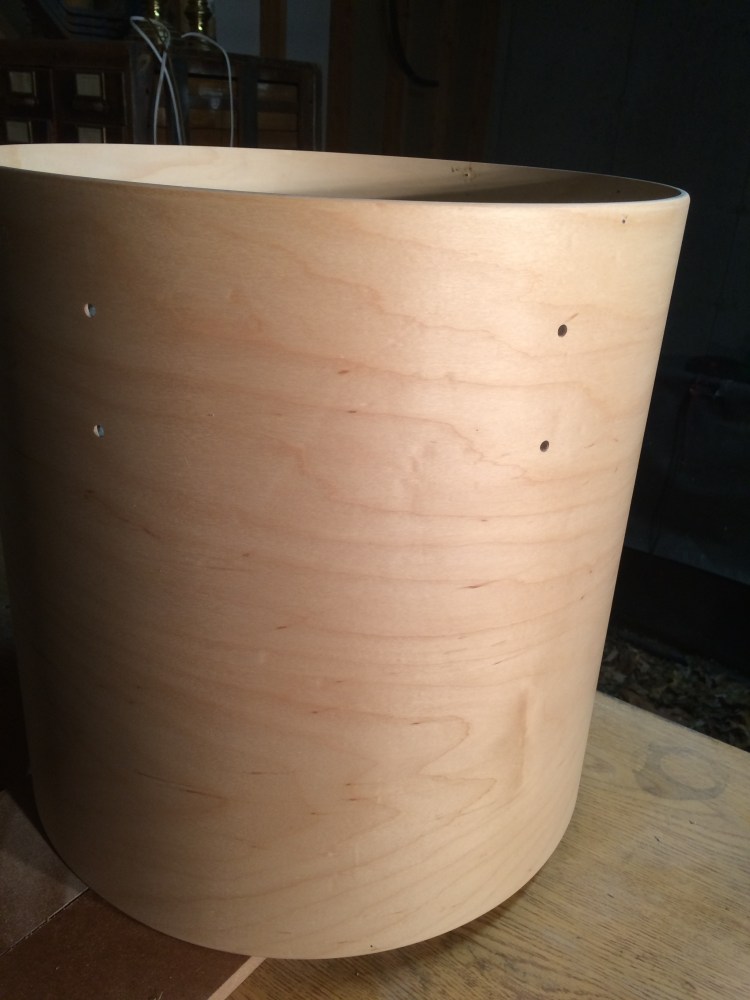
I’d never built a drum before so I based this one off what I’d known of laminated shells. I built an internal structure 1/4″ shy of the 18″ outer diameter I required and laminated a thin layer of maple, followed by 3 thicker layers of poplar and one more maple … The end result finished lighter than the rest of the kit but .. it’s Nitrocellulose .. it’ll be yellow in no time.
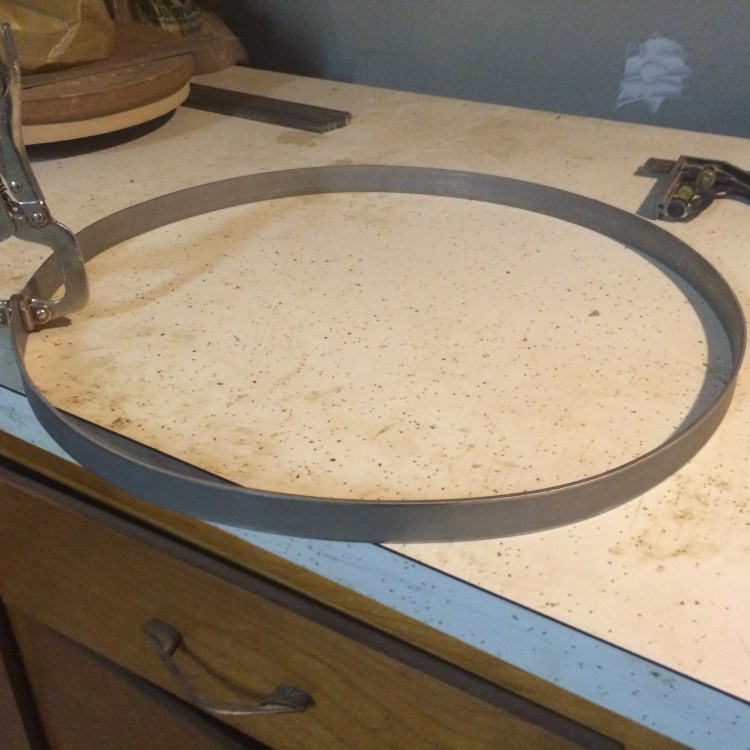
I bent and welded my own rim in the manner of the originals and sought era correct hardware and badges from Gretsch.
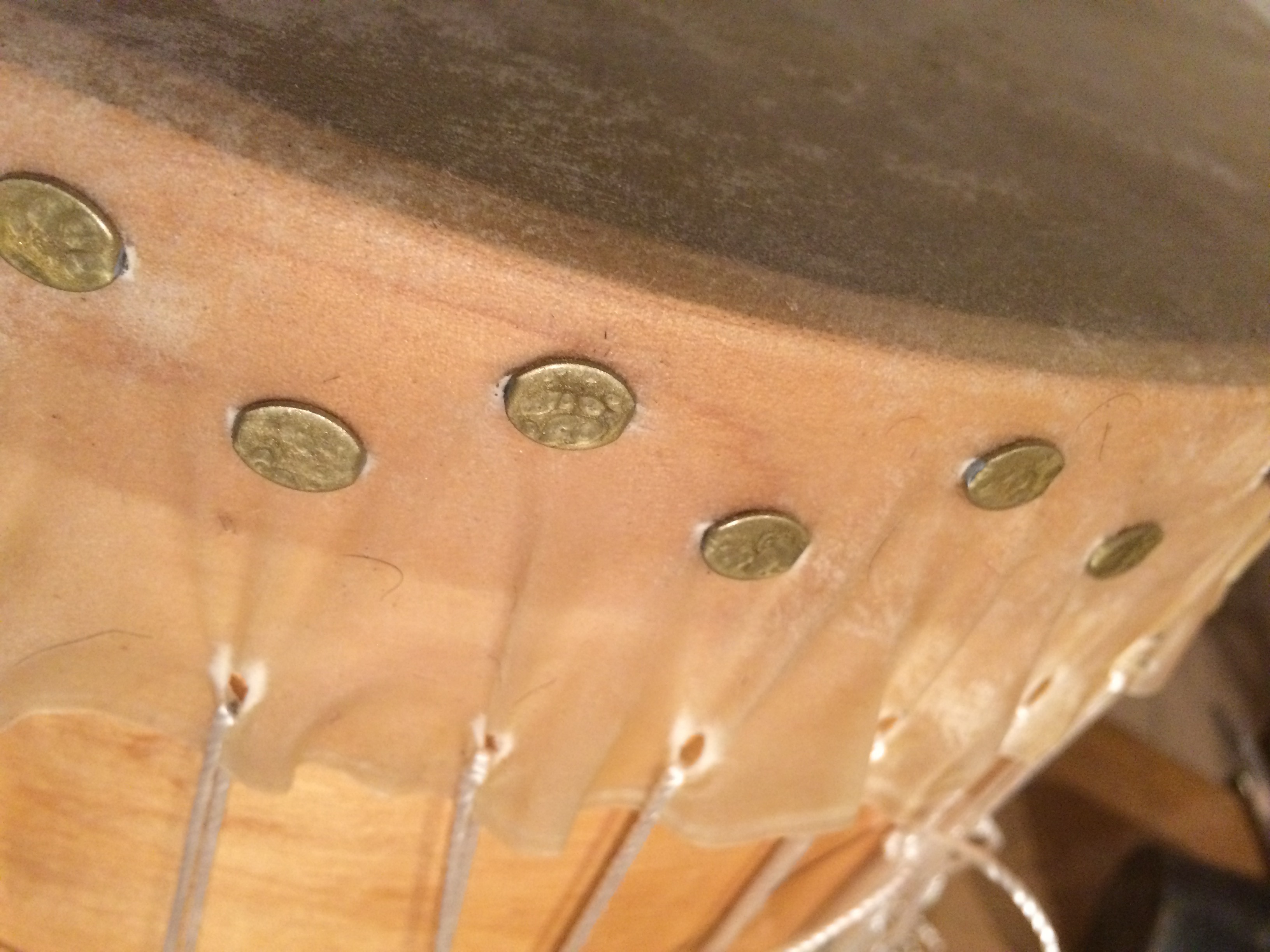

The calfskin was a trip. I built a little tensioning stand with about 24 points of purchase evenly distributed around the material. Once fastened, I was able to adjust the tension as it dried. It took a try or two before I got it right. Nowadays, if its sounding farty, I just hit it with a hair dryer and it perks up. I’m not likely to gig with this kit (or any other, I’m pretty done that way) so it’s rarely exposed to any drastic humidity changes.
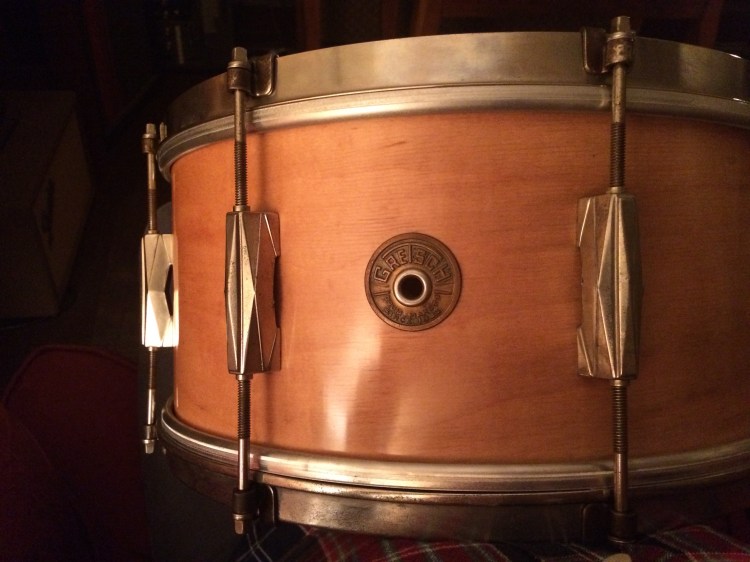
As much work and tools I throw at this kit, I always consider this the jewel. Vintage Gretsch drums always sing, errant and uncontrolled. This snare has a more capable range than most singers I know .. in fact, I could play only this drum for the rest of my life and never get bored.
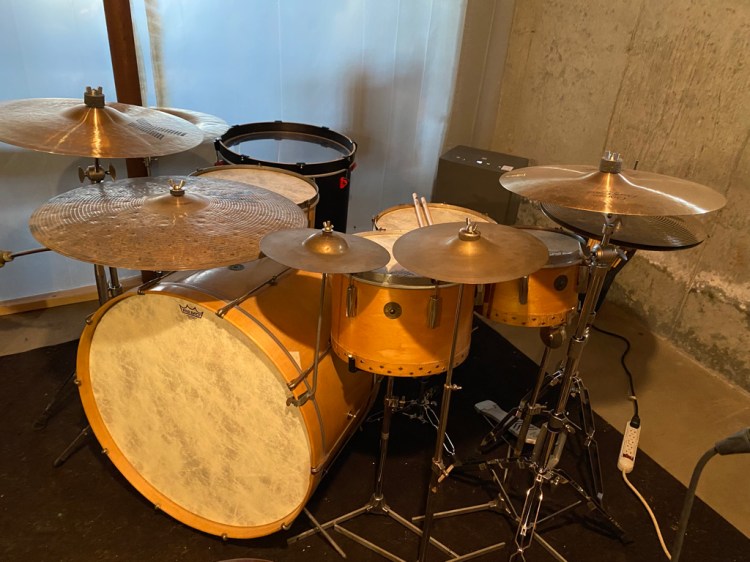
That said, She’s got a lot to her now. That black piece of crap in the back is slowly becoming a 22″ gong drum. I’ve been playing with making a couple smaller toms and have added a set of timbales. I guess at base, I’m just a music geek. But it’s nice to know I have a kit that I could strip down to three drums and be just as happy as I am pretending I’m Neil Peart. Definitely one of the more satisfying builds I’ve done.
 Custom Job