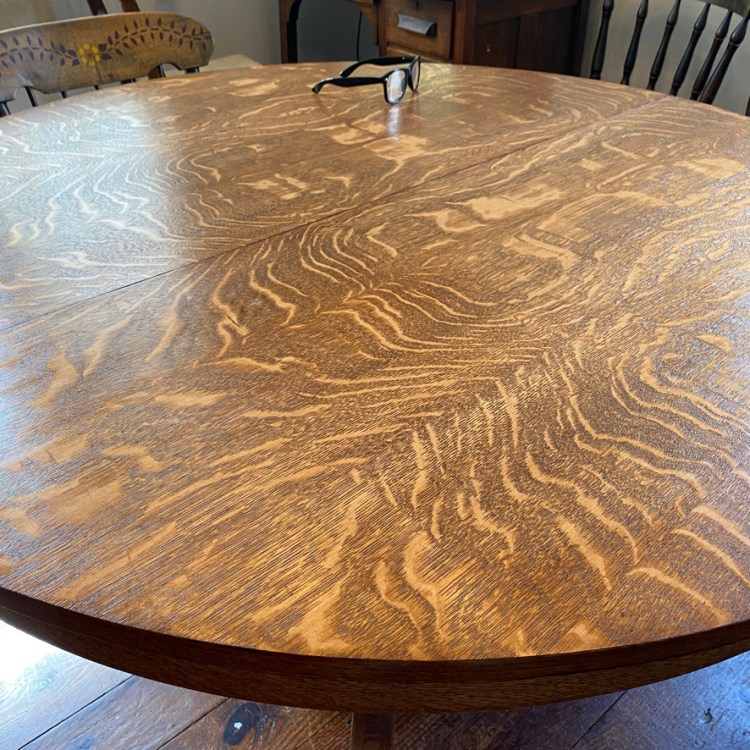
This is an early 2022 job I picked up off of Craigslist. It was a little more than I wanted to spend but it was precisely what I wanted: a round, oak, two leafed pedestal table with as little ornamentation as possible and a highly figured top.
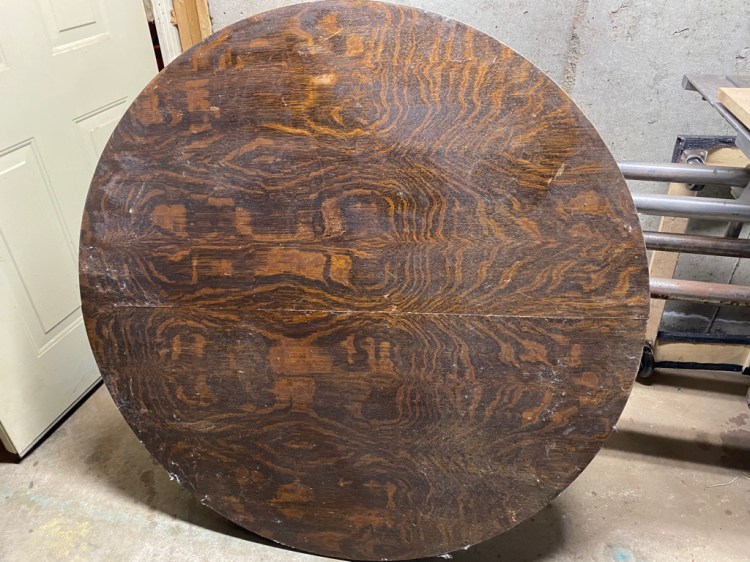
Beneath the fuzz encrusted, gummy original finish was a beautiful rift cut oak veneer that was very complete and solid. A few voids had opened, especially where the table split for the leafs but there’d be many more due to the vibration and heat of the stripping process so I wasn’t too worried. There were no chunks missing which is the big worry.
Just about everywhere else, the finish was just dry and flaking off. This was likely due to the use of some sort of silicon based wax on the top that never got to the leaves, the skirt, the pedestal or the feet. Aside from a few gaps in the feet themselves, the pedestal was very solid.
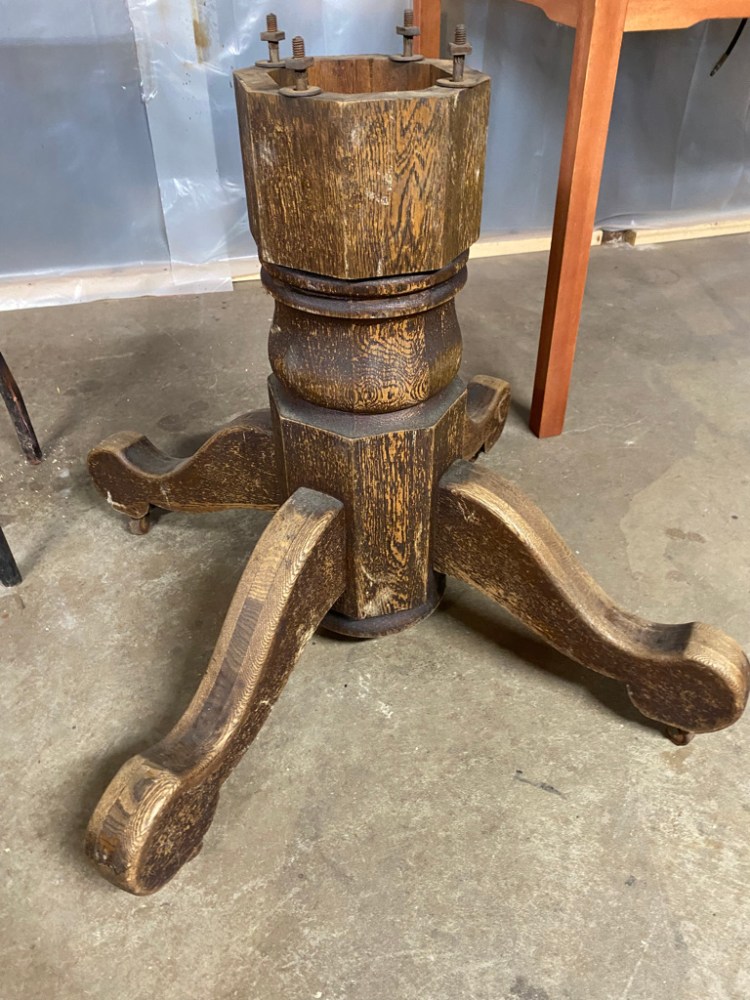
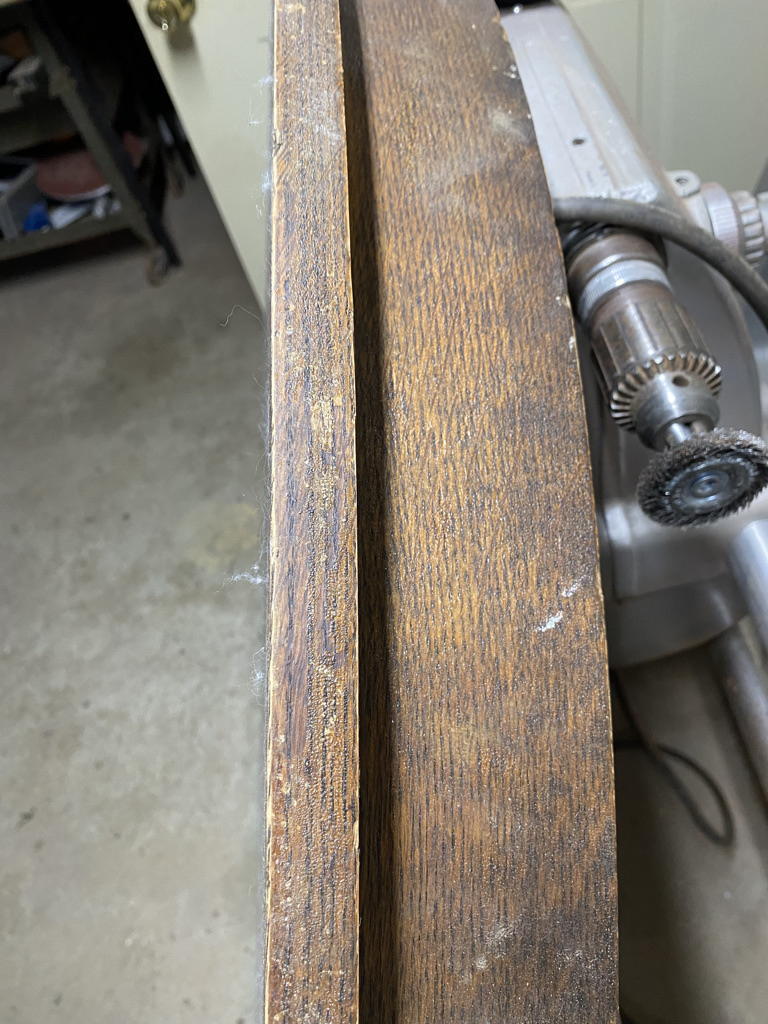
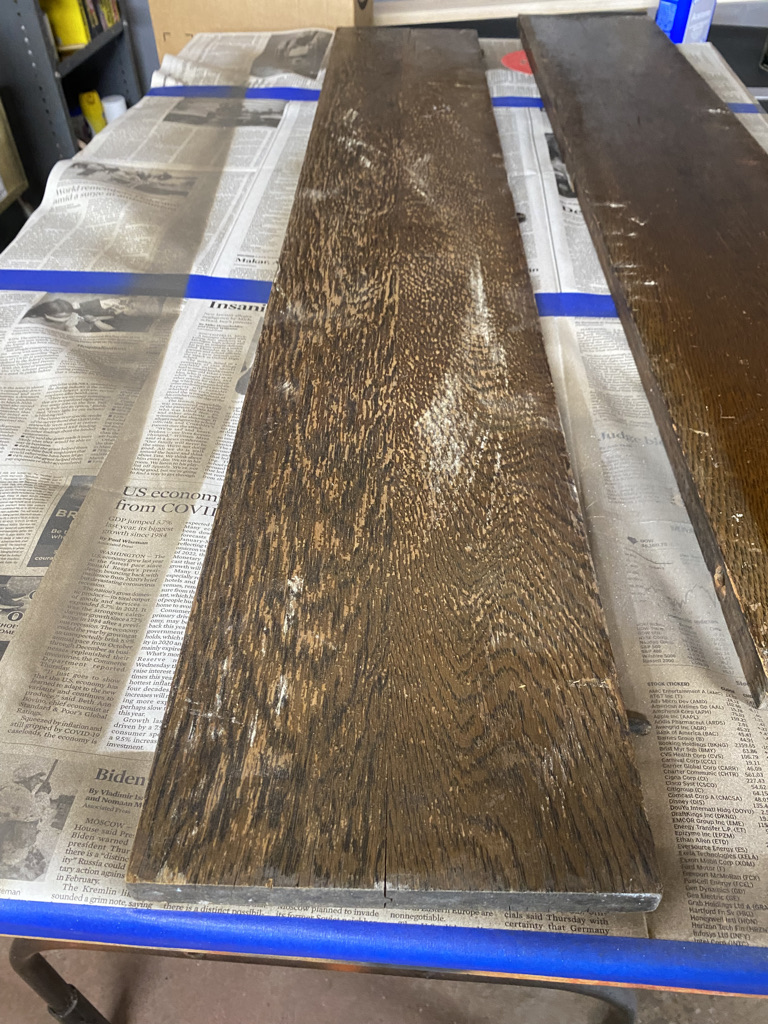
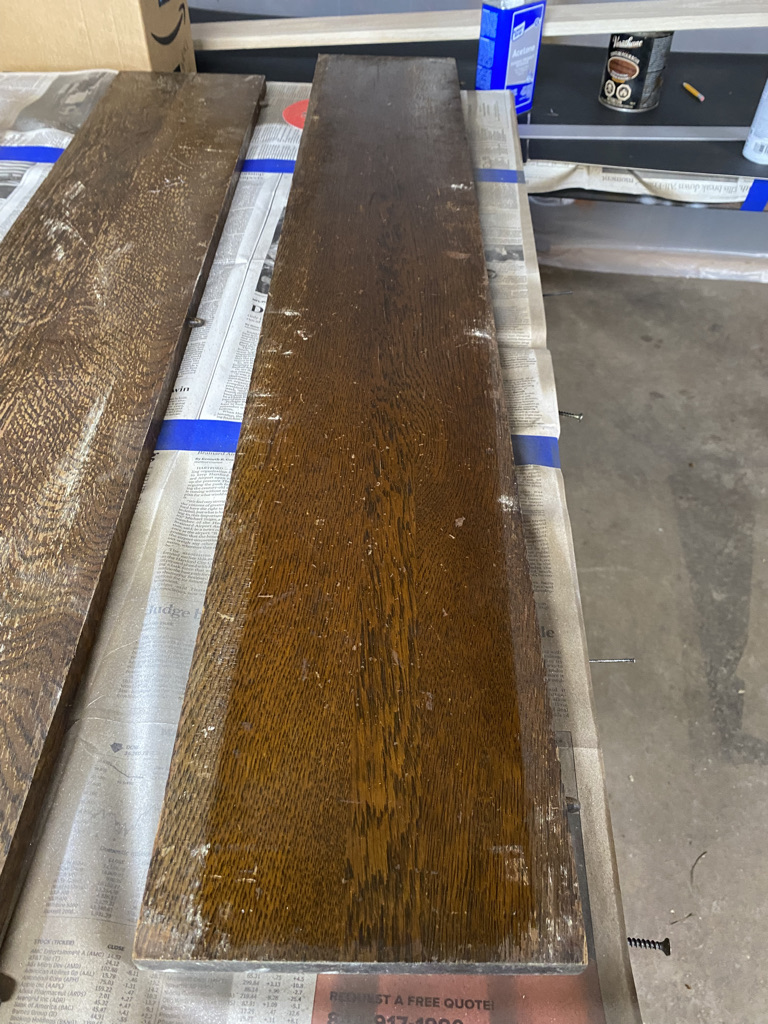
The skirt was in good shape. In removing it, finger prints from the original finishing were noticeable on the underside of the table which was kind of nice. I left those under a coat of poly for future generations.
The leaves were pretty bad. They’re sold oak compared to the rest of the top and had split pretty bad at the ends. They didn’t have skirt extensions on them so cut some solid red oak the same width as the rest of the skirt and doweled them in place after gluing and clamping the cracks.
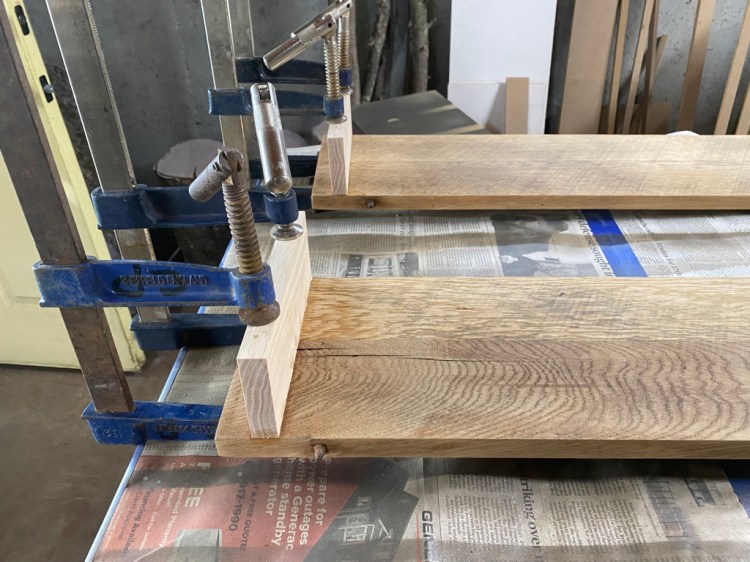
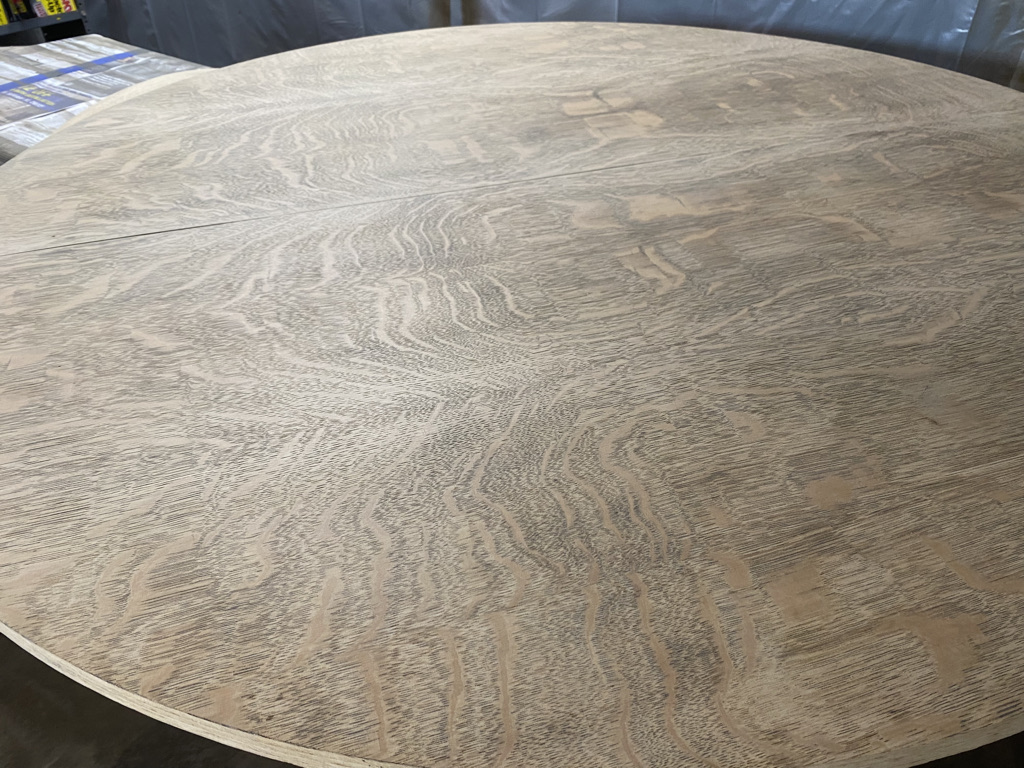
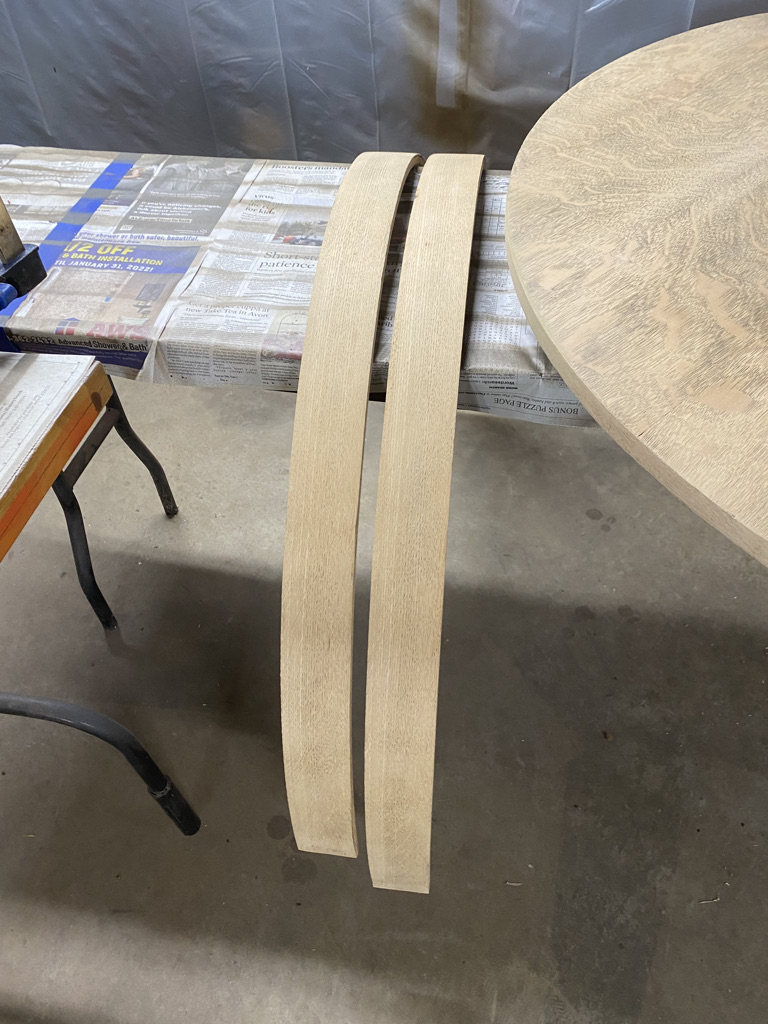
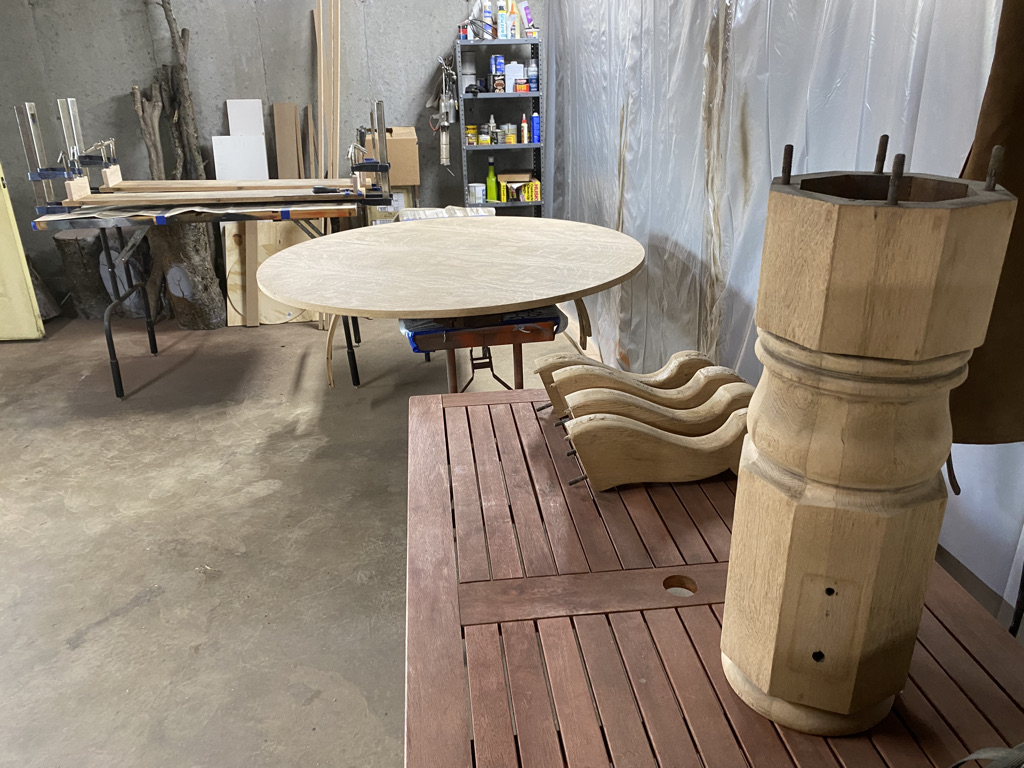
After getting the majority of guck and color off the top, I went about tapping out voids and filling them with wood glue using a syringe. Tedious work, but necessary to make sure the top holds up to another 100 years or more of service. The feet too were glued and clamped for 24 hours prior to final sanding.
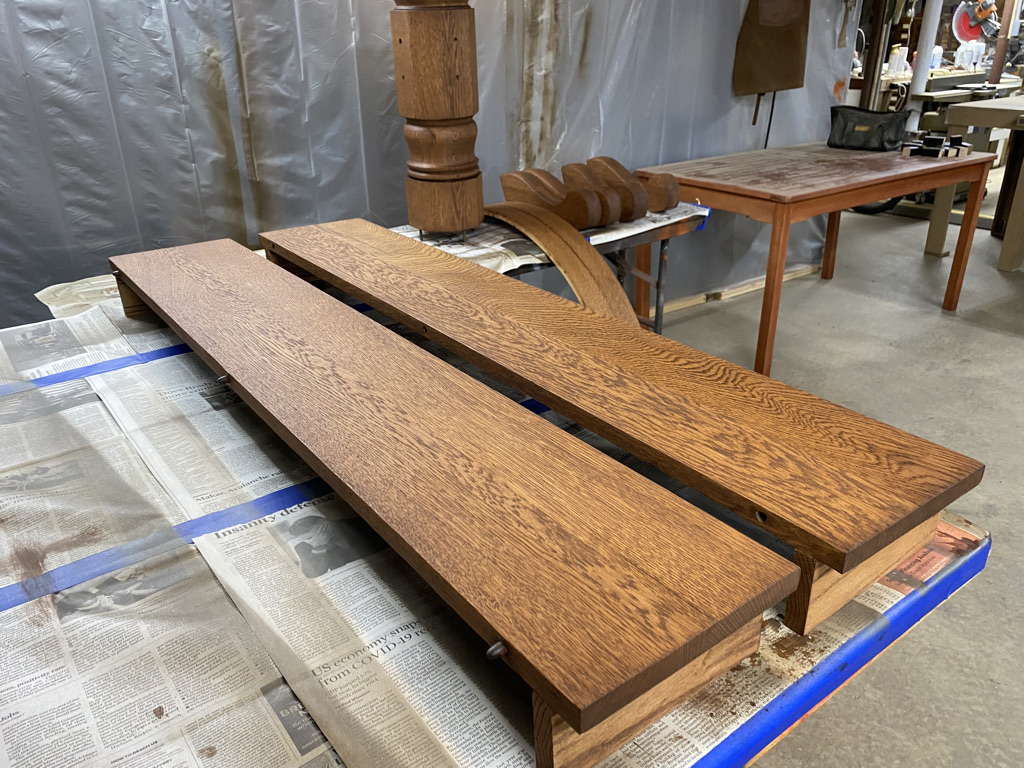
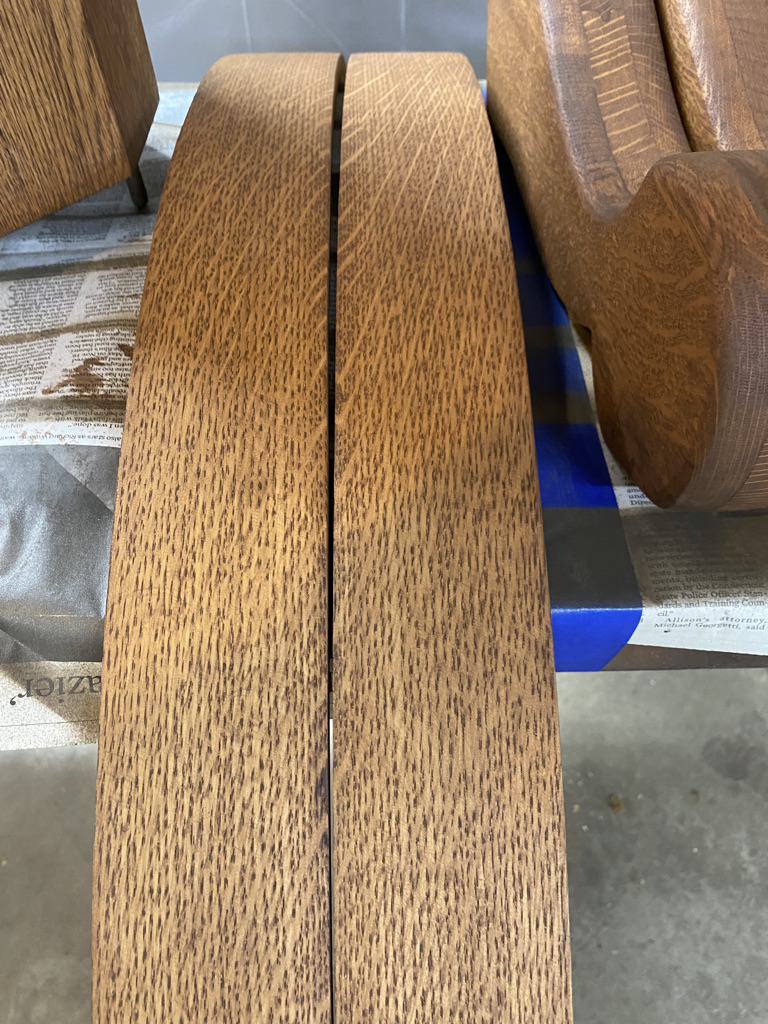
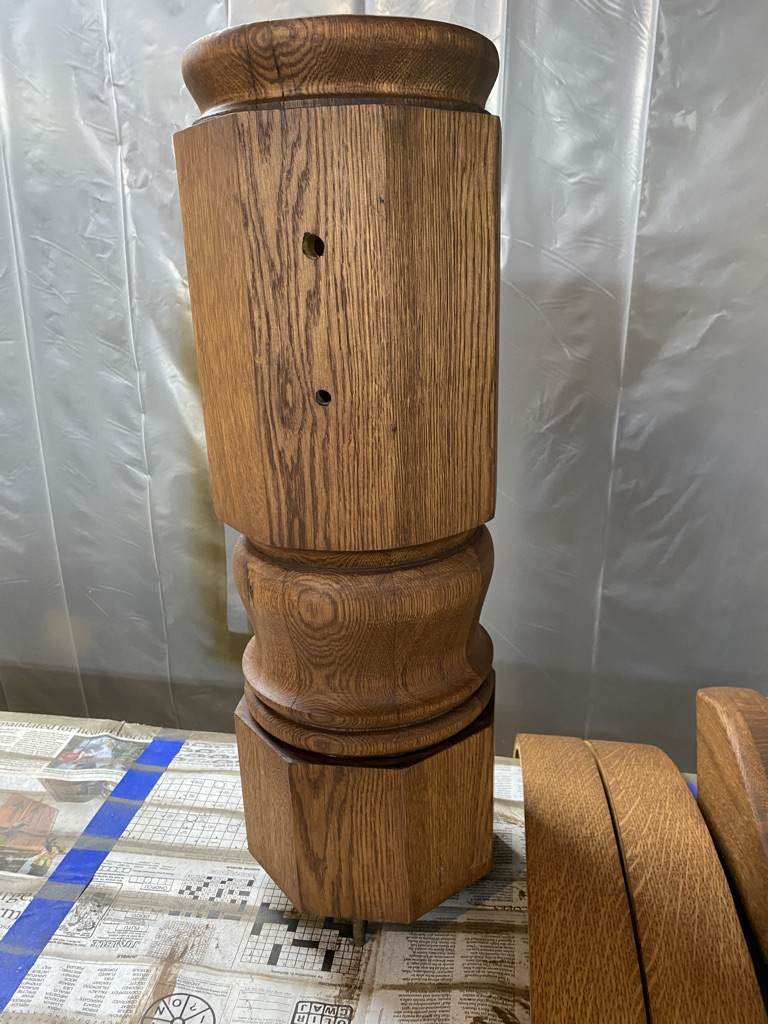
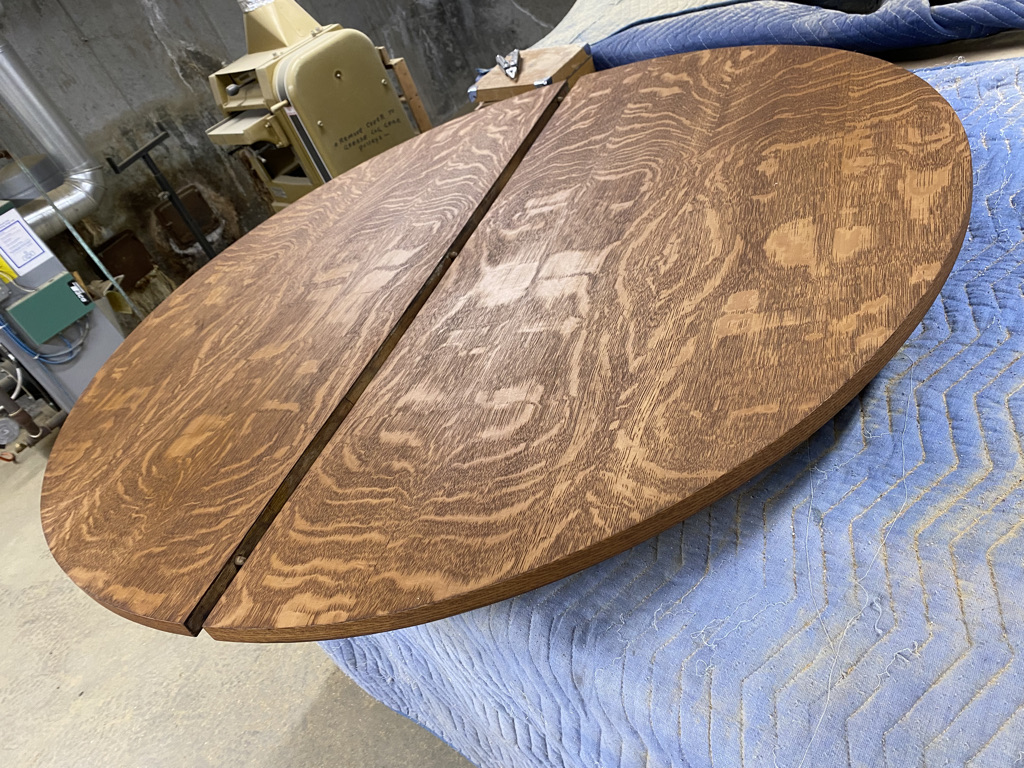
I opted for a slightly lighter color that maintained the dark in the more open portions of the grain. Sadly, it was the last of that particular stain I had. I’d been carrying a can of Varathane Mission Oak around with me for 15 years that was left over from a job I’d done back when I lived in Montreal. .. bittersweet feeling ringing that last drop out of the application rag but worth it. I guess that’s why we keep dangerous chemicals in cans for years on end?
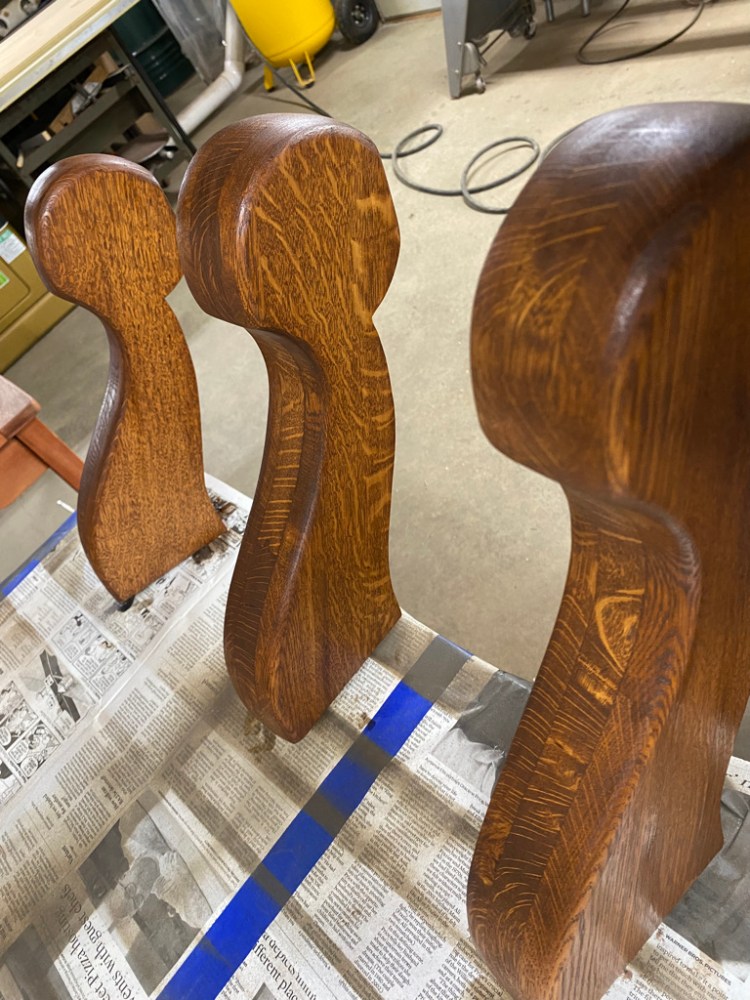
As I often do with tables, I applied 5 coats (2nd coat as pictured) of a Satin Gel Poly by General Finishes. I got to using this rough chemical compound nearly 30 years ago at my first finishing job at Pinewood Furniture in Manchester, CT. They used a product called “Mastercraft” but I’m fairly certain its the same chemistry.
Over the years, I’ve used a ton of different products from traditional amber chip shellac to waterborne conversion varnish and on and on .. I’ve never found a better mix of economical, forgiveness in use, durability, protection and enhancement than I have with hand wiped gel poly. I’ve literally had full grown, 100 lb dogs jump from couches onto coffee tables I’ve finished without leaving a mark. .. This, of course, depends on the wood. But still. Heavy stuff.
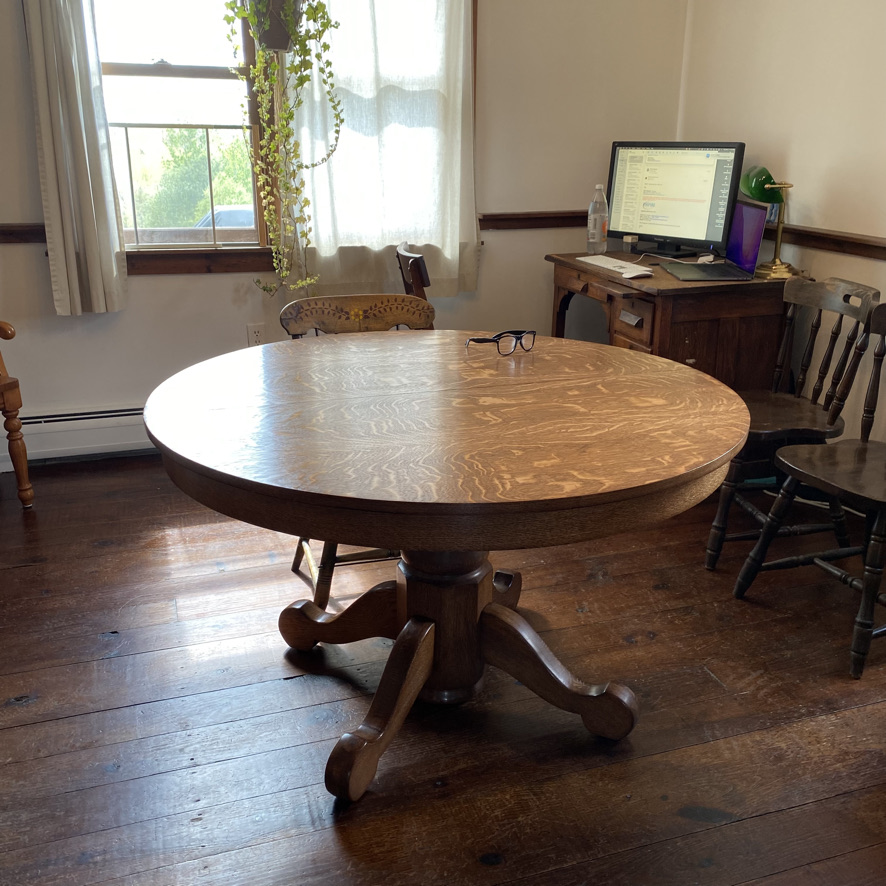
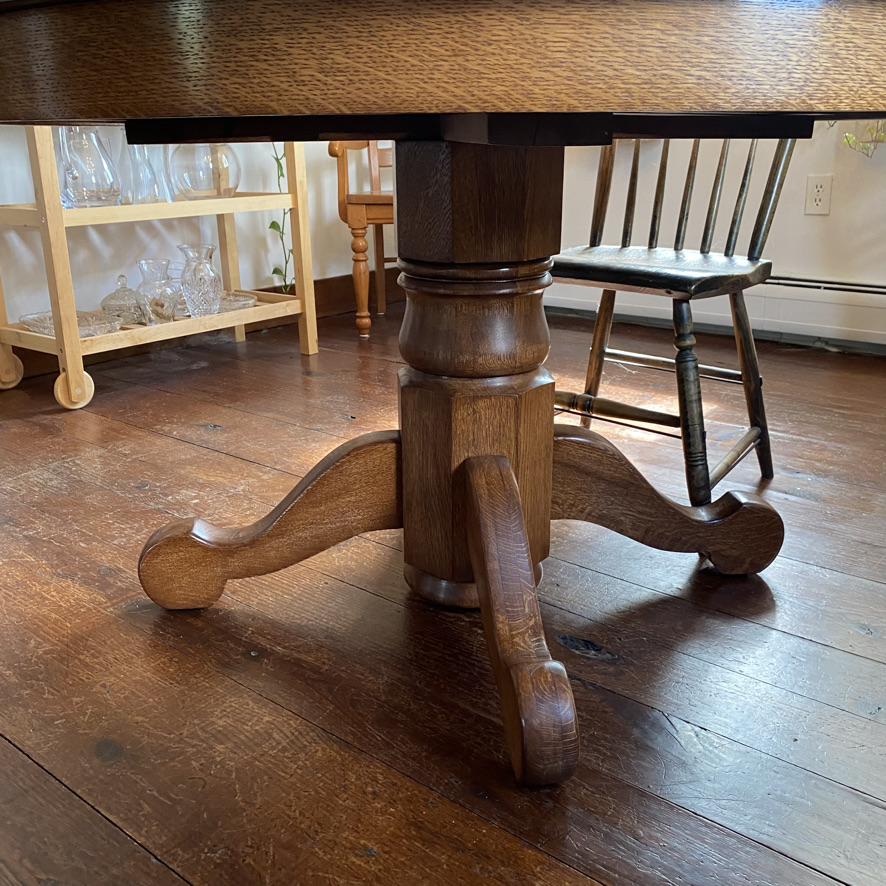
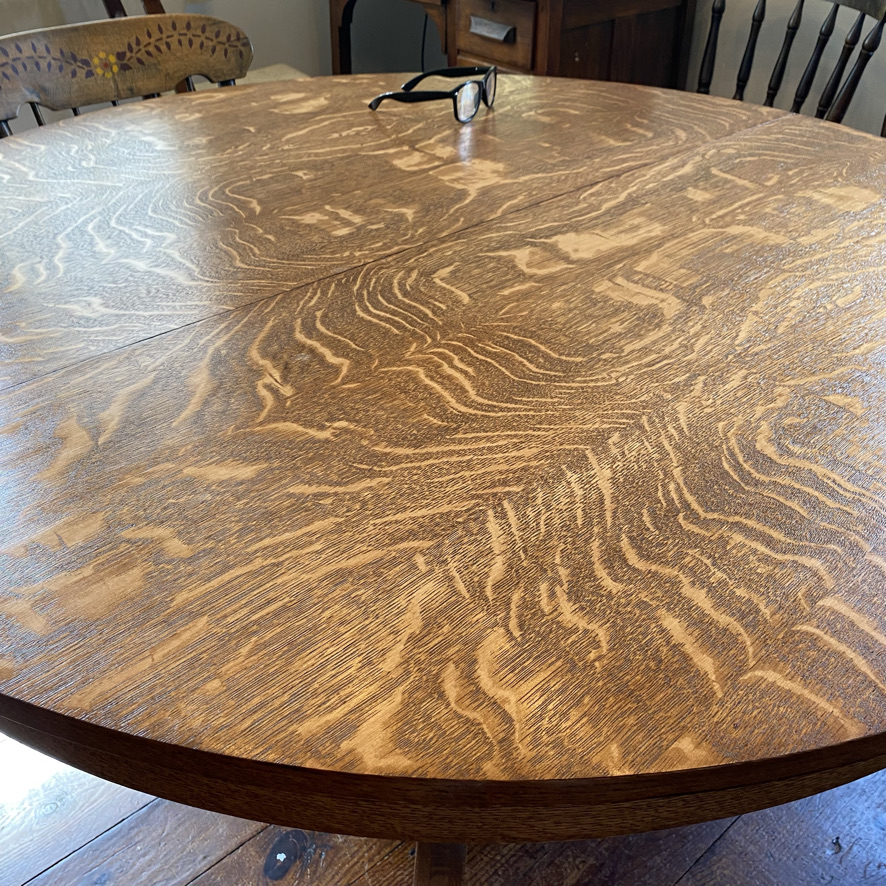
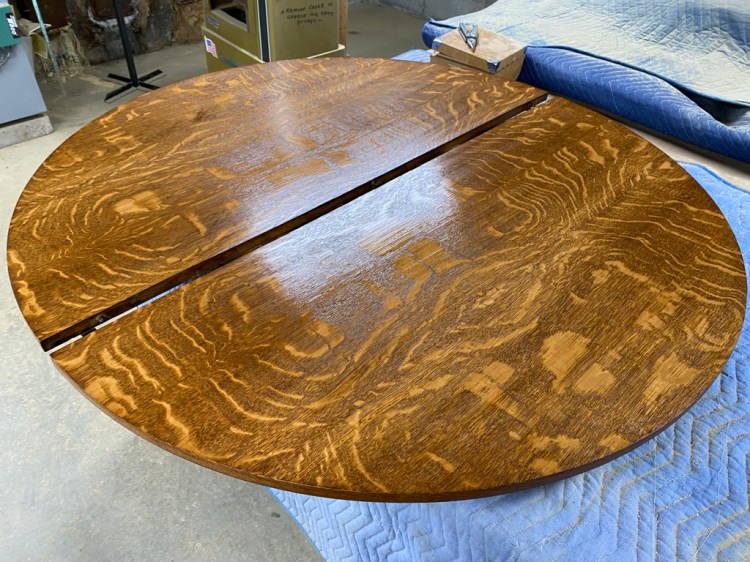
Finished with a polish of quad 0 steel wool run with the grain, in low light the reflection is crystal. In high light it’s diffused nicely. In either situation, depending on the figuring and depth of grain, the wood becomes eternally deep. Even in this case, where oak isn’t as deep as say, Red Birch, its a thing you could stare at forever and always find new things.
Stuff like this is always coming up online, and lots of the time for nothing. When I was looking for a table, my wife and I hit up all the furniture stores around us. Stuff is not only (sorry) FRIGGIN ugly, but expensive and poorly made. To each their own, for sure. But I’d so much rather put the money into making a classic piece stand the test of yet another 100 years of time.

