Cheap Guitars.
As a forward, I say “cheap guitars” and “crappy stuff” knowing that they are neither synonymous nor mutually exclusive. Most guitars with higher price tags that I play these days suffer from the same issues as affordable ones. Having been alive to witness the onset of the existing market of new, ‘vintage’, and custom instruments, I can say that new big name instruments are prey to mass production pitfalls, and changes certainly went into vintage guitars that don’t show in the pedigree. Finally, there are so many custom guitar shops now that I couldn’t begin to guess the pro’s or con’s of each beyond my own chosen methods of construction and material/hardware selection.
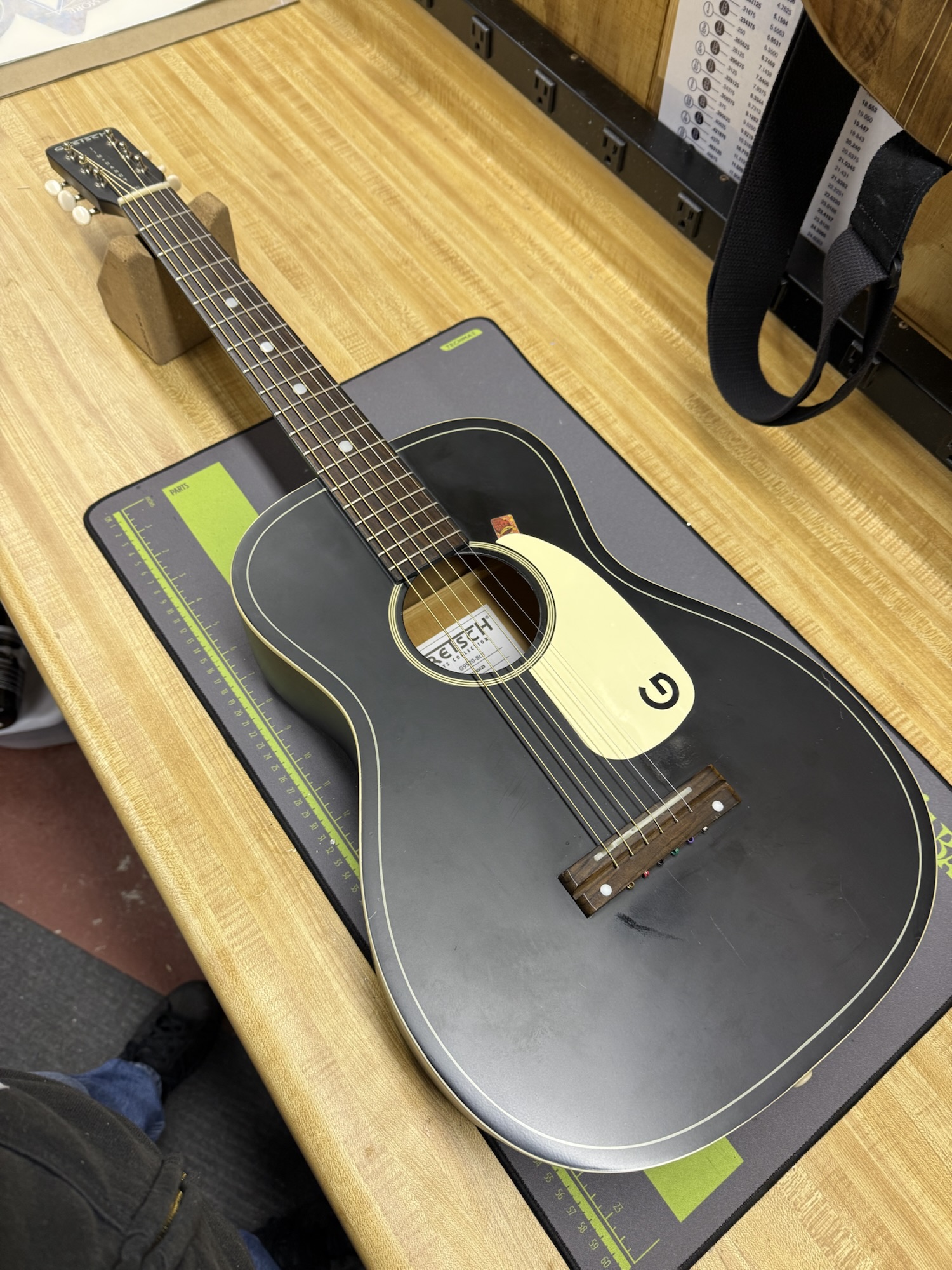
That said, this is more about the frustration a young or otherwise inexperienced player encounters on an instrument that was not afforded it’s justified attention, particularly in fit and finish. Some of the issues I’ve run into; crappy strings, action, and poorly leveled, dressed, or finished frets, are entirely correctable with little work. I stopped buying guitars a while ago now. But there’s a few I simply don’t have an amazing example of, namely a steel string acoustic, a classical, and a bass. To all of those, I’ve made due with a ‘lesser’ guitar. After some work, such as on the following Gretsch ‘Jim Dandy’, my want of a better instrument outweighs my NEED for a better instrument by leaps and bounds. Please forgive the griminess of this guitar. It travels a lot and cleaning it’s matte finish isn’t exactly high on the list…
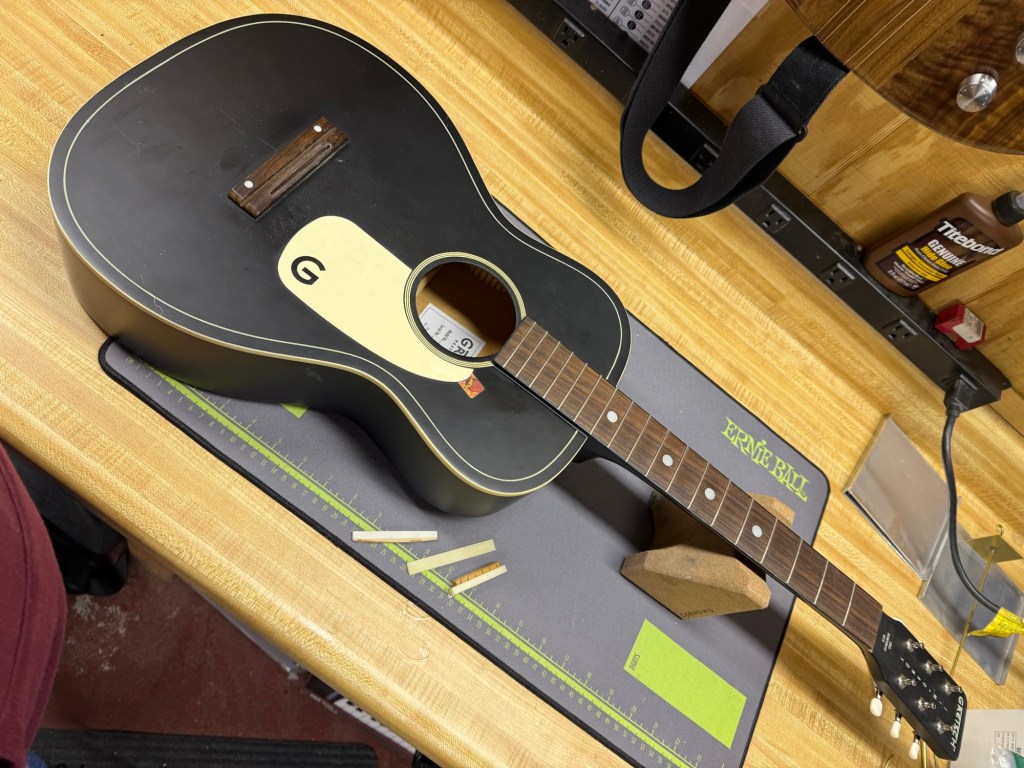
I resigned myself to building my own guitars a while ago now. However, at the time, I had no shop, no tools, very basic ideas and only a small amount of materials to build with. So my wife picked me up this Gretsch “Jim Dandy” Parlor guitar after I’d heard a guy play slide on it and rather liked it’s voice. I think it was like 175 dollars brand new with a case and extra strings and a few other things.
While I liked the sound overall, it’s playability was pretty rough and eventually when I got back into my studio, I found that recording the sounds I heard in it was, if not impossible, then way beyond my capabilities as an engineer. I changed the strings, checked the frets over and polished them, and conditioned the fretboard which made it good enough to play until I had time to get deeper into it.
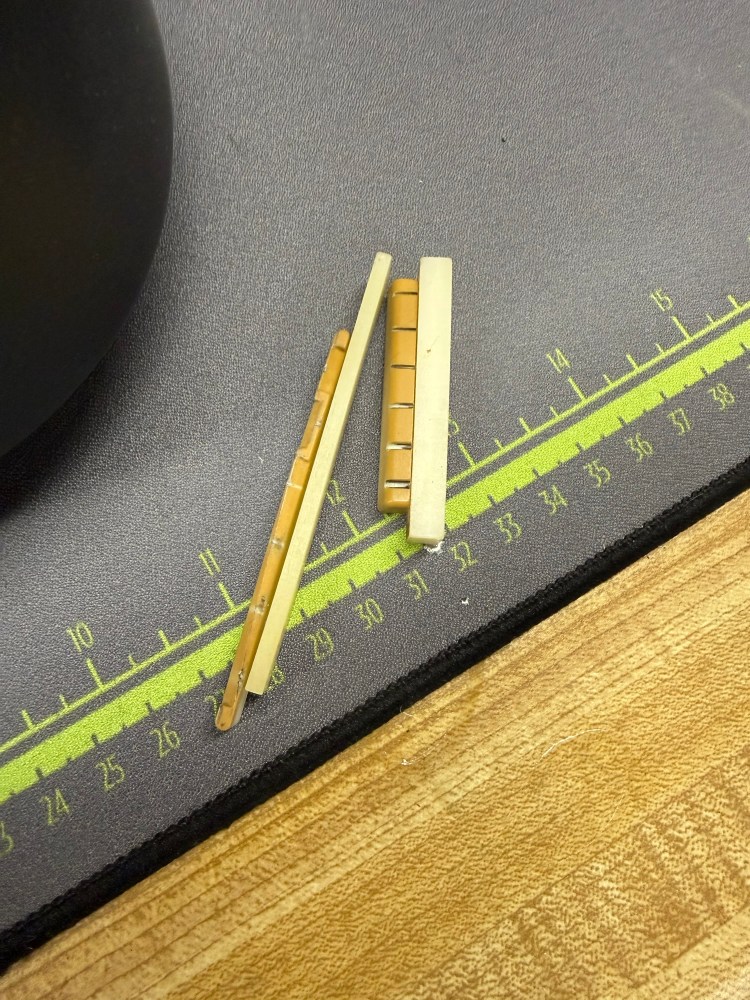
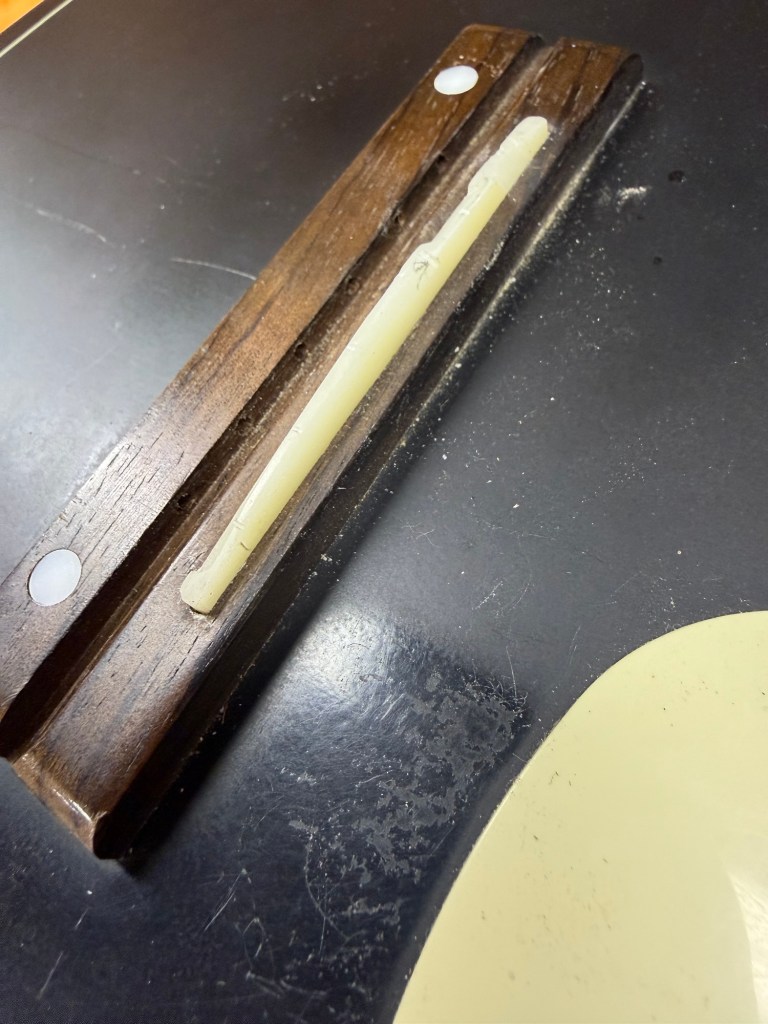
A lot of these cheaper models are built well enough from the perspective of assembly. Where they suffer is in materials used, fit, finish, and set up. The main frustrations with this one was action, intonation, and sustain/overtone voicing. The action is a simple fix BUT, while dealing with that, it made more sense to cut a new nut and compensated bridge from unbleached bone to more closely adjust the intonation and to transfer vibration to the body more accurately. In the photo, the darker material is whatever composite material the company used for the bridge and nut. Not nearly as dense as bone, these components can castrate a stringed instrument’s tone and sustain. Further, the compensated bridge is cut via a pattern that is not necessarily in sync with the manufacturing tolerances of the guitar itself leading to tonal drift past the octave on the neck … not that that matters much on a guitar where it’s virtually impossible to play past the octave but, if it’s bad enough, you’ll hear it.
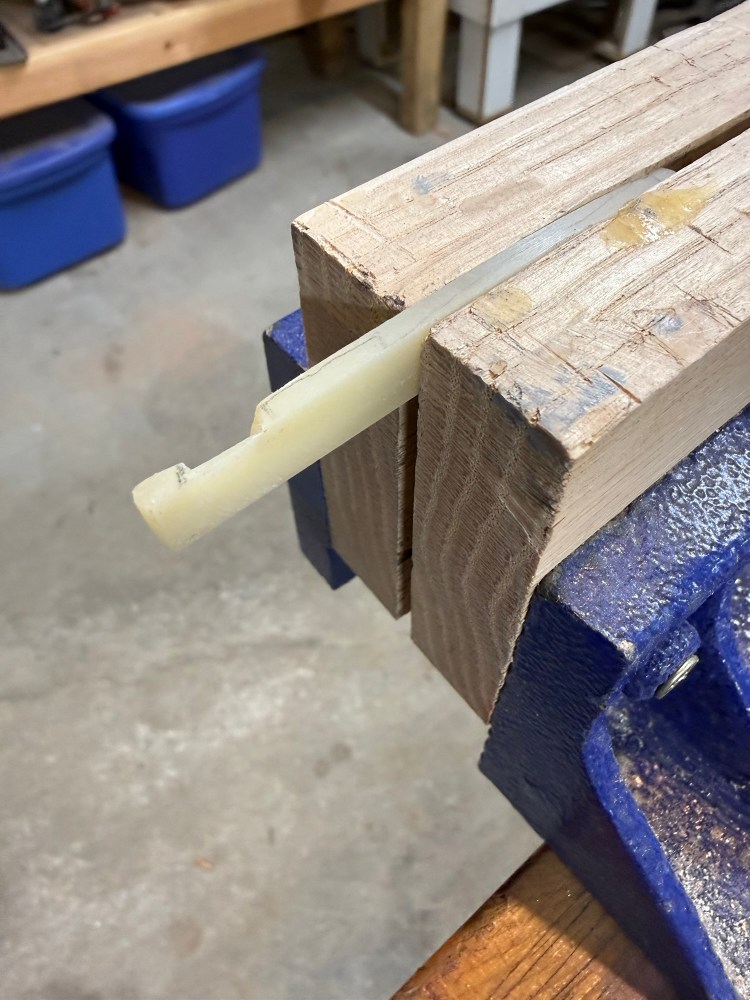
While filing the compensated bridge, I moved the 6th and 5th string compensation forward a bit as I kept hearing slightly flat notes higher on the fretboard. The 4th through the 1st string was a constant angle on the old bridge so I started that slightly forward and trailed it back to the original point of contact for the 1st string as it was stable from the start.
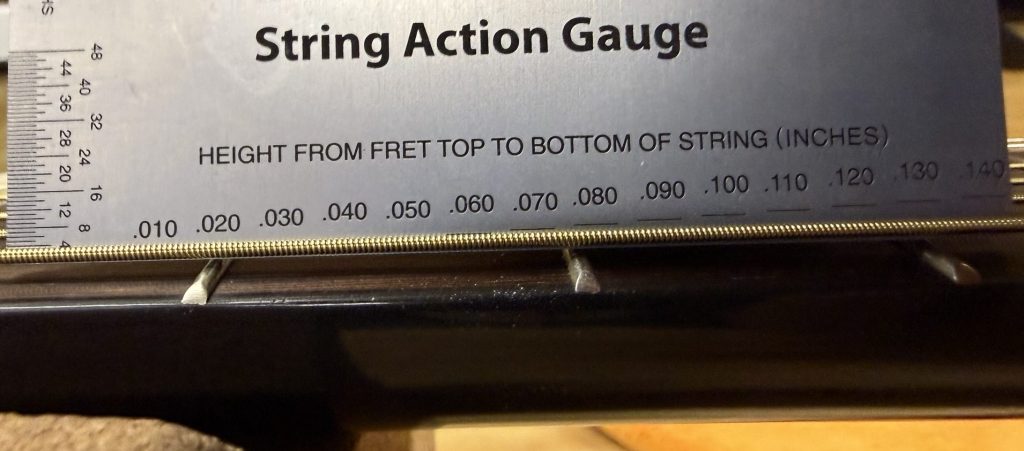
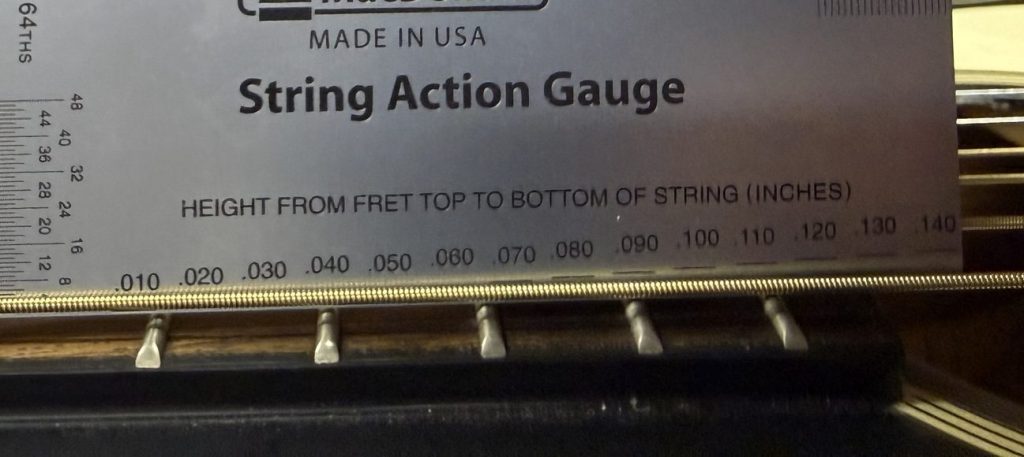
After checking the neck for straightness, I shaved the bridge down 1/32″ at a time until it mirrored the .030 fret clearance at the nut making the guitar playable top to bottom while keeping the strings off the soundboard sufficiently enough to not choke any tones out.
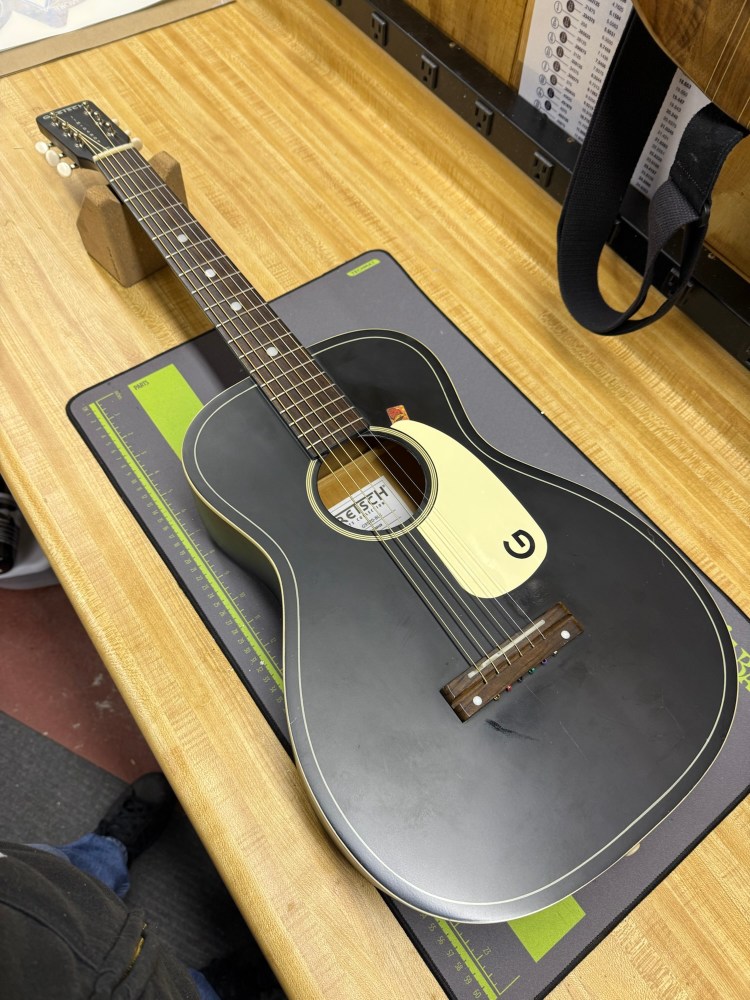
Since in my possession, this guitar has seen a lot of work and never been treated all that well until this work. It was never a nightmare to play as such (I have a cheapo Squire Bronco Bass that left deep and defined cuts on my hands from unfinished fret ends … not to mention bad pickup height adjustment, way way out intonation, and astronomically high action) It was however uncomfortable and a hinderance to my writing being that I just couldn’t play it as well as I could other instruments.
There’s no reason to subject yourself to that sort of frustration while in the throws of learning something new. It can be a great and long trip learning to play. However, building tonal relationships, muscle memory, and stamina is uncomfortable enough. Affording yourself a well set up instrument that doesn’t add injury to insult is kind of a no brainer!
 Custom Job